India has firmly dismissed Pakistan’s claims linking it to a recent terrorist assault in Karachi, describing the accusations as unfounded and urging Islamabad to focus on threats within its own borders.
The incident targeted the provincial headquarters of Pakistan’s paramilitary Rangers in the southern port city. A group known as Jamaat-ul-Ahrar, which has ties to the Afghanistan-based Tehreek-e-Taliban Pakistan (TTP), claimed responsibility for the attack. The operation involved multiple assailants, including one who drove an explosives-laden vehicle into the facility, sparking a fierce exchange of fire. Three security personnel lost their lives, while four others sustained injuries. Authorities reported that three attackers were killed during the confrontation, and a fourth an Afghan national was taken into custody.
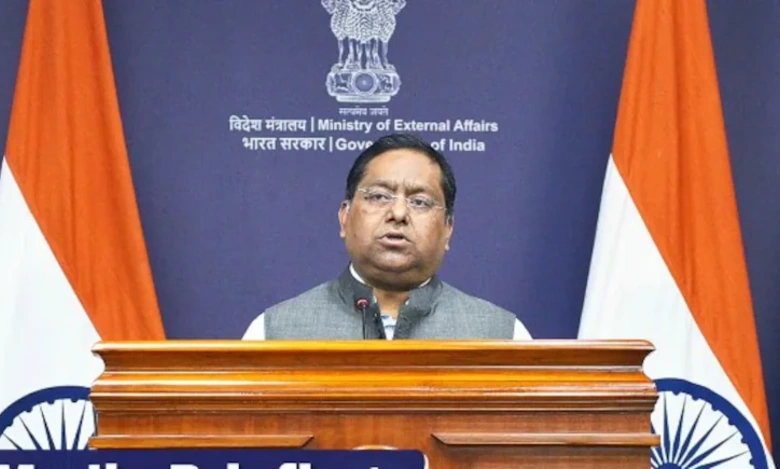
Pakistan’s Interior Minister alleged involvement by an “Indian proxy” in the assault but offered no supporting evidence for the assertion. In response, India’s Ministry of External Affairs spokesperson rejected the charges outright. He emphasized that such claims lacked any basis and advised Pakistani officials to prioritize dismantling terror networks operating on their territory rather than directing blame elsewhere. The spokesperson highlighted the need for Pakistan to confront its reliance on terrorism as a tool of policy.
ALSO READ : Karachi Rangers Attack: India Tells Pakistan to ‘Look Inwards’ on Terror Infrastructure
In the aftermath of the Karachi attack and other recent violence, Pakistan launched overnight airstrikes on suspected militant positions in eastern Afghanistan. Targets in the provinces of Paktia, Paktika, and Kunar were hit in precision operations, according to Pakistani officials, who reported the elimination of around 25 terrorists. These strikes also incorporated ground actions along the border and specifically addressed Jamaat-ul-Ahrar elements. Pakistani authorities described the measures as a direct response to the Karachi incident and broader security challenges in border regions.
This development underscores ongoing tensions between Pakistan and Afghanistan. Islamabad has accused the Taliban-led government in Kabul of providing safe haven to groups like the TTP, which has intensified attacks inside Pakistan. Afghan officials have consistently denied these allegations, asserting that previous Pakistani strikes have resulted in civilian casualties. The shared border has remained largely sealed following earlier escalations, severely disrupting cross-border trade.
The sequence of events reflects persistent security concerns for Pakistan, where security forces continue to face threats from militant organizations. By rejecting external involvement in the Karachi attack, India has called for Pakistan to tackle the root causes of terrorism domestically through concrete and verifiable steps. This stance aligns with longstanding positions on regional stability and counter-terrorism efforts.
-

-

-
-