
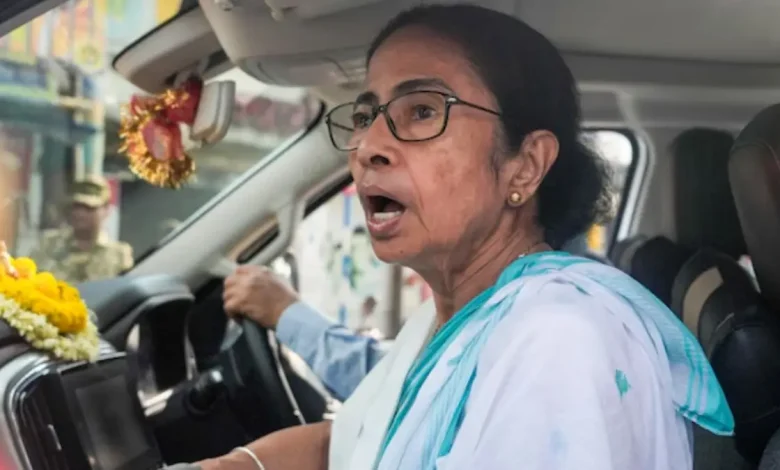
Kolkata : “I don’t hold a chair, I’m a free bird,” an unfazed Mamata Banerjee said at a packed press conference on Tuesday, a day after losing both Bengal and her Bhabanipur seat to arch rival BJP. Minutes later, the tone turned defiant. “I won’t resign. I didn’t lose,” the 71-year-old outgoing Chief Minister declared.
Even if she doesn’t resign, it doesn’t matter. The governor would have asked her to continue till the next Chief Minister took oath. But constitutional provision says a government cannot continue after five years,” he told media. Achary said that even if Banerjee resigned today, the governor would ask her to continue till the new Chief Minister took oath. “Technically she doesn’t need to resign at all.
Senior advocate Shekhar Naphade also echoed Achary, saying the TMC chief’s resistance will not make any difference. The Governor can dismiss the state Assembly and the government’s term will end because the five-year-mandate has concluded. He explained how the TMC chief’s decision to not resign is against the Constitution of India. Senior advocate Rebecca M John also said that there is no legal basis to defer resignation. “Politically, she is making a point, but legally, formal resignation is a mere polite convention.
Under the representation of the Peoples Act, election results can be challenged before the High Court. Section 100 enumerates the grounds on which an election of a returned candidate may be challenged and declared void. “One can challenge the election results in an election petition before the High Court, but that is a separate process and has nothing to do with the end of the mandate of the House,” Achary said, adding that even if the petition is filed, it will only be heard later.




Naphade added that Mamata Banerjee is, however, free to challenge the poll results on whatever forum is available. “Nobody can put that kind of restriction on her. The Supreme Court, in the Azhar Hussain vs Rajiv Gandhi case in 1986, the bench stated, “The results of an election are subject to judicial scrutiny and control only with an eye on two ends. First, to ascertain that the ‘true’ will of the people is reflected in the results and second, to secure that only the persons who are eligible and qualified under the Constitution obtain the representation.
On April 13, a petition before the Supreme Court bench comprising Chief Justice Suryakant and Justice Joymalya Bagchi had argued that the large number of deletions of voters could “materially affect” the election result. In response, Justice Bagchi observed that the court may “consider what is to be done” in such a situation.
Read Also : IndiGo Flight Evacuated at Chandigarh Airport After Passenger’s Power Bank Catches Fire, Five Injured