
Fresh Missile Barrage Hits Tel Aviv as U.S.-Israeli Strikes Target Iranian Energy Sites
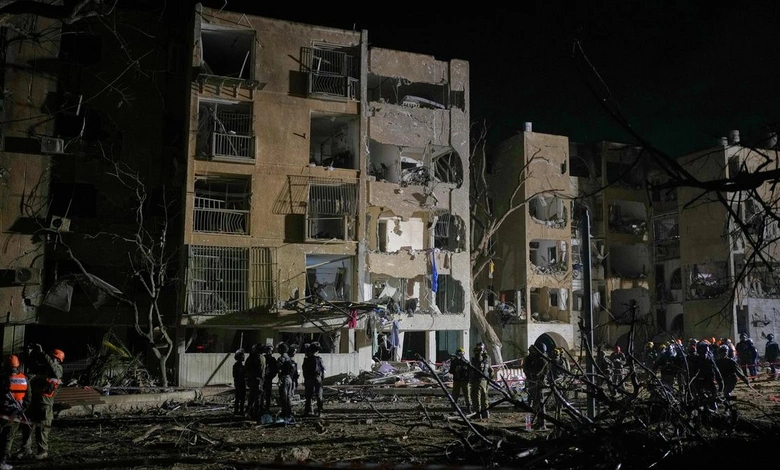
New Delhi, March 24, 2026: Tensions in West Asia surged further on Tuesday as Iran launched multiple waves of missiles toward Israel, causing damage and light injuries in Tel Aviv, while Israeli and U.S. forces carried out strikes on Iranian energy infrastructure, according to reports from various international news agencies.
Iran fired a fresh barrage of missiles at Israel, triggering air raid sirens across several areas, including Tel Aviv. Tel Aviv Mayor Ron Huldai confirmed that a “direct strike” damaged a building in an upscale northern neighbourhood, tearing open the facade of an old three-storey structure and scattering debris. First responders treated four people for light injuries at four different sites, with six others reported lightly hurt overall. No fatalities were recorded from the Iranian attack.
In response, Israeli forces struck seven locations in Beirut’s southern suburbs overnight — the first such assault on the Hezbollah stronghold in days. An Israeli strike on a residential apartment in Bchamoun, about 10 km southeast of Beirut, killed at least two people and wounded five others, as reported by Lebanon’s state-run National News Agency and AFP. Another strike targeted Hazmieh near Beirut, aimed at a member of the Iranian Revolutionary Guards’ foreign operations unit. Israeli troops also captured two Hezbollah members during operations in southern Lebanon.
Iranian media, including Fars news agency and the Islamic Republic of Iran Broadcasting, reported that Israeli-U.S. strikes hit two gas facilities and a pipeline in Iran. Targets included the gas administration building and a pressure regulation station on Kaveh Street in Isfahan, as well as an area outside the Khorramshahr gas pipeline processing station in the southwest. Iran’s Energy Minister Abbas Aliabadi stated that the country’s electricity production is decentralised across more than 150 power plants, making it less vulnerable than centralised systems in the Persian Gulf or Israel.



U.S. President Donald Trump announced a five-day postponement of planned strikes on Iran’s power plants and energy infrastructure following what he described as “very good and productive” talks with an unidentified Iranian official. Trump said Iran “wants to make a deal very badly” and had imposed a deadline for reopening the Strait of Hormuz. However, Tehran’s parliamentary speaker Mohammad Bagher Ghalibaf denied any negotiations were underway and accused Trump of manipulating energy markets. Israeli Prime Minister Benjamin Netanyahu noted that Trump believed military gains could be leveraged into an agreement protecting Israel’s interests.
In a separate development, a U.S. strike in western Anbar province, Iraq, targeted the headquarters of the Hashed al-Shaabi (Popular Mobilisation Forces), killing a commander and 14 fighters, according to AFP.
The conflict continued to ripple globally. Amazon’s AWS region in Bahrain faced disruption due to drone activity. Asian shares rebounded after Trump hinted at a possible resolution. Japan announced plans to release oil from joint stockpiles by the end of March, having already tapped private-sector inventories. Philippine President Ferdinand Marcos Jr. warned that grounding planes due to jet fuel shortages was a “distinct possibility.”
Bahrain pushed a draft UN Security Council resolution to protect shipping in the Strait of Hormuz, backed by Gulf states and the U.S., though it faces likely vetoes from Russia and China.