India and the US have finalised a framework for an interim trade agreement, featuring selective tariff cuts and enhanced market access that both sides describe as mutually beneficial, even as domestic critics question the balance of concessions.
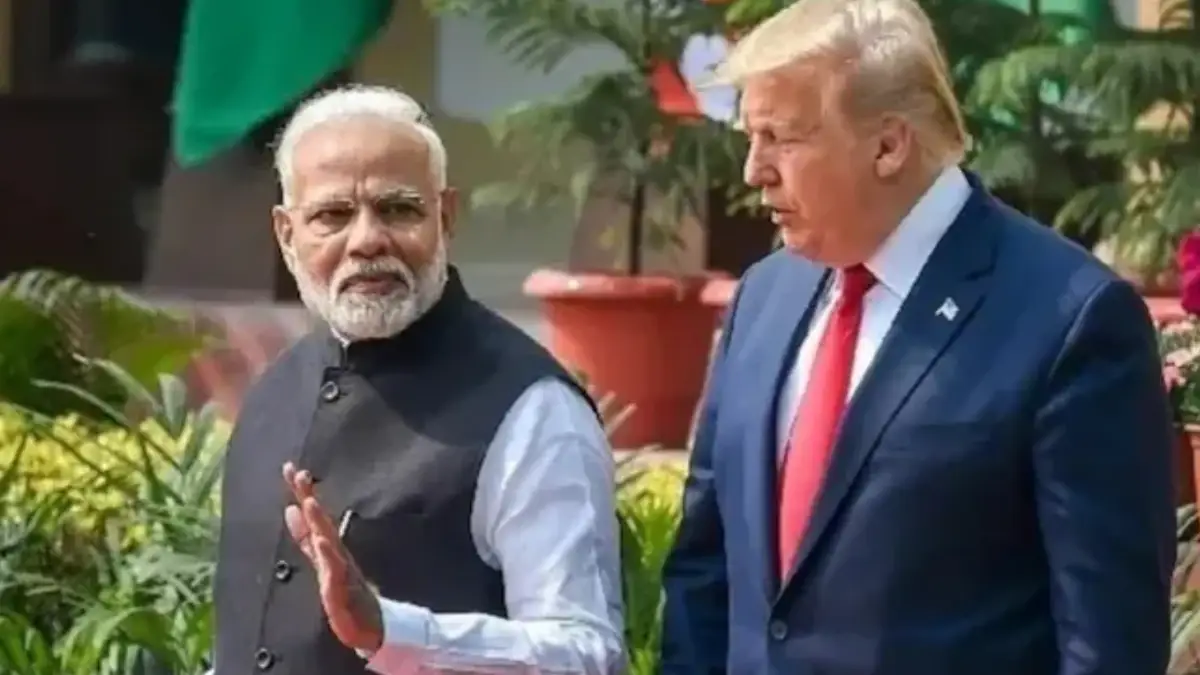
In a development aimed at steadying bilateral commerce against global headwinds, India and the United States announced a framework for an interim trade deal on February 7, 2026. The arrangement includes targeted duty reductions and improved entry for select goods, marking a pragmatic step forward in negotiations that began under US President Donald Trump and Prime Minister Narendra Modi.
A key element involves India’s decision to ease barriers in its tightly guarded agricultural sector for specific American products. This partial opening is anticipated to bring down prices for animal feed ingredients and certain foods in India, though it places pressure on the Modi administration’s efforts to shield domestic farmers from import competition.
As detailed in the joint statement, India will reduce or remove tariffs on US exports such as apples, almonds, pistachios, walnuts, soybean oil, distillers’ dried grains, and red sorghum used for livestock feed. New Delhi has also undertaken to tackle persistent non-tariff hurdles that previously limited American farm shipments.
In return, India secures better terms for its exports. The US has lifted a 25% additional penal tariff tied to India’s Russian oil purchases via an immediate executive order. Commerce and Industry Minister Piyush Goyal stated that a forthcoming order will lower the reciprocal tariff on Indian goods from 50% to 18%. He highlighted that roughly $44 billion of Indian exports—nearly half of the $87 billion total to the US—would gain duty-free or preferential entry, while India grants expanded access for about $26 billion in US imports.
Goyal portrayed the pact as a carefully calibrated “give-and-take” that unlocks opportunities in a $30-trillion market without compromising core interests. He stressed that no concessions apply to sensitive items including wheat, rice, dairy, poultry, meat, maize, millets, sugar, or soybean. For apples—mainly produced in Himachal Pradesh and Kashmir—imports will fall under a quota regime with a minimum price of ₹100 per kg.
Emphasising economic differences, Goyal noted the vast gap in per capita incomes—around $90,000 in the US versus $3,000 in India—arguing the economies complement rather than compete.
The framework also includes India’s stated intention to source $500 billion worth of US energy products, aircraft and parts, precious metals, technology items, and coking coal over five years. Both nations pledged closer alignment on economic security, supply-chain strength, countermeasures against non-market practices by third countries, and removal of digital trade obstacles. The agreement avoids addressing US Section 232 duties on certain steel and aluminium.
Goyal clarified that purchase targets are industry-led, not government-enforced. Deloitte India partner Gulzar Didwania called the $500-billion goal ambitious and worth monitoring for realisation.
However, the Global Trade Research Initiative (GTRI) has criticised the terms as lopsided. Founder Ajay Srivastava described it as an uneven swap: India providing lasting market access in exchange for temporary relief from what he called unsustainable US reciprocal tariffs. He warned that cheaper imports could erode margins for Indian farmers, oilseed processors, and feed manufacturers, heightening domestic competition.
-

-
-

-