
Delhi has wrapped up its coldest November in half a decade, driven by persistently low nighttime temperatures that averaged 11.5 degrees Celsius (°C) through November 29, as reported by the India Meteorological Department (IMD).
The figure marks a noticeable drop compared to recent years, with the last cooler month occurring in 2020, when the average minimum stood at 10.3°C. That year saw seven days dipping below 8°C, including a low of 6.3°C on November 23. In contrast, average minimums from 2021 to 2024 climbed steadily: 11.9°C, 12.3°C, 13°C, and 14.7°C, respectively.
This November’s chill peaked mid-month, with Wednesday’s reading of 8°C—the lowest in three years and three degrees below normal. It recalled the 7.3°C mark from November 29, 2022, though temperatures have held above that threshold so far this season. Saturday brought mild relief, as the minimum rose to 10.4°C, 0.1°C above normal and 2.3°C warmer than the previous day. Daytime highs stayed steady, with a maximum of 26.5°C under clear skies, aligning closely with seasonal norms. The month’s average maximum of 27.6°C mirrors levels from 2023 and 2020, though it trailed last year’s 29.4°C.
ALSO READ : Delhi Terror-Accused Doctors’ Love Story, Read In Details




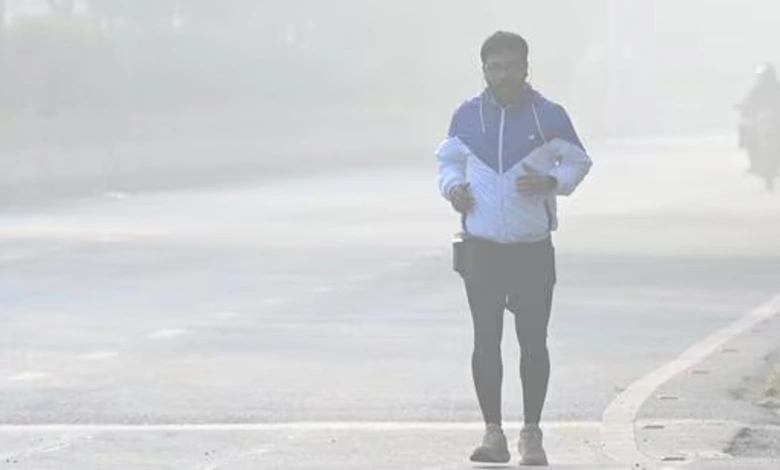
Meteorological factors, including elevated nighttime humidity and earlier western disturbances, have fueled the cold snap while trapping secondary pollutants. Officials note that light surface winds, with no major disturbances forecast in the near term, will sustain these conditions. An IMD official projected minimums around 9-10°C for the next few days, accompanied by shallow morning fog starting Sunday.
Farther afield, cyclonic storm Ditwah in the southwest Bay of Bengal is indirectly stifling north Indian winds, exacerbating stagnation in the Delhi-NCR region. As the system fades, December’s early days should stay mostly dry, with sharper drops in minimums expected once winds normalize. Maximum temperatures, however, are set to hold firm for at least five days.
Air quality offered little comfort, lingering in the “very poor” zone with a 24-hour average air quality index (AQI) of 306 on Saturday, per the Central Pollution Control Board’s (CPCB) daily bulletin—a dip from Friday’s 369, thanks to gustier winds. Yet, forecasts warn of a rebound as calm returns.
The Commission for Air Quality Management (CAQM) eased Stage 3 restrictions under the Graded Response Action Plan (GRAP) this week, lifting work-from-home orders, hybrid learning for Classes 5 and below, and construction bans. Critics, however, decry the move amid ongoing haze.
“The lack of efficient utilisation of data and tools available at the disposal of the regulators and government in controlling emissions at source systematically from key sectors, such as transport, industries, power, waste and construction sector, drives air quality into hazardous category whenever meteorological factors turn unfavourable,” said Sunil Dahiya, founder and lead analyst at Envirocatalysts.
“The government should step up and ensure time-bound targeted emission load reduction from all key sectors with transparency in actions and strict accountability framework. Emission load reduction at source is the only way to reduce air pollution because we can’t control the meteorology,” he added.
As winter tightens its grip, Delhi residents brace for fog-shrouded commutes and unrelenting smog, underscoring the capital’s annual battle against seasonal extremes.