
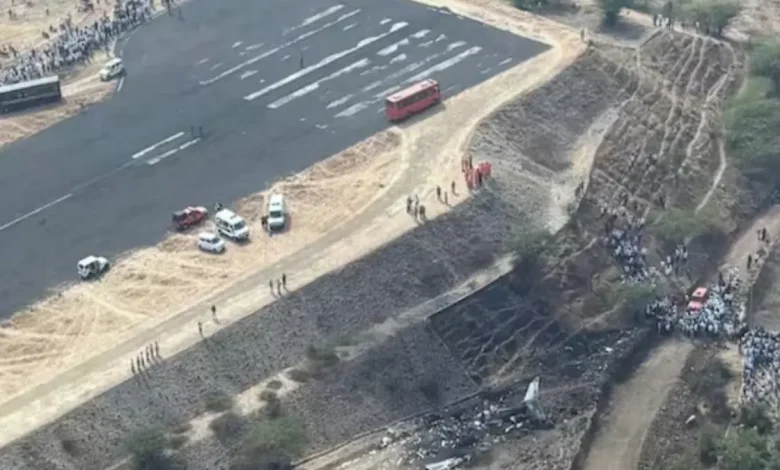
Mumbai : The death of Maharashtra Deputy Chief Minister Ajit Pawar in a Learjet crash at Baramati Airport on Wednesday. The tragedy draws parallels to past disasters at India’s tabletop runways, including the 2020 Air India Express overrun at Kozhikode amid poor visibility and monsoon rains, which killed 21, and the 2010 Mangalore crash that claimed 158 lives.
Baramati Airport, one of India’s six tabletop runways alongside Kozhikode, Mangalore, Lengpui, Shimla, and Pakyong, has once again brought attention to the inherent risks of such elevated strips. Perched atop hilltop plateaus with steep drops at either end, tabletop runways leave pilots minimal room for error and can create optical illusions that make the runway appear deceptively closer than it actually is.
A senior pilot, who is familiar with the runway in Baramati, dismissed the idea that the tabletop nature was the primary factor in Baramati plane crash. At the end of the day, a tabletop runway is still a runway,” he said. “What matters is the threshold, the touchdown point, and the available runway length, not whether it sits on a table, by the sea, or on a plain. The pilot instead pointed to visibility and decision-making during the approach as more critical factors.
The pilot also explained that during landing, an aircraft must be fully stabilised, a critical phase of deceleration and descent, but in the case of the Baramati plane crash, the plane, initially flying straight, suddenly performed what pilots call a “wing over,” flipping and crashing into the ground. The crash, which killed five people, occurred during the final moments of landing at the Baramati airstrip, a compact facility situated 604 metres above mean sea level and lacking advanced landing aids.




Read Also : Nipah Virus In India : Symptoms, Risks And Prevention Explained