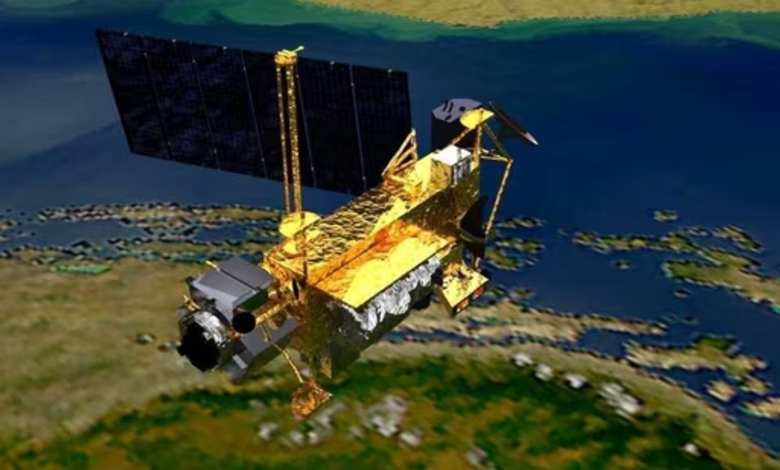
A satellite launched by the U.S. space agency more than a decade ago is expected to re-enter Earth’s atmosphere, bringing an end to its long mission studying space weather around the planet.
According to a report by BBC News, the spacecraft known as Van Allen Probe A is projected to make a fiery return to Earth after spending nearly 14 years in orbit. The satellite, weighing roughly 600 kilograms (about 1,323 pounds), was originally launched in August 2012 alongside its twin spacecraft, Van Allen Probe B, to examine Earth’s radiation belts.
The probes were designed to explore the Van Allen radiation belts, regions of charged particles trapped by Earth’s magnetic field. These belts can influence satellites, astronauts and communication systems, making their study important for understanding space weather and its impact on modern technology.
Both spacecraft exceeded their original mission timeline. Although the probes were initially expected to operate for only a few years, they continued collecting valuable scientific data until they were deactivated in 2019 after running out of fuel.
Tracking data from the U.S. Space Force suggests that the satellite’s re-entry could occur around 7:45 pm EDT, though predictions include a margin of error of about 24 hours. Scientists say the exact location where the satellite will fall cannot be determined in advance because atmospheric conditions can affect the timing and path of the descent.
Experts expect that most of the spacecraft will burn up as it passes through the atmosphere. However, some fragments may survive and reach the surface. Even so, the probability of anyone being harmed by falling debris is considered extremely low—estimated at roughly one in 4,200.
Space agencies continue to monitor the satellite’s descent, noting that uncontrolled re-entries are relatively common as older spacecraft gradually lose altitude and eventually return to Earth
Also Read: Instagram Down: Thousands Report Issues With Messages