
Creating Earth-Like Planets Requires Distant Stellar Explosions, New Research Reveals
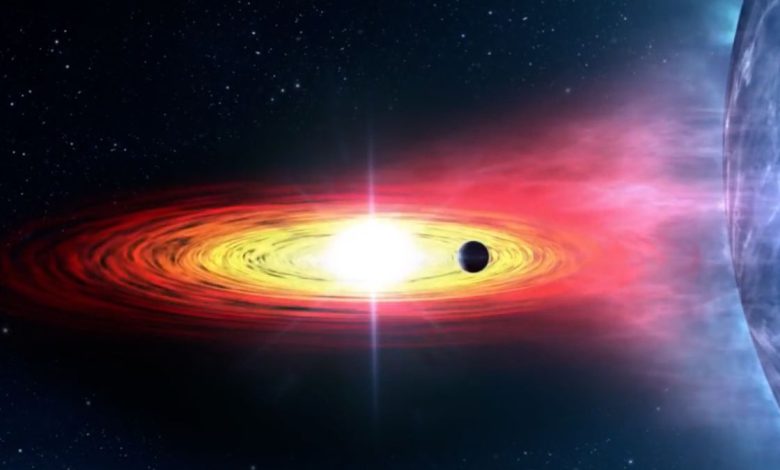
Earth stands as an exceptional celestial body capable of sustaining life, possessing a precise mixture of elements while occupying the ideal orbital zone around the Sun warm enough to nurture living organisms. Our world benefits from an atmospheric shield that protects us from harmful solar radiation, along with a protective magnetic field. Recent research indicates that forming a planet similar to Earth requires a heated solar system environment, which is initiated by short-lived radioisotopes.
As these isotopes undergo radioactive decay, they generate a warmer cosmic setting that prevents rocky planets like Earth from accumulating excessive amounts of water. Without the presence of these isotopes, Earth-sized worlds would transform into what scientists theorize as Hycean planets celestial bodies characterized by vast global oceans covered by dense, hydrogen-dominated atmospheres.
Evidence of these essential isotopes in our solar system comes from meteorite analysis, with scientific studies confirming the presence of SLRs within these space rocks. The creation of short-lived radioisotopes requires a supernova a catastrophic stellar explosion marking a star’s demise. Yet this violent cosmic phenomenon typically destroys the protoplanetary disk surrounding young stars. Remarkably, the Sun’s primordial disk survived intact, allowing our solar system to develop. The supernova requirement would suggest Earth-like worlds are uncommon throughout the cosmos.
Read more: Under The Scalpel Of AI: How India’s Healthcare Quietly Shifted In 2025

Earth-like worlds could be very common
Contrary to this notion, recent scientific findings propose that planets resembling Earth may actually be abundant across the universe. Scientists suggest that the nascent solar system was bathed in cosmic radiation originating from a supernova positioned at a considerable distance. According to Universe Today’s coverage, “if at least one supernova occurred within a parsec of us,” sufficient cosmic rays would have been generated to produce radioactive isotope levels matching those discovered in solar system meteorites. Since Sun-like stars typically emerge within stellar clusters, the probability of such a supernova occurring is relatively high, indicating that numerous Earth-like planets may exist throughout the galaxy.