
Supreme Court Questions Stray Dog Lovers: “Don’t Chickens, Goats Have Lives Too?”
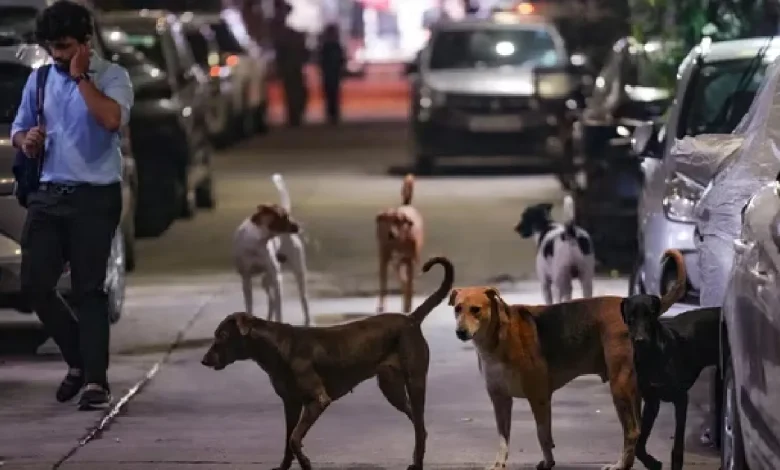
The Supreme Court of India continued its deliberations on Wednesday regarding multiple petitions addressing the stray dog crisis, challenging the narrow focus on canine welfare by asking, “What about other animal lives? What about chickens and goats? Don’t they have lives?”
During proceedings, one petitioner attempted to present a photograph depicting a 90-year-old individual who allegedly succumbed to injuries following a stray dog attack. Stating, “See, this is what happens when stray dogs attack,” the petitioner was interrupted by the bench, which declined to view the image, remarking, “There is no need to show this photo.”
Legal counsel representing victims argued before the court, “People are suffering due to stray dogs. Human rights have to be protected.” Drawing comparisons to global practices, the lawyer cited Japan and the USA, which operate “drambox” kill shelters where unclaimed abandoned dogs are euthanised if not adopted. He noted Japan’s absence of stray dog problems and zero rabies fatalities since 1950.
An animal rights advocate countered earlier, questioning, “We are talking about putting all stray dogs in the pounds. What are we going to do about the garbage and monkeys if the dogs disappear?”



The father of an eight-year-old Noida girl attacked by stray dogs last year also appeared before the bench. Referencing another 2023 incident where an eight-year-old child died, he alleged the Noida Authority’s inaction despite repeated complaints. He demanded that Resident Welfare Associations receive authority to designate their premises as “no dogs zones”.
Senior advocate Kapil Sibal, representing pro-animal interests, declared, “We are here as dog lovers and as lovers of the environment.” When the court posed its question about other animals’ lives, Sibal responded, “I have stopped eating chicken because they are caged in such cruel manner,” adding, “The other side is that if one tiger is a maneater all tigers don’t have to be killed as maneaters.”
Sibal advocated for the globally-adopted Capture, Sterilise, Vaccinate, Release (CSVR) model, claiming it “has brought down dog population in cities to almost zero levels” with proven success. He contended that in India, where garbage disposal issues and slums are widespread, eliminating stray dogs would exacerbate existing problems. He further argued that maintaining shelter facilities would impose substantial economic strain on municipal bodies, while corporations have failed to engage agencies and NGOs for implementing Animal Birth Control rules effectively.
Senior advocate Colin Gonsalves, appearing for animal welfare organizations, challenged the dog bite statistics, asserting the data was “five to seven times the actual number” since each injection dose gets recorded as a separate incident. He highlighted zero rabies cases across 19 states since 2021 and cautioned against “drastic and irreversible consequences” of mass impoundment driven by public hysteria.
The court observed, “Our order was modified and restricted to the institutional areas, not the roads. Why do we need stray dogs inside schools or hospitals or courts? What’s the objection to removing them from institutional areas?”
The Solicitor General expressed concern that discourse centred disproportionately on dog lovers rather than broader animal welfare. He suggested RWAs, not individuals, should determine whether dogs can roam gated communities, noting conflicts arise when 10% of residents insist on keeping strays despite 90% opposition. He questioned, “What happens if tomorrow someone says I want to keep a buffalo or cow in my home?”
Counsel for a dog bite victim stated, “My client is a senior citizen who is a dog bite victim. There are a series of dog lovers here. We are not against dogs, but we have to curb stray dogs.” Justice Vikram Nath assured, “We will hear the lovers and haters both today. We have all the time today for you.”