
Parliament Approves Bill To Levy Higher Excise Duty On Tobacco
New Delhi— In a swift legislative move, both houses of Parliament have endorsed the Central Excise (Amendment) Bill, 2025, paving the way for elevated excise duties on tobacco and its derivatives once the existing GST compensation cess expires. The Rajya Sabha approved the measure on Thursday, December 4, 2025, sending it back to the Lok Sabha after a brief debate, following the lower house’s passage of the bill on Wednesday, December 3.
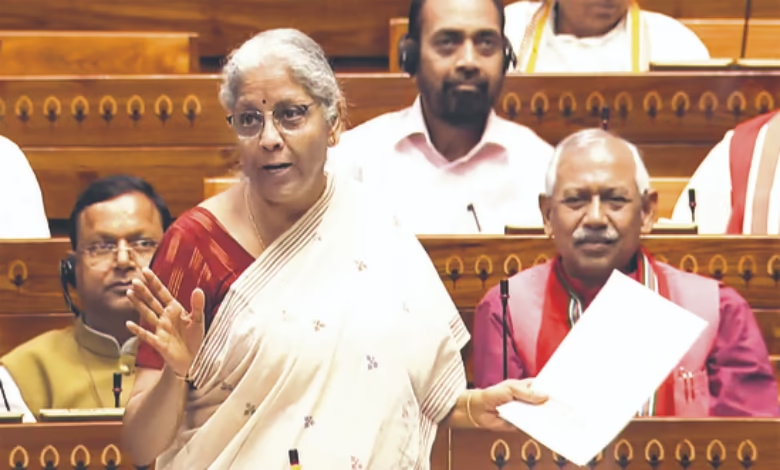
Finance Minister Nirmala Sitharaman, addressing concerns during the Rajya Sabha discussion, emphasized that the proposed changes do not introduce fresh taxation but maintain the prevailing tax load under the GST framework. She noted that deliberations in the most recent GST Council meeting had anticipated the cess’s discontinuation by month’s end, aligning with prior agreements.
“This is not an extra burden on consumers,” Ms. Sitharaman clarified. “Tobacco items will remain classified as demerit goods, subject to the maximum 40% GST rate, even without the compensation component.” The bill’s implementation hinges on the cessation of the GST compensation cess, currently applied to tobacco products. This levy is set to conclude shortly after the repayment of a ₹2.69 lakh crore loan, extended to states for pandemic-related revenue shortfalls, expected within the coming weeks.
Ms. Sitharaman underscored the constraints of the GST structure, which caps taxation on such goods at 40%, regardless of their health risks. “The effective tax on tobacco has inadvertently declined without the cess, potentially making these products more accessible—a scenario we aim to counteract,” she stated. To bridge this gap, the government is reverting to central excise mechanisms, reinstating duties under the Central Excise Act.



ALSO READ : Congress MP Renuka Chowdhury Brings Dog To Parliament, Sparks Row
The minister also highlighted ongoing initiatives to steer farmers away from tobacco cultivation toward alternative cash crops. These efforts span Andhra Pradesh, Bihar, Karnataka, Madhya Pradesh, Maharashtra, Odisha, Tamil Nadu, Telangana, Uttar Pradesh, and West Bengal, where over 100,000 acres have transitioned in recent years.
Even post-cess, Ms. Sitharaman reiterated, tobacco will face the highest GST slab of 40%, preserving its demerit status. She referenced World Health Organization benchmarks, pointing out that pre-GST tax levels—including the cess—still fell short of recommended thresholds, keeping affordability high and challenging public health objectives.
Upon enactment, the bill empowers the government to adjust central excise rates flexibly after the cess ends. At present, tobacco products bear a 28% GST alongside variable cess rates. The legislation outlines specific hikes: 60-70% on unmanufactured tobacco; 25% or ₹5,000 per 1,000 sticks (whichever is greater) on cigars and cheroots; ₹2,700 to ₹11,000 per 1,000 sticks on cigarettes, scaled by length and filter type; and ₹100 per kg on chewing tobacco.
Covering items like cigarettes, chewing tobacco, cigars, hookah, zarda, and scented varieties, the measure seeks to fortify fiscal tools against tobacco’s societal costs while adhering to established tax principles.