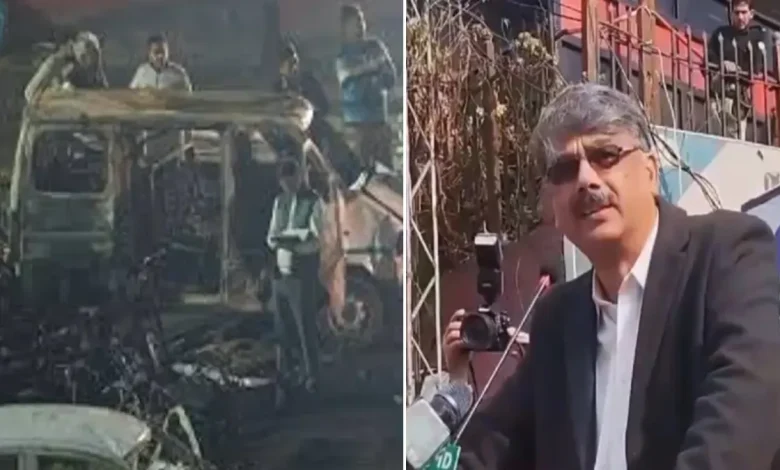
In yet another acknowledgment of Pakistan’s role in cross-border terrorism, Pakistani politician Chaudhry Anwarul Haq has claimed that terror groups attacked India “from the Red Fort to the forests of Kashmir”.
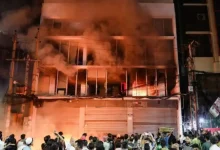
Haq’s reference to the Red Fort alludes to the car bomb blast near the iconic Delhi monument on November 10, which resulted in 14 deaths. The attack’s mastermind, Dr Umar Un Nabi, belongs to a Jaish-e-Mohammed (JeM)-linked “white-collar” terror network that was dismantled in Faridabad shortly before the incident. His mention of Kashmir’s forests refers to the April terror attack at Baisaran Valley in Pahalgam, Jammu and Kashmir, where 26 people lost their lives when terrorists opened fire on tourists.
In a video that has circulated widely online, Haq stated, “I earlier said that if you keep bleeding Balochistan, we’ll hit India from Red Fort to the forests of Kashmir. By the grace of Allah, we’ve done it and they’re still unable to count bodies”.
“Few days later, armed men entered and attacked (Delhi) and they haven’t probably counted all the bodies so far,” he added.

Pakistan has consistently accused India of fueling unrest in Balochistan to mask its economic difficulties and deflect from its sponsorship of cross-border terrorism. New Delhi has firmly rejected Islamabad’s allegations.
Following the Pahalgam attack, India launched a diplomatic campaign against Pakistan, implementing several measures including the suspension of the Indus Waters Treaty. New Delhi stated it would only restore the agreement if Islamabad ceased supporting cross-border terrorism.
This is not the first instance of a Pakistani politician revealing Islamabad’s involvement in promoting cross-border terrorism.
Recently, Khyber Pakhtunkhwa Chief Minister Sohail Afridi exposed the Pakistan government’s terror strategy, which he claimed benefits from “fake” terrorist attacks in the province.
Afridi accused Islamabad of orchestrating staged terrorist incidents while simultaneously obstructing peace efforts in the volatile Khyber region, according to Afghan media outlet TOLO News. He charged Islamabad with “manufacturing terrorism” for political purposes.
Pakistan-linked terror module’s sinister plan
Meanwhile, sources have revealed that the Faridabad terror module, connected to last week’s Red Fort car bomb blast in Delhi, was reportedly preparing to execute a major suicide attack on December 6, coinciding with the anniversary of the Babri Masjid demolition.
Agencies uncovered what the group internally designated as “Operation D-6” after interrogating terror suspects apprehended from Faridabad and Jammu and Kashmir. According to sources, the module had been planning a large-scale suicide strike using a vehicle-borne explosive device, with preparations underway for weeks.
The module allegedly comprised nine to ten members, including five to six doctors who worked at Al-Falah University in Faridabad and reportedly used their medical credentials to obtain chemicals and materials for explosives.
Interrogation of arrested suspects disclosed that Dr Shaheen Shaheed and Dr Umar, who executed the car blast outside the Red Fort, were central to the conspiracy.
According to preliminary investigations, Dr Shaheen was allegedly assigned the task of establishing and heading JeM’s women’s wing in India, under the banner of Jamaat-ul-Momineen, a newly formed female recruitment and operations network of the banned organization.
Dr Shaheen’s arrest followed the detention of Dr Muzammil Ahmad Ganai, who is also affiliated with Al-Falah University, which has come under scrutiny following the module’s exposure and the Delhi blast.