

Ahmedabad: India and Germany are poised to finalize multiple agreements covering semiconductors, critical minerals, a defence and security roadmap, and skill development during German Chancellor Friedrich Merz’s India visit and his meeting with Prime Minister Narendra Modi in Ahmedabad — a key engagement in the Modi Merz Ahmedabad 2026 diplomatic calendar, The Indian Express has learnt.
Chancellor Merz is making his first bilateral trip to India since taking office last May. A 25-member delegation of CEOs accompanies him, including top executives from a prominent submarine manufacturer — a strong signal that the long-discussed India Germany Submarine deal, including cooperation possibilities under Project 75I, will feature prominently in defence discussions.
The nations will introduce a defence and security roadmap designed to bolster India’s defence manufacturing base, alongside finalizing plans to establish a skill development centre in Hyderabad. A major highlight is expected to be a semiconductor agreement India Germany have been negotiating as part of their advanced-technology collaboration.
Merz and Modi held discussions shortly after the German Chancellor’s swearing-in and have since met twice — during the G-7 leaders summit in Canada last June and at the G20 summit in South Africa in November.


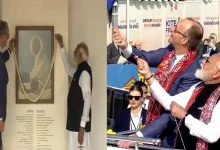
Notably, Chancellor Merz’s trip also initiates an extended period of engagement between India and the European Union, with EU leaders visiting India for Republic Day celebrations, followed by French President Emmanuel Macron’s arrival in February for the Artificial Intelligence Impact Summit in Delhi. Alongside these engagements, officials expect significant progress in the India EU FTA negotiations, which Germany is keen to accelerate.
Prime Minister Modi is anticipated to visit Germany later this year for inter-governmental consultations accompanied by a delegation of senior Cabinet ministers.
Chancellor Merz, arriving in Ahmedabad early Monday morning, will conduct bilateral talks with the Prime Minister at Mahatma Mandir.
Sources indicate that the bilateral strategic partnership will serve as the core focus of their conversation. A “high degree of mutual trust and confidence” has shaped political and defence relations between the two nations over the past 25 years. Discussions will also touch on German defence technology being supplied to India to strengthen preparedness — a theme closely connected to the potential India Germany Submarine deal and related naval modernization projects such as Project 75I.
The two leaders will address the war in Ukraine, where Germany has taken a strong position as part of the Coalition of the Willing in Europe. Furthermore, uncertainty triggered by recent actions from US President Donald Trump — including withdrawals from international organizations and disruptive geopolitical moves — is expected to feature in conversations as India and Germany explore ways to strengthen a multi-polar world order.
The China challenge will also be discussed, as India considers Beijing a long-term strategic threat while Germany views China as both a strategic competitor and a major economic partner.
The leaders are also expected to review progress on the India EU FTA negotiations, which officials hope will conclude before the India–EU Summit scheduled for January 26–27, where EU leaders Ursula von der Leyen and Antonio Costa will be present.
Germany’s business community, especially its automobile sector, is believed to be pushing for stronger market access in India a priority Merz is expected to reinforce. According to officials, Germany remains “a leading partner for India to achieve its Viksit Bharat goal.”
According to sources, the bilateral conversations will rest on four key pillars:
Germany and Make in India
More than 2,000 German companies operate in India. Many are now seeking to expand their footprint under the Make in India initiative. The Green and Sustainable Development Partnership continues to support national missions such as Green Hydrogen, Sustainable Urban Mobility, Metro development, and Solar Rooftop projects.
Germany and Skill India
Germany is one of India’s strongest partners in skills training. Multiple German entities are collaborating with Indian agencies to build a new skill development centre for renewable energy professionals.
Germany and Green India
German companies are rapidly expanding their presence in India’s renewable energy and next-gen green infrastructure sectors. Collaboration in green hydrogen and emerging clean technologies is expected to deepen further.
Next-gen Technology Partnership
Germany is now a key supplier of high-technology products after easing export controls. Cooperation spans AI, semiconductor manufacturing, digital technologies, quantum innovations, and more. Progress on the semiconductor agreement India Germany is expected to be a major talking point.
Mobility partnership and people-to-people ties will also be highlighted. Around 60,000 Indian students are currently enrolled in German universities predominantly in STEM fields and additional concessions for Indian students are expected soon. Germany also continues to attract skilled Indian professionals, which both governments view positively.
The two leaders will also discuss UN reforms, especially since both nations are part of the G-4 grouping along with Japan and Brazil lobbying for permanent representation on the UN Security Council.