India’s space program encountered a significant setback on January 12, 2026, as ISRO’s PSLV-C62 mission ended in failure, resulting in the loss of all 16 satellites despite a successful initial launch from Sriharikota.
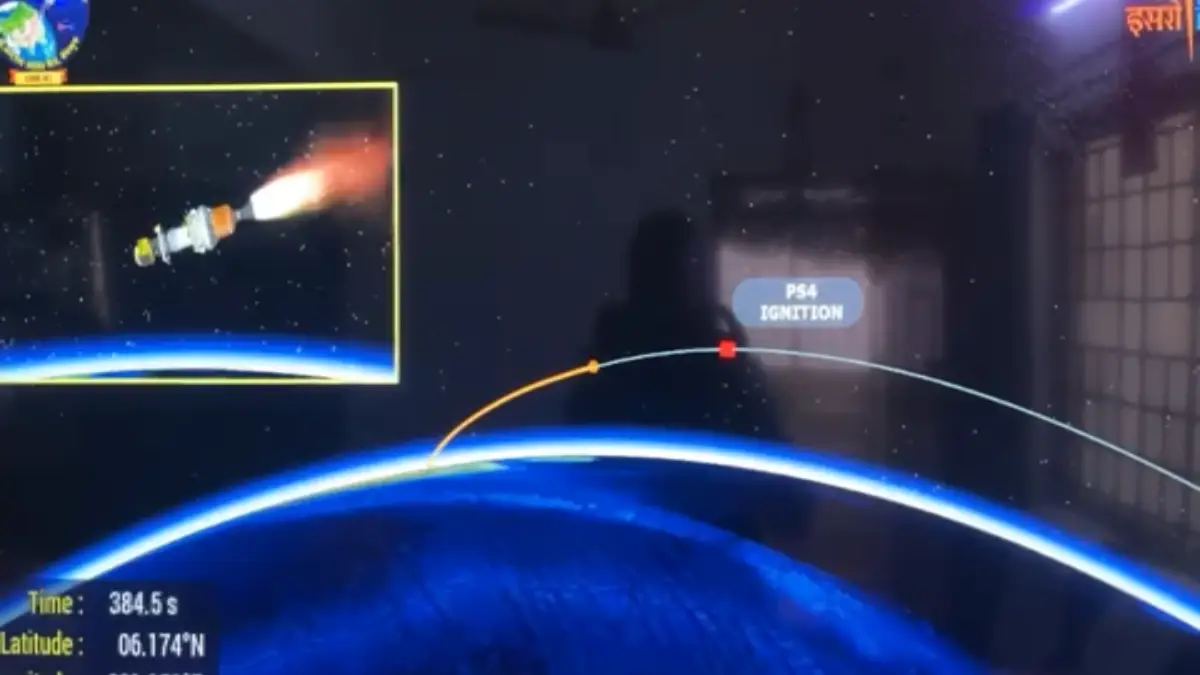
The 260-tonne PSLV-DL variant lifted off at 10:17 AM IST, executing its first two stages and separation phases without incident, drawing attention from viewers across the nation.
Mission control, however, fell silent following third-stage ignition, with telemetry updates ceasing and confirming a failure to achieve orbit insertion, similar to the previous year’s PSLV-C61 incident.
“The performance of the vehicle at the end of the third stage was nominal, and then a disturbance in roll rates and a deviation in flight path was noticed. We are analysing the data, and we will come back with more updates,” ISRO chief V Narayanan confirmed.
Mission Details
The launch carried DRDO’s EOS-N1 (Anvesha) primary satellite designed for maritime surveillance, along with 15 co-passenger satellites. These included payloads from Indian students, private company experiments, and Spain’s KID re-entry demonstrator. The mission targeted a 505 km sun-synchronous orbit.
While the vehicle successfully completed solid booster separation, anomalies emerged during the third stage approximately eight minutes after liftoff, echoing the chamber pressure drop that caused the failure of EOS-09 during the C61 mission.
ISRO confirmed the flight deviated from its planned trajectory, which will prompt a Failure Analysis Committee investigation. The space agency has not yet disclosed the root cause of the malfunction.
Second PSLV Failure in Eight Months
This incident represents PSLV’s second uncommon failure within an eight-month period, impacting its 94% success record established over 63 previous flights that successfully launched missions including Chandrayaan-1 and Aditya-L1.
Following the unpublished report from the C61 failure, which raised transparency questions, the C62 third-stage repetition has sparked concerns regarding solid-fuel motor reliability, potential nozzle problems, or casing integrity issues within the accelerated 2026 launch schedule.
Commercial rideshare programs managed by NSIL now face diminished confidence, potentially affecting the growth of India’s private space sector.
The consecutive failures present challenges to ISRO’s 2026 objectives, which include launching over 100 satellites, expanding NavIC, and advancing Gaganyaan preparations, particularly as private competitors emerge in the market.
While PSLV’s modular design enables rapid corrective measures, the lack of transparency could invite parliamentary examination as seen in 2025.
VIDEO | Sriharikota: Sharing an update on the PSLV-C62/EOS-N1 mission, ISRO Chairman Dr. V. Narayanan says, “Today, we attempted the PSLV-C62 EOS-N1 mission. The PSLV vehicle is a four-stage vehicle with two solid stages and two liquid stages. The performance of the vehicle up to… pic.twitter.com/bq8Eh3rkyi
— Press Trust of India (@PTI_News) January 12, 2026
Chairman V. Narayanan’s team has committed to quick recovery efforts, considering LVM3 alternatives while maintaining self-reliance as the global community watches India’s space program resilience.
-
-
-

-