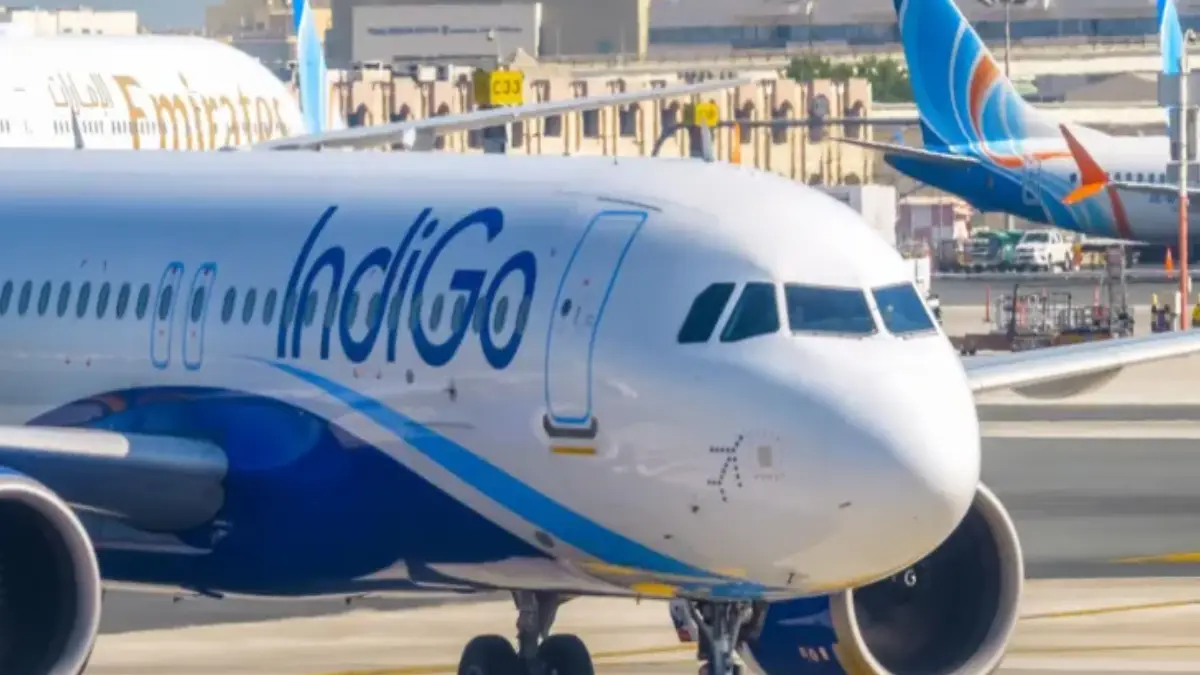
InterGlobe Aviation Ltd.’s IndiGo, India’s leading airline, has returned to regular scheduling following significant disruptions in the opening days of December, as detailed in a recent Goldman Sachs research report.
The carrier had been forced to cancel approximately 800 domestic flights per day from December 3 to 7. Operations have since normalised, with the airline now conducting 2,000 to 2,200 flights daily and serving between 460,000 and 490,000 domestic passengers.
Goldman Sachs continues to view IndiGo favourably, highlighting its market leadership, cost-efficient model, reliable plans for fleet expansion, and the expanding pool of aspirational travellers in India. Despite the challenges, the brokerage has reaffirmed its ‘Buy’ recommendation on the stock, though it lowered the 12-month target price slightly to Rs 5,600 from Rs 5,700, implying a potential upside of 12.6%.
The disruptions drew scrutiny from regulators, resulting in a 10% reduction in allocated slots for the winter schedule, a temporary suspension of relaxed Flight Duty Time Limitations norms for IndiGo until February 10, 2026, and imposed limits on fares. The issues stemmed from a shortfall of 60-70 effective pilots, adverse weather, technical glitches involving Microsoft systems, and the airline’s streamlined operations that magnified network-wide effects.
ALSO READ : IndiGo Flight Disruptions : DGCA Dismissed Four Flight Operations Inspectors As Part Of Its Crackdown
Although IndiGo’s total pilot count has risen above 6,000 from 5,456 as of March 31, 2025, the effective crew strength dipped to 5,085 during the period due to leaves, training, and notice periods. The company has provided vouchers to impacted passengers as compensation.
Goldman Sachs anticipates roughly 10,000 flight cancellations for December, translating to a 4.8% drop in available seat kilometres for the quarter. However, year-on-year growth in this metric is projected to hold steady in the following quarter.
On the financial side, the firm has accounted for an estimated Rs 1,620 crore foreign exchange loss due to further rupee depreciation, plus expenses related to passenger vouchers spread over the second half of the fiscal year.
Key risks identified by Goldman Sachs include escalating jet fuel prices, which comprise 35%-50% of costs; ongoing rupee depreciation against the dollar, given that 72% of expenses are in USD, covering fuel and aircraft leases; and potential delays in adding new capacity.
Overall, while the winter schedule interruptions have pressured operations and fiscal 2026 estimates, Goldman Sachs emphasises IndiGo’s fundamental advantages and dominant position as reasons for optimism in the longer term.
-

-

-

-