
India Rejects Pakistan’s Minority Rights Allegations, Says Islamabad’s Own Record ‘speaks For Itself’
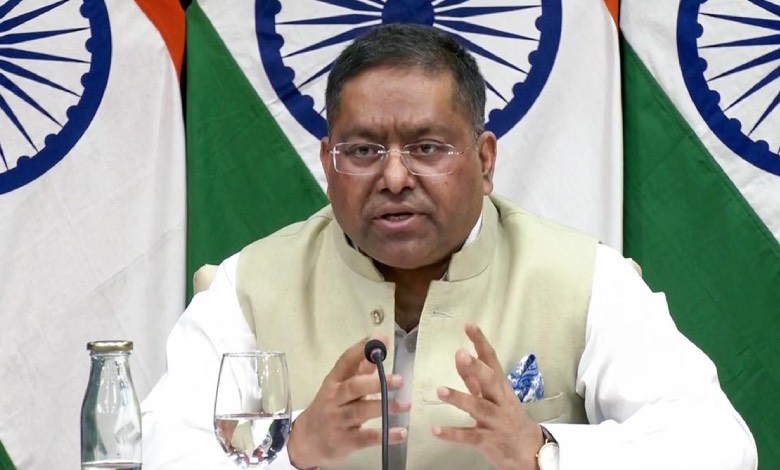
India on Monday firmly rebuffed comments made by Pakistan’s Ministry of Foreign Affairs regarding purported incidents involving minorities in India, stating that Islamabad’s track record on minority rights “speaks for itself.”
Responding to media inquiries about statements by Pakistani Foreign Office spokesperson Tahir Andrabi, External Affairs Ministry spokesperson Randhir Jaiswal said New Delhi categorically rejected the claims, noting they originated from a country with a well-documented and troubling human rights record.
Diversionary tactics won’t mask reality
Jaiswal emphasized that Pakistan’s treatment of religious minorities has long been a serious concern, adding that attempts to deflect attention through unfounded accusations would not change the facts on the ground.
“We reject the reported remarks from a country whose abysmal record on this front speaks for itself. Pakistan’s horrific and systemic victimisation of minorities of various faiths is a well-established fact. No amount of finger-pointing will obfuscate it,” he stated.




Context of Pakistan’s claims
The MEA’s statement came after Andrabi alleged persecution of minorities in India, claiming the issue was a matter of “deep concern” for Pakistan while urging the international community to take notice.
India responded by highlighting Pakistan’s own history, which has drawn repeated criticism from international human rights organizations.
Blasphemy laws as tool of oppression
New Delhi pointed to Pakistan’s systematic misuse of blasphemy laws against minorities and vulnerable groups. Pakistan’s blasphemy provisions, particularly Section 295-C, have faced global condemnation for vague wording and severe punishments, including capital punishment.
Read More:
These laws have disproportionately affected religious minorities, especially Christians, Ahmadis, and Hindus, frequently resulting in mob violence, arbitrary detentions, and extended incarceration.
Decades-long pattern of persecution
Pakistan has a documented history of violence and discrimination against religious minorities, characterized by mob attacks, communal riots, legal marginalization, and forced conversions spanning decades.
The Ahmadi community has endured persistent state-sanctioned and societal persecution, while Christians have repeatedly faced communal violence. During the 2009 Gojra riots in Punjab, mobs attacked Christian neighborhoods, killing eight people and injuring numerous others.
Hindu religious sites have also been targeted during communal tensions, including the 2020 attack on a Hindu temple in Karak district of Khyber Pakhtunkhwa.
India has consistently maintained that Pakistan must address its own record of minority persecution before leveling baseless accusations against others, emphasizing that credibility on human rights issues begins domestically.