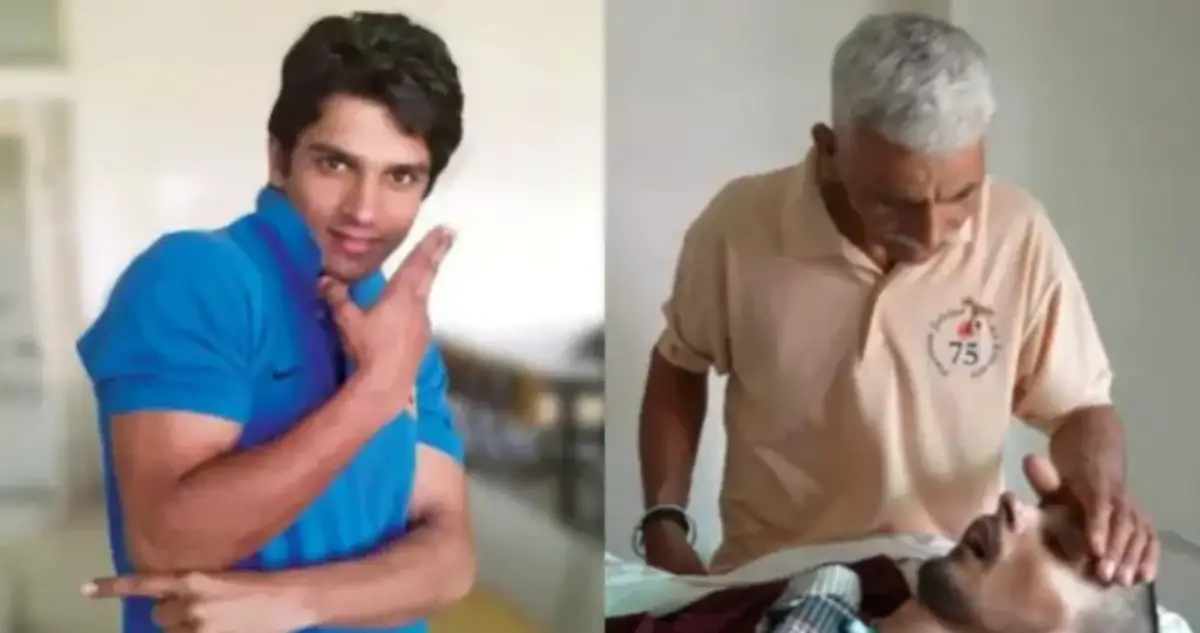
New Delhi : The Supreme Court on Thursday said it would consider withdrawing life-sustaining treatment for a 32-year-old man, Harish Rana, who has remained in a vegetative state for the past 13 years, as it reserved its order in the passive euthanasia petition filed by his parents. These issues are delicate. We are also mortals. Who are we to decide who lives or dies? We will consider withdrawing life-sustaining medical treatment,” the Supreme Court said.
Harish, a resident of Delhi’s Mahavir Enclave, left home in his teens to pursue college in Chandigarh. However, the world of the Ranas came crashing down on August 20, 2013, after Harish fell from the fourth-floor balcony of his PG accommodation, suffering severe head injuries. The amicus curiae sought passive euthanasia for Harish, calling it a case of accelerating natural death.
Explaining the passive euthanasia process, the amicus said Harish would be put in palliative care, where his feeding tubes would be removed. “There will be no intervention. He will be given sedatives so he doesn’t feel any pain. He will be made comfortable till his death,” the amicus said. While active euthanasia is illegal, passive euthanasia was recognised by the Supreme Court in 2011 in the Aruna Shanbaug case.
Shanbaug, a nurse in Mumbai’s KEM Hospital, was sexually assaulted by a ward boy in 1973, leaving her in a vegetative state for over 40 years. Concurring with the amicus’s argument, ASG Bhati also sought euthanasia for Harish. The ASG underlined that this would be the first time that the guidelines laid down by the court would be implemented. The death should not be caused due to the omission.
Read Also : Supreme Court Rejects Plea in Vijay’s ‘Jana Nayagan’ Certification Row, Directs Makers to Madras High Court
-

-
-
-