
Delhi Grapples with Toxic Air and Bitter Cold as AQI Surpasses 400 and Orange Alert Issued
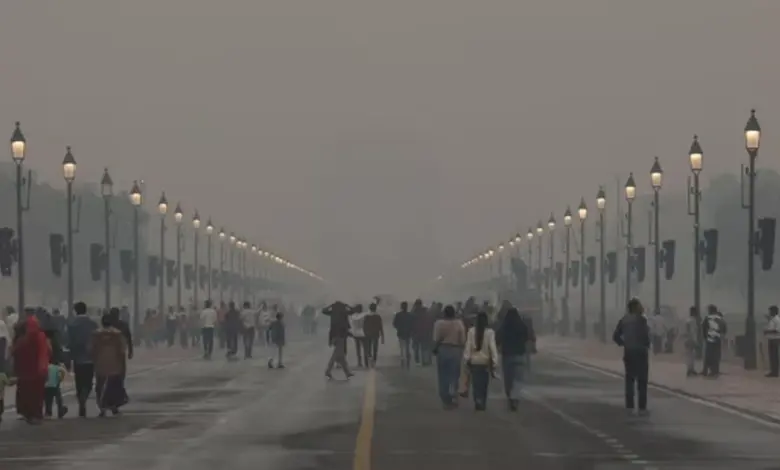
New Delhi – Residents of the national capital faced a severe dual challenge on Monday as air pollution reached hazardous levels and chilly weather prompted an official warning.
According to data from the Central Pollution Control Board (CPCB), Delhi’s Air Quality Index (AQI) stood at 403 in the morning, placing it firmly in the “severe” category. The deterioration began on Sunday, when the AQI started in the “very poor” range but worsened by evening due to persistent dense fog and elevated pollution trapping pollutants close to the ground.
Several monitoring stations reported even higher readings, including Anand Vihar at 458, Ashok Vihar at 430, Burari Crossing at 401, Chandni Chowk at 426, Jahangirpuri at 439, Mundka at 416, Narela at 404, and Okhla Phase-2 at 411. Since December 25, the air quality has steadily declined, prompting experts to highlight risks particularly for vulnerable groups such as children, the elderly, and individuals with respiratory or cardiac issues.
Compounding the pollution crisis, the India Meteorological Department (IMD) issued an orange alert for Delhi on December 29, forecasting a high of around 22 degrees Celsius and a low of 7 degrees Celsius. Dense to very dense fog is expected to continue in parts of north India, including Himachal Pradesh, Punjab, Haryana, Chandigarh, and western Uttar Pradesh until December 31, with eastern Uttar Pradesh likely affected until January 1, followed by gradual improvement.




ALSO READ : Delhi Police Nets Nearly 1,000 in Major Pre-New Year Crackdown in Southeast District
The Commission for Air Quality Management (CAQM) is closely monitoring developments, with a potential meeting of the Graded Response Action Plan (GRAP) sub-committee if conditions worsen further. Currently, Stage-3 restrictions remain enforced across the National Capital Region, prohibiting private construction activities and the operation of BS-3 petrol and BS-4 diesel vehicles. Stage-4 measures, previously revoked on December 24, would require an AQI exceeding 450.
The Delhi government emphasized that effective pollution mitigation depends on reducing vehicular traffic, with ongoing efforts to promote shared transportation, electric vehicles, and expanded automated fitness testing for commercial vehicles to curb emissions. Chief Minister Rekha Gupta stated that the administration’s transport policy aims to decrease road vehicles without inconveniencing commuters.