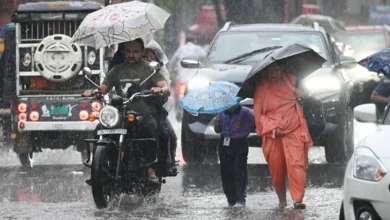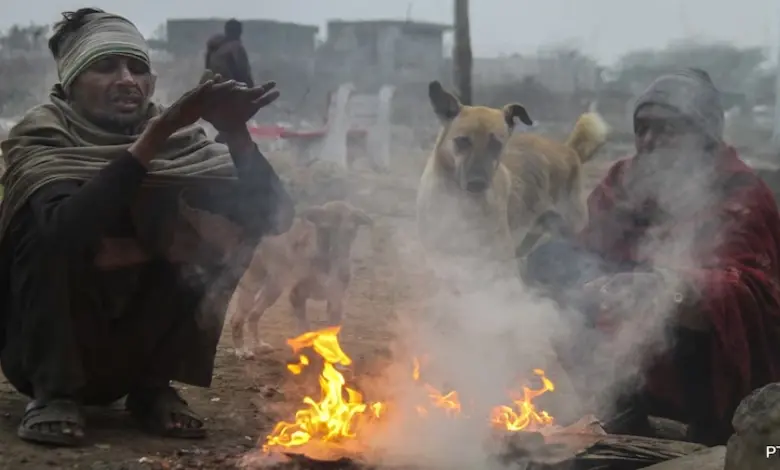
New Delhi woke up to a sharp chill on Monday as the national capital recorded its lowest minimum temperature of the season so far, plunging to 3.2 degrees Celsius amid persistent cold wave conditions. This marked the coldest January morning in Delhi since 2023, according to data from the India Meteorological Department (IMD).
The IMD reported that the minimum temperature at Safdarjung Observatory—the city’s principal weather station—settled at 3.2 degrees Celsius, 4.2 notches below the seasonal average. Other stations reflected similar drops: Palam recorded 3.3 degrees Celsius (four notches below normal), Lodhi Road 3.0 degrees Celsius (three notches below normal), Ridge 4.2 degrees Celsius (3.9 notches below normal), and Ayanagar 3.2 degrees Celsius (3.9 notches below normal).
Daytime temperatures remained subdued, with the maximum reaching 20.6 degrees Celsius overall—0.7 degrees above normal—though station-wise readings stayed below average. Safdarjung and Lodhi Road both logged 18.8 degrees Celsius, Palam 15.4 degrees Celsius, Ridge 18.8 degrees Celsius, and Ayanagar 18.1 degrees Celsius.
Cold wave conditions gripped the city for the second consecutive day, following intense spells at isolated locations on Sunday, when Palam, Ridge, and Ayanagar dipped below 4.0 degrees Celsius. An IMD official noted that Sunday marked the first appearance of cold wave conditions in the national capital this winter season.
ALSO READ : Ex-UN Officer Couple In Delhi Lose ₹14.85 Crore In 15 Days After Fake ‘Digital Arrest’ Scam
The IMD forecast mainly clear skies ahead, but with moderate fog at many places and dense fog at isolated spots during morning hours. Cold wave conditions are expected to persist at a few locations, with Tuesday’s minimum likely around 4 degrees Celsius and the maximum near 20 degrees Celsius.
Meanwhile, Delhi’s air quality remained poor, with the 24-hour average Air Quality Index (AQI) standing at 297, according to the Central Pollution Control Board (CPCB). In the evening, 21 monitoring stations reported ‘very poor’ levels, and 17 stayed in the ‘poor’ category, with Anand Vihar recording the highest at 343. The Air Quality and Weather Services (AQWS) predicted ‘very poor’ conditions from January 13 to January 15, continuing into the following six days.
The Decision Support System (DSS) attributed pollution contributions as follows: transport sector 13.7 per cent, Delhi and peripheral industries 11.6 per cent, waste burning 1.2 per cent, construction activities 1.7 per cent, and residential sources 3.4 per cent. Among National Capital Region districts, Jhajjar led at 21.7 per cent, followed by Bhiwani (6.2 per cent), Rohtak (3.7 per cent), Gurugram (2.0 per cent), and Sonipat (1.6 per cent).