
Delhi Gripped by Dense Fog and Severe Pollution as Red Alert Issued
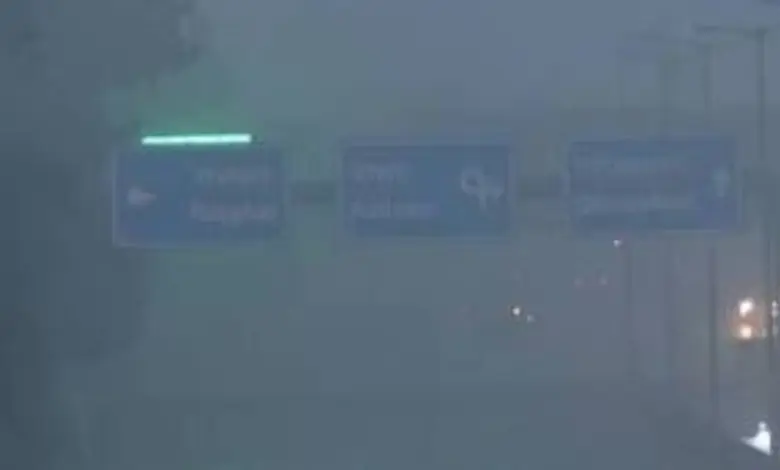
Dense fog enveloped New Delhi on Monday, drastically reducing visibility across the city and causing widespread disruptions to air travel while driving air quality back into the “severe” zone.
The India Meteorological Department (IMD) has declared a red alert for dense fog expected on Tuesday morning.
Visibility at Indira Gandhi International Airport and Safdarjung plummeted to 50 meters at 8 a.m., later improving slightly to 100 meters by 9 a.m., according to IMD reports.
The low-visibility conditions led to significant chaos at the airport, with at least 128 flights canceled, eight diverted, and nearly 200 delayed, based on official statements and data from Flightradar24.com. The facility continued operations under Category-III protocols, designed for landings in poor visibility.




The Directorate General of Civil Aviation (DGCA) has designated the period from December 10 to February 10, 2026, as the official fog season, anticipating recurring disruptions during these months.
ALSO READ : Delhi Grapples with Toxic Air and Bitter Cold as AQI Surpasses 400 and Orange Alert Issued
Fog also affected railway services, resulting in delays for multiple trains.
The city experienced a minimum temperature of 8.3 degrees Celsius—1.5 degrees above normal—and a maximum of 22.5 degrees Celsius, which was 2.1 degrees higher than usual, the IMD noted.
Air pollution worsened, with the 24-hour Air Quality Index (AQI) reaching 401, falling into the “severe” category as per Central Pollution Control Board (CPCB) data. This marked a deterioration from Monday’s AQI of 390, classified as “very poor.”
Of the city’s monitoring stations, 24 recorded “severe” air quality, while 13 registered “very poor,” according to the CPCB’s SAMEER app.
The CPCB defines AQI ranges as follows: 0-50 “good,” 51-100 “satisfactory,” 101-200 “moderate,” 201-300 “poor,” 301-400 “very poor,” and 401-500 “severe.”
Forecasts from the Air Quality Early Warning System indicate that pollution levels will remain in the “very poor” category on Tuesday and Wednesday, before slipping back to “severe” on New Year’s Day.