Delhi’s Smog Chokes Capital as AQI Hits 397; Demonstrators Pepper-Spray Officers in Tense Standoff
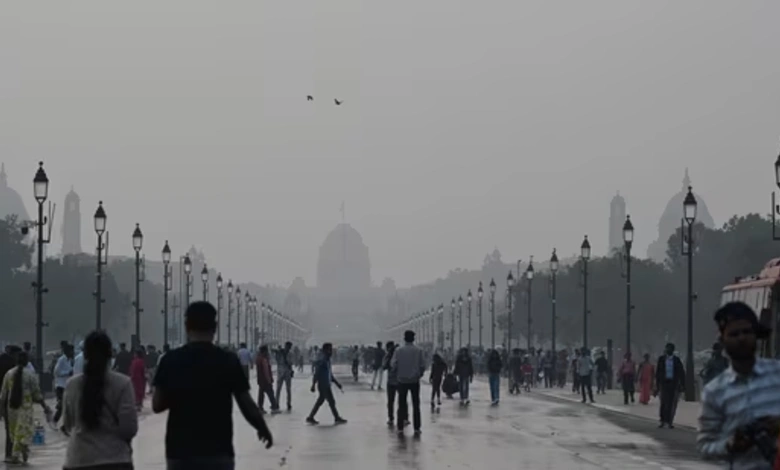
New Delhi – Delhi’s air pollution crisis deepened on Monday, with the city’s overall Air Quality Index (AQI) registering 397 at 6 a.m., firmly in the “very poor” range, according to figures from the Central Pollution Control Board (CPCB). Low wind speeds and dropping temperatures have exacerbated the haze, marking the 18th consecutive day of hazardous conditions since November 6, including three days in the “severe” category from November 11 to 13. Factors like winter’s arrival and post-Diwali crop burning in neighboring regions have compounded the distress.
Data from CPCB revealed stark disparities across the capital: Of 39 monitoring stations, 20 reported AQIs exceeding 400, thrusting them into the severe zone, while the remaining 19 hovered between 300 and 400, still very poor. The most alarming readings came from Vivek Vihar and Rohini at 458 each, followed by Jahangirpuri (455), Wazirpur (448), and Delhi Technological University (444). On Sunday, the 24-hour average AQI was 391 at 4 p.m., up from 370 the previous day and 364 on Friday, showing no signs of abatement.
The persistent toxic smog has heightened public health risks, with a surge in respiratory, eye, and lung ailments reported by hospitals. Medical professionals have urged immediate action, prompting authorities to enforce measures from Stage 4 of the Graded Response Action Plan (GRAP) under the existing Stage 3 protocols to curb emissions.
In a bold display of frustration, a group of citizens rallied against the choking air at India Gate on Sunday evening, decrying the government’s response to the pollution emergency. “When the state makes the air itself poisonous, it becomes necessary for people to unite and raise their voices for their own survival,” the organizers stated.


ALSO READ : Delhi : AQI Surges Past 400, Strangling Key Neighborhoods in Polluted Grip
The gathering, near the C-Hexagon, quickly escalated into chaos as police intervened to clear the area. Officers explained that the protest was blocking ambulances and medical teams, but demonstrators resisted. A scuffle ensued, with some protesters deploying chilli spray—also known as pepper spray—against the personnel, an uncommon tactic in such demonstrations.
“This was very unusual. For the first time, protesters used pepper spray on officers managing traffic and law and order,” Deputy Commissioner of Police (New Delhi) Devesh Kumar Mahla told PTI. Several officers suffered eye and facial irritation and were treated at Ram Manohar Lohia (RML) Hospital. A senior police officer, quoted by PTI, noted the rarity of the incident: “We tried to explain that emergency vehicles were stuck and needed clear access, but they refused to move. The situation then turned into a scuffle, and some protesters used chilli powder on our personnel.”
Authorities have initiated legal proceedings against those responsible, vowing to prevent future disruptions while addressing the underlying air quality grievances.