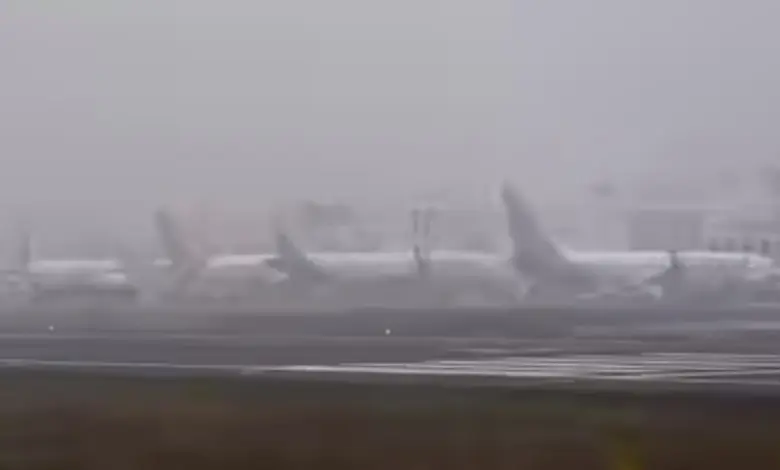
New Delhi: The season’s first blanket of dense fog enveloped Delhi on Monday, plunging visibility to zero and triggering widespread disruptions at Indira Gandhi International Airport (IGI).
Departures were halted for nearly five hours, from 4 a.m. to 9 a.m., as visibility fell below 100 meters. In total, 228 flights were cancelled—131 departures and 97 arrivals—while more than 800 were delayed and five diverted to alternate airports, according to officials. The knock-on effects persisted well into the day, even after conditions improved around noon.
The India Meteorological Department reported a sharp drop in visibility starting Sunday night, reaching zero at Safdarjung by 12:30 a.m. Monday and remaining critically low until early morning. At Palam, near the airport, the lowest reading was 50 meters at 4 a.m. Visibility began recovering after 9 a.m., reaching 700 meters at Safdarjung by 10:30 a.m. as sunlight broke through.
Low-visibility procedures were activated at IGI from 4 a.m. Flightradar24 data showed around 260 arrivals and 400 departures affected by delays through Monday evening. Some aircraft arrived late due to fog at originating airports, further compounding outbound delays.
ALSO READ : Delhi Sees Slight Air Quality Improvement, But Hotspots Remain in ‘Severe’ Zone
Pilots certified for CAT III instrument landing can operate in as little as 50 meters visibility for landings and 125 meters for takeoffs, but non-certified crews require clearer conditions, leading to extended holding times.
Fog also impacted airports across northern India, with at least 100 trains delayed. The civil aviation ministry noted that flights might face delays, diversions, or cancellations, urging passengers to check updates with airlines and allow extra travel time.
IndiGo stated that low visibility below operational minima had severely affected services in Delhi and northern India, beyond their control, with some flights proactively cancelled for safety. Air India attributed disruptions to poor visibility impacting all carriers, cancelling select flights to prevent prolonged uncertainty.
The Director General of Civil Aviation reviewed fog preparedness, directing officials to monitor passenger issues and ensure airlines follow standard procedures.
-

-

-

-