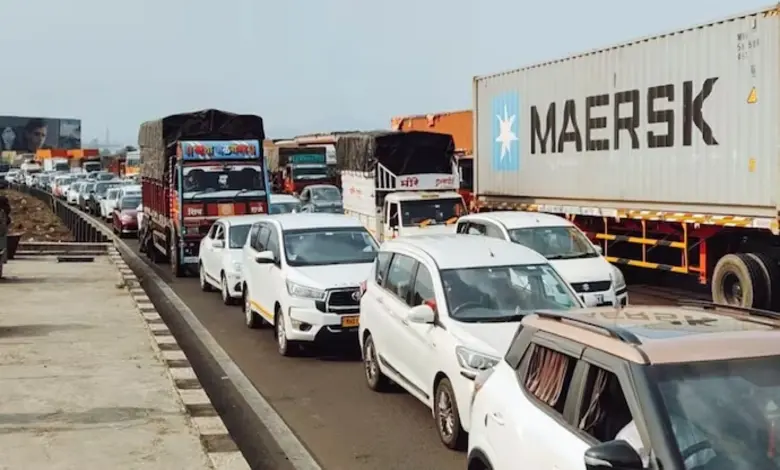
A severe traffic jam—one of the worst in the history of the Mumbai-Pune Expressway—lasted more than 30 hours, stranding thousands of motorists without basic amenities after a tanker carrying highly flammable propylene gas overturned and leaked near the Adoshi tunnel.
The incident unfolded on Tuesday evening, February 3, 2026, around 5:06 pm to 5:15 pm, when the tanker (registration NL01 AG 4250), transporting 21 tonnes of propylene gas from Kochi to Surat, lost control—allegedly due to negligent high-speed driving on the downhill Borghat section in Raigad district’s Khandala Ghat, about 90 km from Mumbai. The vehicle overturned on the Mumbai-bound carriageway, causing a significant gas leak from damaged valves under high internal pressure (initially 8 psig, gradually dropping to 2 psig over roughly 21 hours).
Authorities promptly closed the entire Mumbai-bound lane as a precaution against potential ignition or explosion, enforcing a 500-metre safety exclusion zone. This triggered enormous tailbacks: Pune-bound traffic extended to the Khalapur toll plaza, while Mumbai-bound queues reached 10-12 km or more in places. The expressway, which handles an average of about one lakh vehicles daily, ground to a halt, affecting commuters in both directions.
Emergency crews—including the National Disaster Response Force (NDRF), fire brigade, Highway Police, and a specialized chemical response team from Bharat Petroleum Corporation Limited (BPCL)—rushed to the scene. Firefighters continuously sprayed water to cool the tanker and suppress risks, while experts transferred the gas to replacement tankers. The damaged vehicle was finally cleared late Wednesday night (February 4, 2026), with Mumbai-bound traffic resuming gradually around midnight and full normalization taking additional time into early Thursday.
ALSO READ : Mumbai Airport: Air India And IndiGo Planes Scrape Wingtips
The ordeal left passengers in dire conditions. Families with young children ran out of milk, diapers, food, and water; elderly travelers suffered dehydration, discomfort, and anxiety from prolonged immobility without toilets or safe exit points. Pune resident Rohit More described struggling with his toddlers overnight, calling it exhausting and unprepared-for. Elderly couple Vilas and Shalini Minjare, rerouted via Tamhini Ghat, highlighted the lack of emergency provisions for vulnerable groups.
Pune entrepreneur Sudhir Mehta, stuck for eight hours, arranged a helicopter evacuation and shared aerial views on X, advocating for mandatory emergency exits and helipads along the corridor to handle future crises.
Khopoli police registered an FIR against driver Ratan Singh Uday Narayan Singh (44, from Uttar Pradesh), who sustained injuries including to his right palm and was treated at MGM Hospital, Kamothe; his co-worker Monu Singh was unharmed.
Maharashtra Chief Minister Devendra Fadnavis directed the Maharashtra State Road Development Corporation (MSRDC) to investigate and submit recommendations for better emergency management on this vital link.
Highway Police Superintendent Tanaji Chikhale explained the challenges from the tanker’s high pressure and valve damage, urging use of alternate routes like Tamhini Ghat, Karjat, Malshej Ghat, or Aale Phata—though many became congested too.
The disruption, which also cancelled 139 MSRTC bus trips, underscored persistent gaps in preparedness on Maharashtra’s key expressway.
-
-
-
-