Mumbai: Mumbai Municipal Corporation elections are being held today. These elections are taking place after nearly nine years. The last time voting for Mumbai Municipal Corporation elections was held in 2017.
Amid the pile of intensifying civic problems in Mumbai city, the major parties contesting this year’s Mumbai Municipal Corporation elections seemed engrossed in just one discussion. That discussion was: who will become Mumbai’s Mayor?
The core focus of this discussion was clearly centered on religious identity and linguistic identity. The campaign made it evident that both identities have seemingly come into a tense situation in Mumbai.
In the last few decades, especially after the rise of ‘Mandal-Kamandal’ politics in the 90s, the word polarization has become common in every election. Its general meaning is that voters are pulled to two extremes on any sensitive issue, and as a result, one party gets more votes.
Everyone has witnessed polarization on identity and caste issues in elections. Sometimes based on religion, sometimes caste, sometimes language and sometimes region-based polarization is observed. It is also criticized, but despite that, political parties did not pay much attention to it in this election campaign. Each party seemingly moved forward with issues convenient for them.
However, Mumbai elections have never been an exception before or after. After the United Maharashtra movement, not just linguistic identity, but the issue of Marathi identity has also been a hot topic of discussion here. But after the 1992-93 riots and bomb blasts, the religious politics here underwent a change. Both these issues had polarized voters during that period as well. So what was observed in this year’s Mumbai election campaign? Here’s a look…
RELIGION ISSUE DID NOT RESONATE MUCH
In the Lok Sabha elections and Assembly elections campaign, religion and related issues were prominent and were openly mentioned. Not just political parties and leaders, but Hindutva organizations also tried to create such an atmosphere.
However, if one looks at the Mumbai Municipal Corporation election campaign, this time there was not much open campaigning on religious issues, but such campaigning was observed as an ‘undercurrent’. But how much and what kind of impact it has will only be understood from the results. Generally, statements by leaders like Nitesh Rane and Asaduddin Owaisi always remain in discussion, but this time they were not prominent in the campaign.
The most discussed statement this time was by BJP’s Mumbai President Amit Satam who said that Mumbai’s Mayor will not be any ‘Khan’ like Zohran Mamdani. This caused a major controversy. Satam also gave a statement that if Uddhav Thackeray becomes Mayor, Mumbai will become Pakistan. Due to this, a conflict was seen in the campaign between Thackeray’s party and BJP-Mahayuti.
MARATHI IDENTITY ISSUE
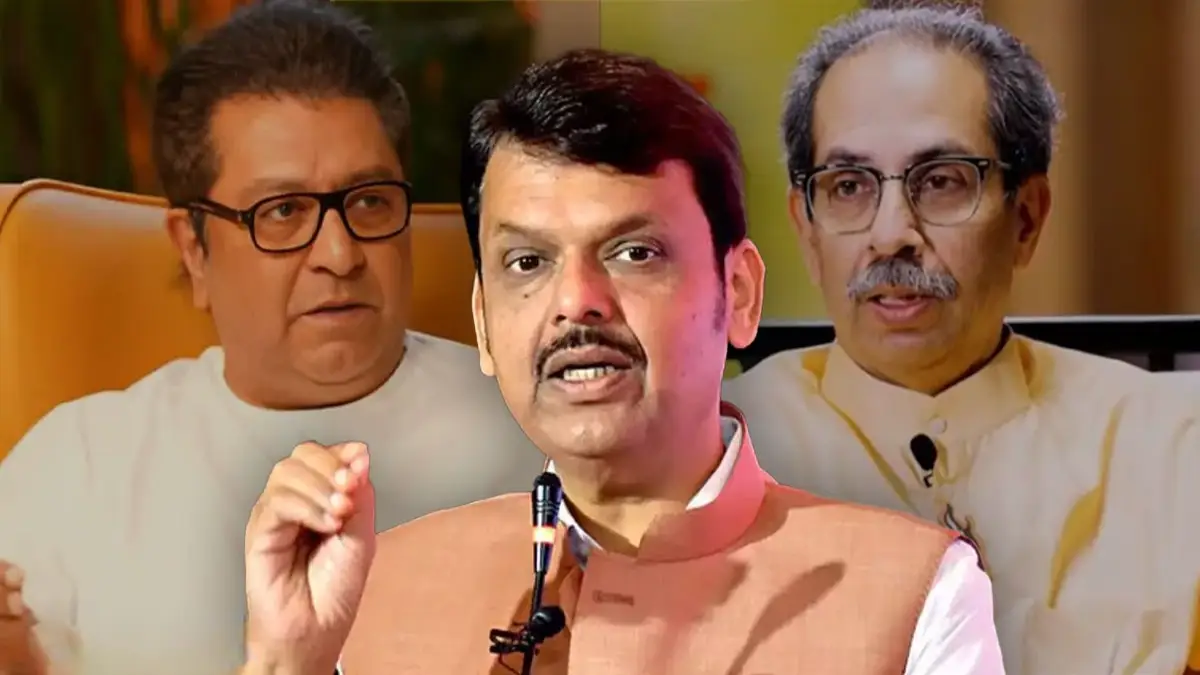
Uddhav Thackeray and Raj Thackeray announced their alliance this time and contested the elections together. They had already grasped the issue in the election campaign that Mumbai’s Mayor will be ‘Marathi’ only. As the election campaign progressed, the Thackeray cousins repeatedly put forward this issue. They asked in numerous interviews and speeches that BJP is campaigning saying Mumbai’s Mayor will be Hindu, so why is it not saying that the Mayor will be Marathi?
When this issue gained momentum in the election campaign, Devendra Fadnavis also had to respond to it. In an interview with ‘Mumbai Tak’, when he was asked this question, he said that Mumbai’s Mayor will be Hindu and Marathi. These issues were prominent in the campaign, but it will be interesting to see whether Mumbai city, which has an identity as a ‘cosmopolitan’ city, will give importance to one identity or not?
In the initial campaign of the election, the Hindutva issue was highly prominent, but it seemed that as the election progressed, this issue got left behind. In the final phase, language and development issues were more prominent. Even in BJP’s election campaign, the Hindutva issue remained quiet and more emphasis was placed on development.
LANGUAGE ISSUE IN MUMBAI AND GUJARATIS
If there was any most discussed and polarizing issue in this election, it is the issue of linguistic identity.
What impact this issue had on voters, who benefited from it will only be understood after the results. But during the election campaign, this issue was constantly discussed in public places and on social media.
Its beginning happened even before the election with the decision to make Hindi compulsory as a third language. It was in response to this that an alliance was formed between Uddhav Thackeray and Raj Thackeray, which could not have been imagined at one time. Perhaps it became the most decisive aspect of the election.
Raj and Uddhav kept Marathi Mumbaikars at the center in their election campaign. That was clearly visible in both interviews and campaigns. They constantly tried to prove that Marathi people are being left behind due to the arrival of other people, and Mumbai is constantly rising. Two statements created uproar again in the election campaign centered on Marathi identity.
Kripashankarsing, who joined BJP, talked about making a non-Marathi Mayor, and shortly after, Tamil Nadu BJP leader Annamalai called Mumbai not just a Maharashtra city but an international city. This seemingly gave Thackeray supporters another issue, and they gave strong statements on this issue.
WHAT QUESTIONS WILL THIS ELECTION ANSWER?
There are many questions that voters can answer in this election. Such as, will Marathi votes unite due to this election campaign and Thackeray alliance? Because this election does not have only Marathi and Hindi voters. The discussion that started about graveyards also changed into Marathi versus Gujarati-Jain.
Gujarati voters are also in large numbers in Mumbai and their votes are decisive. In Assembly and Lok Sabha elections, the Muslim community, which voted in large numbers, voted in favor of Maha Vikas Aghadi, as revealed in several surveys.
In such a situation, it will also be interesting to see which of Congress and Shiv Sena (UBT), who are contesting separate elections this time, will Muslim voters choose. After this election campaign, questions also are whether if linguistic polarization happens, who will benefit and how? Will Marathi voters go towards only one party? If this issue works, where will non-Marathi voters go?
Will Marathi voters also get divided among Thackeray’s Shiv Sena, Shinde’s Shiv Sena and MNS? All eyes will be on what issues Mumbai’s voter considers while voting.
LAST MUMBAI MUNICIPAL CORPORATION ELECTION
The last election of Brihanmumbai Municipal Corporation was held in February 2017. At that time, Shiv Sena and NCP had not split. In the 2017 election, Shiv Sena became the largest party and won 84 seats out of total 227 seats. BJP stood second by winning 82 seats. However, later BJP announced support to Shiv Sena for the Mayor post.
Congress got 31 seats, NCP got nine seats and MNS got seven seats. In this election, BJP and Shinde’s Shiv Sena are contesting together in Mumbai. While on the opposition side, there is an alliance of Uddhav Thackeray’s Shiv Sena and Raj Thackeray’s party MNS. Congress is not part of these two main alliances.
Read More: BMC Elections 2026: Mumbai Votes Today – Here’s What’s Open and What’s Closed
After the split of Shiv Sena, the Mumbai election is considered extremely important for Uddhav Thackeray. Because Shiv Sena has continuously been the largest party in Brihanmumbai Municipal Corporation since 1997. In such a situation, all eyes are on what results will come this time.