Maharashtra’s Political Shift: Gujarati Community Loses Ground – Here’s Why
[By Nilesh Dave (Mumbai Samachar Editor), Edited by Devansh Desai]
Mumbai: Just recently, Jagdish Vishwakarma was appointed as BJP’s Gujarat state president. But before him, who led the world’s largest political party in a state home to over seven crore Gujaratis? C.R. Patil a Marathi by origin, leading crores of Gujaratis. There was no linguistic chauvinism, no protests. Patil could become president because Gujaratis are tolerant, they blend seamlessly wherever they go, like sugar dissolving in milk. But excessive sugar sometimes brings the risk of diabetes and something similar has happened to Gujaratis in Maharashtra.
When Bombay was divided, neither Marathis nor Gujaratis were at fault. Two new states emerged, yet no mass migration occurred. People stayed where they were. Gujarati populations thrive not just in Mumbai, but across Pune, Nashik, Nandurbar, Gondia, Kolhapur, Solapur and numerous other cities. Gujaratis have contributed enormously to Maharashtra’s development, earning through honest labor and actively participating in both their homeland’s and adopted land’s growth.
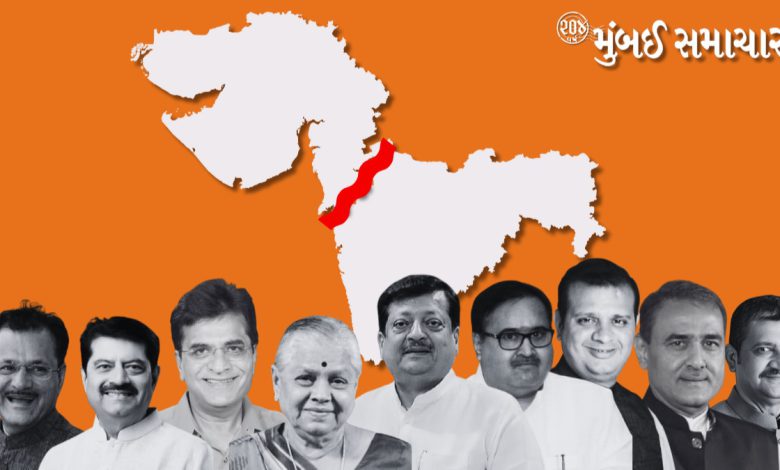
Their contribution extends beyond social spheres into politics. Leaders like Bhanushankar Yagnik, Rajni Patel, Shanti Patel, Jivraj Bhanji, Liladhar Pasu, Jayanti Parekh, Arun Gujarathi, Praful Patel, Jayantiben Mehta, Kirit Somaiya, Prakash Mehta and Yogesh Sagar were prepared to address foundational issues facing Gujaratis. Most were Congressmen initially, but with BJP’s rise in Gujarat, Gujaratis in Mumbai-Maharashtra also abandoned Congress. Today, one can say with eyes closed: Gujaratis equal BJP. Therefore, addressing Gujarati problems, solutions and achievements rests solely with BJP and its leaders.

The changing landscape
Over the past decade, the scenario has shifted dramatically. A conspiracy seems afoot to create animosity between two communities Marathis and Gujaratis who once lived harmoniously. It began when Gujarati signboards disappeared from railway platforms. The silent community was perceived as weak, which largely proved true. The removal spread from railway boards to shop signboards, yet this tolerant community remained silent.
Meanwhile, North Indian populations steadily increased their footprint over three decades. The experiment began: non-Gujarati candidates were fielded in Gujarati-dominated areas. Did this community protest? No. Gujaratis accepted everyone, so it became the norm. Otherwise, how could the “Makambo” areas Malad, Kandivali, Borivali not produce a single Gujarati MLA or MP in 30 years (except Charkop’s Yogesh Sagar)?
Workers who toil for decades, who form the party’s true strength, are treated like vegetables by leaders who crush their dreams for power. After Modi’s rise in 2014, it’s as if a race began to remove Gujaratis from the state. No party is exempt. Gujarati leaders capable of raising community issues in assemblies, parliament, municipalities or streets those with influence not just in Mumbai but across Maharashtra are being systematically sidelined.
The systematic purge
Following Jayantiben Mehta’s passing and Arun Gujarathi’s retirement due to age, two Gujarati leaders command statewide influence: Kirit Somaiya and Prakash Mehta. Yet both have been gradually pushed aside ironically, by replacing them with Gujarati candidates, ensuring they couldn’t protest.
Before Modi’s central rise, Maharashtra BJP was struggling. Kirit Somaiya, Prakash Mehta, Jayantiben Mehta and Yogesh Sagar worked tirelessly strengthening the party. Both Prakash Mehta and Kirit Somaiya groomed numerous youngsters including Pravin Chheda, Manoj Kotak and Mangal Bhanushali. Despite their strong organizational grip even today, they’re excluded from major decisions. Yes, their help is sought when the party faces crisis.
Currently, Yogesh Sagar and to a lesser extent Manoj Kotak can lead Gujaratis across several areas and issues, but Kotak was removed after one term. His strong ground network and worker influence keep him afloat. Yogesh Sagar constantly faces precarious situations. Extremely reliable sources confirm his name was finalized for Mumbai president, but by the time approval came from Delhi, the game had changed. Several Mumbai Gujarati leaders know this but remained silent.
Pravin Chheda is another promising leader capable of raising party issues both on streets and in assemblies, but party-switching and reduced rapport with workers proved fatal, pushing another Gujarati leader to the margins. South Mumbai’s Atul Shah faces similar circumstances. The reason? These Gujarati leaders couldn’t effectively present their case to the center, resulting in losses for the entire Gujarati community.
The current scenario
Currently, two MLAs Mihir Kotecha and Parag Shah lead Mumbai’s Gujaratis, but their capacity outside Mumbai is questionable. Parag Shah entered politics accidentally; he’s not a political person. Most of his time goes to spirituality and business, believing everyone’s welfare is possible without political machinations. Mihir Kotecha follows a “neither teach nor learn” approach, showing no interest beyond his constituency.
The way Gujaratis were filtered out in this BMC election indicates dark times ahead for the community in Maharashtra. The reason: this community couldn’t unite, couldn’t preserve self-respect, remained eager to cut down their own people and leaders. In contrast, North Indians quietly expanded their presence. But Maharashtra BJP’s dominant Marathi leaders cannot treat North Indians the way they treat Gujaratis—such disrespect could backfire heavily.
If you reflect, among Mumbai’s six district presidents, not a single one is Gujarati. Yes, one is North Indian. The cause isn’t BJP’s top leadership’s diplomacy it’s Gujarati leaders’ timidity. Some BJP Marathi leaders know this Gujarati community cannot speak up, cannot unite, so use them as a vote bank without power-sharing and they’re succeeding brilliantly. When Raj and Uddhav united, showing Delhi that Marathis might consolidate, even more Gujarati tickets were cut. As if that wasn’t enough, non-Gujaratis were imposed in Gujarati areas for assembly and Lok Sabha seats, yet the silence prevailing is deadly for Gujaratis.
A desperate appeal
Time still remains. New emerging leaders like Neil Somaiya, Dharmeshgiri, Sandeep Patel, Harsh Patel, Dhaval Vora and Himanshu Parekh need grooming that responsibility rests with the current generation of leaders. Not just that, there’s an urgent need for one Gujarati organization so powerful that a single call fills Shivaji Park not against any community, but in support of their own. Otherwise, it will be too late, and like many languages and cultures that vanished from Earth, the Gujarati community will disappear from Maharashtra.