
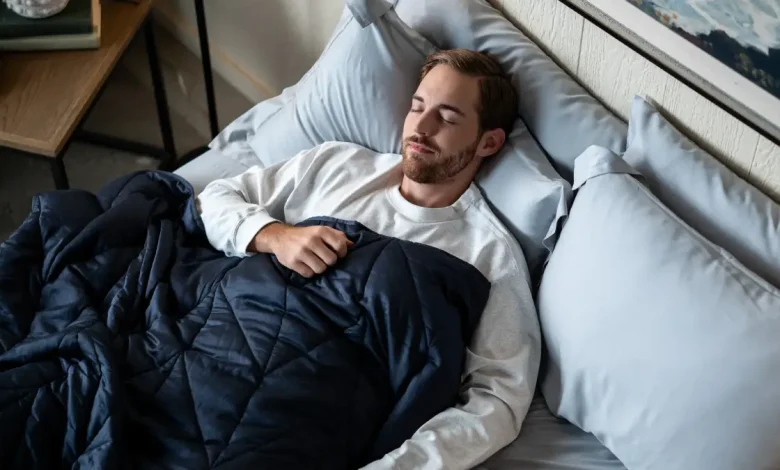
Throughout winter, people frequently claim certain quilts are exceptionally warm or specific blankets provide intense heat. However, the reality contradicts this perception: blankets and quilts generate no heat whatsoever. The mechanism behind their warming effect involves fascinating scientific principles.
Even the world’s most luxurious blankets fail to produce thermal energy. A simple demonstration proves this concept: wrapping a deceased body in any quilt or blanket will not generate warmth—the body remains cold. This raises an intriguing question: what creates the sensation of warmth we experience?
The Real Mechanism Behind Warmth
The fundamental truth is that regardless of a quilt’s quality or weight, it cannot independently create heat. Instead, these coverings prevent your body’s natural thermal energy from dissipating into the surrounding environment. Quilts and blankets function by creating barriers that block cold air infiltration while simultaneously capturing the heat your body continuously produces.
This explains why prolonged time under a quilt eventually makes you feel overheated. The human body perpetually releases thermal energy. When this warmth becomes confined beneath bedding, the enclosed air temperature rises progressively. Heavier quilts retain this trapped heat more effectively, whereas lighter blankets allow faster heat dissipation.




Insulation Properties Explained
Blankets and quilts serve as thermal insulators by capturing air pockets between material fibers such as wool or cotton. These trapped air layers significantly reduce the rate of heat loss. Layering two blankets creates an additional air barrier, enhancing insulation capacity and enabling the body to preserve its metabolically-generated warmth more efficiently.
Human Body Heat Production
How much thermal energy does the human body actually generate? During rest, a healthy adult produces approximately 80–100 watts of heat, equivalent to a traditional incandescent light bulb’s output. Light walking elevates this production to 200–250 watts. Running or vigorous exercise can release 600–1,000 watts, matching a small space heater’s capacity. Throughout a complete day, the body generates roughly 2,000–2,500 kilocalories of energy—sufficient to recharge a mobile phone multiple times.
Temperature Regulation System
Heat generation alone proves insufficient; the body must actively regulate temperature. The hypothalamus, a brain region functioning as a biological thermostat, controls this process. When body temperature increases, blood vessels near the skin’s surface dilate, facilitating heat release. Additionally, warm, moisture-laden air exits the body during exhalation.
Historical Evolution of Bedding
Humans have utilized protective coverings for warmth spanning tens of millennia. Approximately 70,000–50,000 years ago, early humans employed animal skins and fur obtained from hunted creatures for bedding and thermal protection, representing humanity’s earliest blanket forms.
Ancient Egyptian civilizations used lightweight linen blankets, frequently decorated with elaborate designs, particularly among royal families. Ancient Romans commonly utilized woollen bed coverings called lodi. Historians believe quilts originated independently in ancient China and Egypt.
Read More: Why Do People Eat 12 Grapes at Midnight on New Year’s Eve?
Modern-style blankets gained popularity later than quilts. By the 14th century, cities like Bristol and various Welsh regions had established reputations for wool blanket manufacturing. During the 18th century, an Englishman named Thomas Blanket innovated by combining cotton and wool fibers to produce a novel covering type, ultimately lending his surname to the product category we recognize today.