In today’s fast-paced, high-stress world, achieving a night of deep, restorative sleep has become an elusive goal for many. While over-the-counter sleep aids and prescription medications offer a temporary fix, they frequently carry unwanted side effects or risk dependency. An insightful guide published by India TV News highlights a time-tested alternative: using the therapeutic practice of yoga to calm the mind and prepare the body for high-quality rest naturally.
By incorporating specific, grounding yoga asanas into an evening routine, individuals can trigger the body’s parasympathetic nervous system-often called the “rest and digest” mode-effectively lowering cortisol levels and signaling to the brain that it is safe to sleep.
1. Child’s Pose (Balasana) for Instant Stress Release
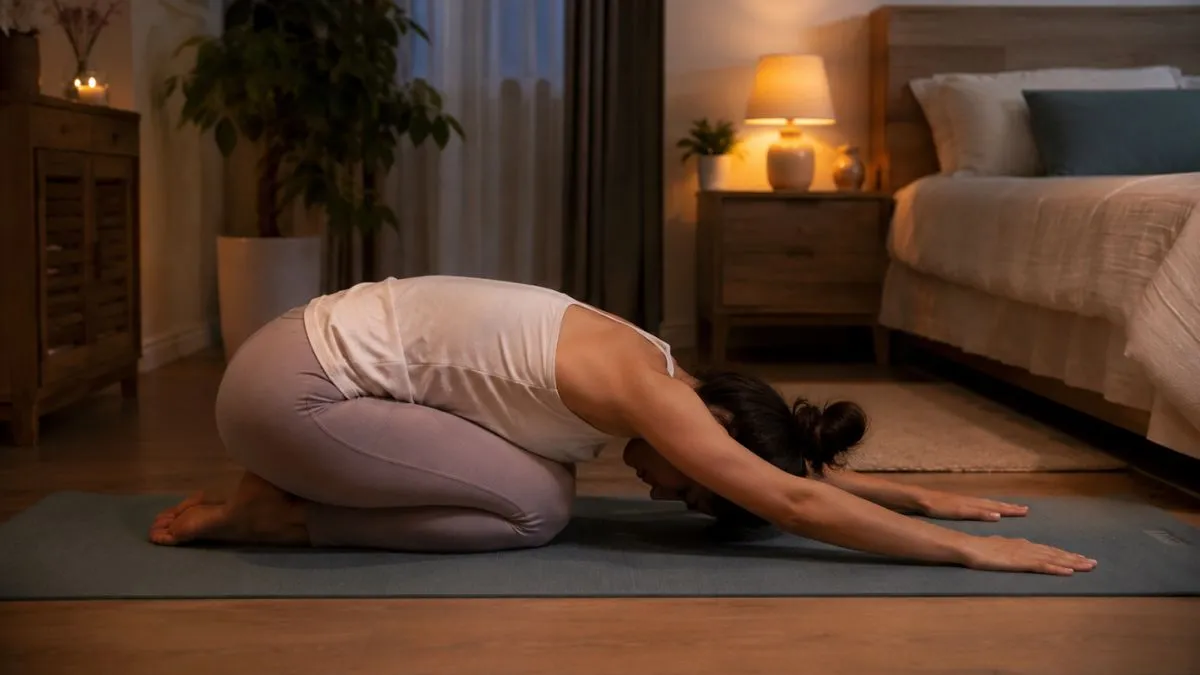
Balasana, or Child’s Pose, is widely celebrated as one of the most effective structural poses for releasing mental and physical tension. According to India TV News, this gentle forward bend acts as an internal reset button.
By resting the forehead on the floor or a pillow, practitioners stimulate the vagus nerve, which helps slow a racing heart rate and soothe an anxious mind. Additionally, the pose softly stretches the lower back, hips, and thighs, reversing the physical toll of sitting at a desk all day and clearing a path for a peaceful night.
2. Legs-Up-The-Wall Pose (Viparita Karani) to Relieve Physical Fatigue
An exceptional posture for evening relaxation is Viparita Karani, commonly known as Legs-Up-The-Wall pose. As reported by India TV News, this passive, restorative inversion works wonders for reversing the effects of gravity on the lower extremities.
By elevating the legs against a wall, blood flow is gently redirected back toward the heart and brain. This fluid shift relieves swelling in the ankles and feet, drains accumulated fatigue from the legs, and profoundly stabilizes blood pressure—making it significantly easier to drift off seamlessly.
3. Forward Fold (Uttanasana) to Quiet a Busy Mind
Uttanasana, or the Standing Forward Bend, is a powerful posture for calming an overactive central nervous system. The article notes that allowing the head to hang below the heart promotes oxygenated blood circulation to the brain, which helps quiet intrusive thoughts and alleviate mental exhaustion.
Physically, the pose provides a deep stretch along the entire back body, including the calves, hamstrings, and spine, effectively venting the residual daily stress that typically manifests as bodily stiffness at bedtime.
4. Reclined Bound Angle Pose (Supta Baddha Konasana) to Open the Heart and Hips
Many individuals unconsciously store emotional stress and anxiety in their pelvic region and hips. Supta Baddha Konasana, or Reclined Bound Angle Pose, targets these specific areas by opening up the groin and hips while lying flat on the back.
India TV News emphasizes that this deeply relaxing posture encourages slow, abdominal breathing. By broadening the chest and relaxing the pelvic floor, the pose induces a profound state of comfort and emotional release, easing the transition from daytime alertness to night-time tranquility.
5. Corpse Pose (Savasana) for Total Neurological Calm
No evening yoga sequence for sleep is complete without Savasana, or Corpse Pose. Though deceptively simple, lying completely flat and motionless on the back requires conscious surrender.
As highlighted in the India TV News report, Savasana serves as the ultimate meditative tool to close the day. It allows the practitioner to systematically scan the body, consciously release any remaining pockets of tension, and minimize external sensory input. Spending just a few minutes in focused Savasana prepares the brain’s alpha waves to shift smoothly into the deep delta waves required for deep sleep.
Also Read: When Is The iPhone 18 Pro Max Dropping In India?
-

-

-

-