
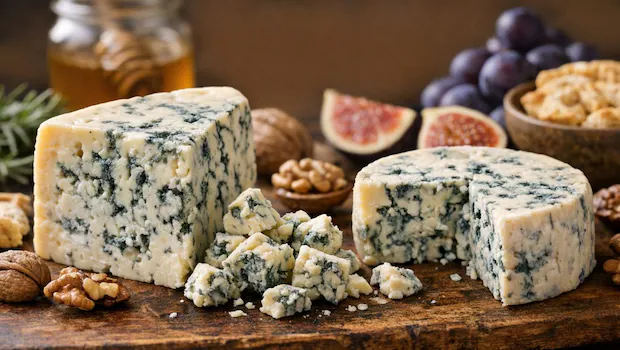
Despite its unmistakable blue-green marbling and pungent aroma that unmistakably signals the presence of mold, blue cheese endures as a cherished delicacy among food enthusiasts globally. Many initially find the idea of consuming a deliberately mold-infused product off-putting, yet this distinctive cheese consistently appears on upscale cheese platters, fine-dining menus, and home entertaining spreads, boasting a dedicated fanbase.
The distinctive characteristics originate from carefully chosen, food-safe molds—specifically Penicillium roqueforti or Penicillium glaucum. Cheesemakers introduce these harmless strains intentionally during production. Over controlled aging periods, the mold spreads throughout the cheese, forming the signature veins. Rather than spoiling the product, the fungus actively breaks down proteins and fats, resulting in the cheese’s creamy texture and its hallmark sharp, tangy taste.
The flavor profile stands out as intense and multifaceted: salty, pungent, earthy, with subtle spicy undertones. Often described as an acquired taste—comparable to bold olives or rich dark chocolate—it captivates once embraced, transforming everyday dishes. Crumbled over salads, blended into pasta sauces, melted over proteins, or paired with contrasting sweetness like honey, figs, or fresh fruit, it adds remarkable depth.
ALSO READ : Moderate Caffeine Intake May Lower Dementia Risk, Long-Term Study Suggests




The strong, sometimes challenging aroma serves as a quality indicator for aficionados. It arises from the same volatile compounds present in luxury items like truffles, cured meats, and wild mushrooms, contributing profound umami notes born from precise fermentation and maturation.
Nutritionally, blue cheese delivers notable benefits, including high levels of calcium, protein, and vitamin B12. Its concentrated intensity means modest portions deliver satisfaction without excess consumption. The fermentation process may also provide probiotic-like advantages similar to those in other cultured dairy items.
Steeped in tradition, renowned varieties such as France’s Roqueforti, Italy’s Gorgonzola, and England’s Stilton enjoy protected designations. Each reflects centuries-old regional techniques, unique cave-aging environments, and artisanal expertise passed through generations.
Chefs value its remarkable versatility: it counters sweetness in pairings with pears or honey, enriches meats like burgers and steaks, and brings sophistication to salads, charcuterie, and creamy sauces.
In an era dominated by milder, more neutral flavors, blue cheese persists because of its unapologetic boldness—in appearance, scent, and taste. It creates memorable experiences, polarizes opinions, yet secures its place as an enduring, character-driven favorite that continues to intrigue and delight.