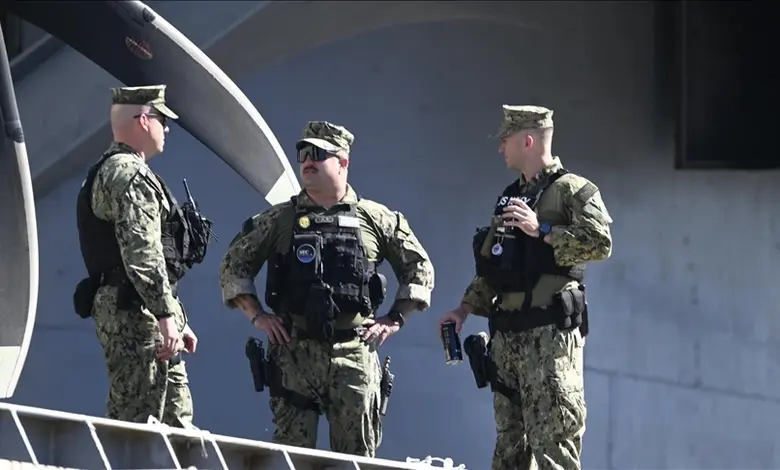
On Friday, an Iranian missile, accompanied by unmanned aerial vehicles, hit the Prince Sultan air base in Saudi Arabia, according to U.S. and Saudi officials. The strike injured 12 American troops, with two suffering serious wounds, and caused damage to several U.S. refueling aircraft.
Secretary of State Marco Rubio cautioned that any attempt by Iran to impose tolls on vessels passing through the Strait of Hormuz would represent a major post-war challenge. He described such actions as illegal and “dangerous to the world” during discussions with G7 counterparts, while indicating the conflict could persist for another two to four weeks.
Israeli forces conducted extensive strikes on Iranian nuclear-related sites and weapons facilities in Tehran and western Iran. Iran, through its state media and Foreign Minister Abbas Araghchi, reported that Israel targeted two major steel plants: Mobarakeh Steel in Isfahan and Khuzestan Steel in Ahvaz. The Islamic Republic of Iran Broadcasting confirmed the strikes on these industrial facilities. Israel has not immediately commented on the steel plant attacks but has acknowledged hits on two nuclear sites—the Khondab heavy-water plant (previously known as Arak) and the Shahid Rezayee Nejad yellowcake production facility.
ALSO READ : India Calls Out Pakistan’s Denial Over 1971 Bangladesh Genocide, Backs Dhaka’s Push for Justice
Iran has responded by turning back two China-owned container ships from the Strait of Hormuz, directing its shipping restrictions toward nations seen as backing Israel and the United States.
U.S. Central Command (CENTCOM) reported that more than 300 American troops have sustained injuries over the four weeks of fighting with Iran. The Pentagon is weighing the deployment of up to 10,000 additional ground troops to the region, which could raise the total U.S. presence above 17,000 when combined with existing forces, including roughly 5,000 Marines and 2,000 paratroopers from the 82nd Airborne Division. These reinforcements might involve infantry, armored units, and logistics support for potential operations such as securing territory or uranium stockpiles. This scale remains significantly smaller than the troop levels used in the 2003 Iraq invasion.
Crude oil prices have climbed above $100 per barrel once more, while U.S. stock markets have declined. This occurred despite President Trump’s decision to pause strikes on Iran’s energy infrastructure.
In a speech in Miami Beach, President Trump referred to the Strait of Hormuz as the “Strait of Trump” and urged Iranian leaders to reopen the waterway. He dismissed any misinterpretation as a slip, joking that “there’s no accidents with me.” Trump also criticized NATO allies for failing to offer military support, suggesting this could prompt a review of U.S. spending on the alliance. He remarked that the lack of reciprocity might benefit the U.S. financially, questioning why America should continue commitments if allies do not reciprocate.
Trump characterized the war as “sort of finished, but it’s not finished,” expressing expectations of greater market and oil price impacts than seen so far. He noted the S&P 500 had fallen for a fifth consecutive week to levels not observed since August, while voicing confidence in a strong economic rebound once the conflict concludes. An Iranian-linked group also claimed responsibility for hacking the personal email of FBI Director Kash Patel.
These updates reflect the fluid nature of the conflict, with military, economic, and diplomatic elements intersecting.
-

-
-
-