
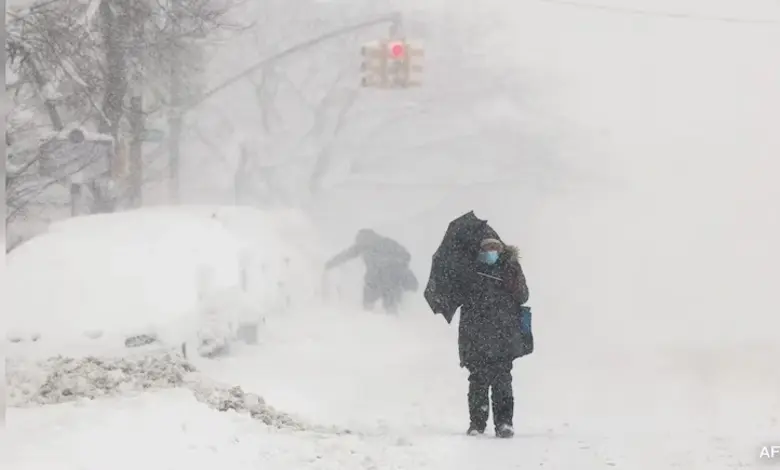
A ferocious snowstorm slammed the northeastern United States from Maryland to Maine on Monday, unleashing heavy, wet snow, ferocious winds, and blizzard conditions that brought life to a standstill for millions of residents.
Classified by the National Weather Service as a classic bomb cyclone nor’easter off the coast, the storm featured a rapid pressure drop and ideal conditions for intense snowfall—described by meteorologist Owen Shieh of the agency’s Weather Prediction Center as a “Goldilocks situation,” with temperatures perfectly balanced to deliver maximum heavy, wet accumulation rather than rain or lighter flurries. Forecasters called it the strongest such event in a decade.
Snow totals broke records across the region. Warwick, Rhode Island, led with more than three feet (91 centimeters), while Rhode Island’s T.F. Green International Airport tallied 32.8 inches (83.3 centimeters), eclipsing its 1978 record. Central Park in New York City recorded 19 inches (48 centimeters), and accumulations surpassed two feet (60 centimeters) in parts of the metropolitan Northeast. Winds gusted to hurricane strength, peaking at 83 mph (133 kph) on Nantucket and battering Cape Cod and surrounding areas.
Emergency declarations swept through states and major cities, including New York and Philadelphia. New York City declared a travel ban and observed its first traditional snow day in six years, shuttering public schools. Boston, Philadelphia (which shifted to remote learning), and various suburban districts followed, with some planning closures into Tuesday. The United Nations postponed a Security Council session, Broadway performances were canceled, and institutions like New York’s Museum of Modern Art closed.




ALSO READ : Iran’s Young Generation Takes To Campuses Again Amid Escalating Tensions With The US
Air travel collapsed under the onslaught. Flight tracking service FlightAware reported more than 5,600 flights canceled into, out of, or within the United States on Monday, with nearly 2,000 additional cancellations already slated for Tuesday—primarily affecting hubs in New York, New Jersey, and Boston. Nearly 2,500 flights faced delays. Rhode Island’s main airport halted all operations temporarily.
Public transportation faltered: New York’s Metropolitan Transportation Authority cited delays on outdoor subway lines and suspended Staten Island rail service, though most subway operations recovered by evening. Commuter rails planned limited Tuesday service, but bus riders braced for extended waits. DoorDash paused deliveries in New York City overnight.
Heavy, wet snow and damaging gusts triggered widespread power outages, with PowerOutage.us tracking more than 450,000 utility customers still without electricity by Monday evening, heightening risks of tree damage and prolonged blackouts.
Amid the chaos, quieter moments emerged. In Lower Manhattan, pedestrians wandered empty streets, some danced in Times Square, and residents readied sleds or skied to assist neighbors. Outreach teams worked to move homeless individuals into shelters and warming centers. At Connecticut’s Mystic Seaport Museum, staff hand-cleared snow from historic vessels like the Charles W. Morgan to prevent damage.
As the storm tapered northward, the National Weather Service monitored another system that could deliver additional snow to the battered region later in the week.