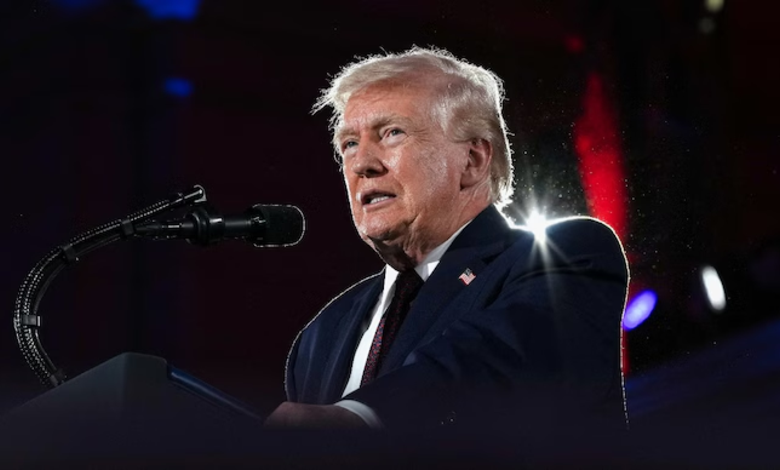
US President Donald Trump has indicated that fresh negotiations with Iran could take place in Pakistan within the next two days, keeping the focus on resolving key disputes that carry significant financial implications for global energy markets.
In an interview with the New York Post on Tuesday, Trump stated that talks are likely to resume in Pakistan, reversing an earlier suggestion that the venue might change. “It’s more likely that we go back there,” he remarked, questioning the need to shift to a country unrelated to the issues. He praised Pakistan’s Army Chief Field Marshal Asim Munir as “fantastic” and “doing a great job,” highlighting this as a reason for returning to Islamabad for discussions.
The comments come shortly after a round of US-Iran talks in Pakistan failed to produce a deal. Trump had previously hinted at possibly involving a European mediator, noting when asked about Turkey, “No, somebody more central. Europe, maybe.” He once again voiced frustration with European allies, saying they genuinely want to assist but “just don’t know how to do it.” Trump described them as holding endless meetings without meaningful action, labeling the bloc a “paper tiger.”
ALSO READ : US-Sanctioned Tanker Linked To China Crossed Strait Of Hormuz
Central to the impasse is the Strait of Hormuz, a critical chokepoint for global oil shipments that Iran has effectively blocked. The US has insisted on reopening the waterway to restore the flow of energy supplies, a move with direct consequences for international trade, energy prices, and economic stability worldwide. Broader issues under discussion include Iran’s nuclear program and the lifting of international sanctions on Tehran, all of which carry substantial monetary stakes.
The weekend talks in Islamabad, which lasted 21 hours, concluded without agreement, leaving a fragile two-week ceasefire in doubt. US Vice President JD Vance, who led the American delegation alongside Special Envoy Steve Witkoff and Jared Kushner, told Fox News that Iran had shifted somewhat toward the US position. “We made a lot of progress,” Vance said, adding that Tehran “moved in our direction” but not far enough, placing the onus on Iran to advance the process.
A Pakistani government source told Reuters there had been optimism mid-talks for a breakthrough, but momentum quickly faded. The Iranian side was led by parliament Speaker Mohammad Bagher Ghalibaf. Discussions also touched on Israel’s ongoing actions against Iran-backed Hezbollah in Lebanon.
On Monday, Trump told reporters that Iran had reached out, expressing eagerness to negotiate a deal. The outcome of these potential new talks in Pakistan could influence energy markets, sanctions relief, and broader economic relations in the region.