
President Trump Steps Back from Greenland Confrontation, Secures NATO Framework Deal
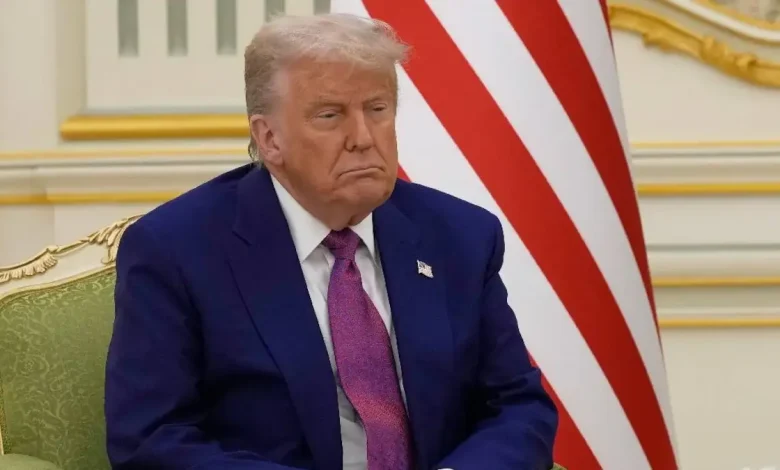
In a significant de-escalation of trans-Atlantic tensions, President Donald Trump announced on Wednesday that he had reached the framework of a future agreement with NATO concerning Greenland and the broader Arctic region. The declaration came shortly after his address to the World Economic Forum in Davos, Switzerland, and followed discussions with NATO Secretary General Mark Rutte.
Posting on Truth Social, Trump described the arrangement as a positive outcome for the United States and all NATO members. He stated that he and Rutte had “formed the framework of a future deal with respect to Greenland and, in fact, the entire Arctic Region,” adding that, if finalized, it would represent “a great one for the United States of America, and all NATO Nations.” No specific details were provided in the announcement.
The move marked a clear retreat from earlier aggressive positions. Trump had previously threatened to impose additional tariffs on European allies who opposed U.S. acquisition of Greenland, an autonomous territory under Danish sovereignty. He had also declined to rule out the use of military force to achieve control over the island, raising alarms among NATO partners and prompting warnings that such actions could jeopardize the alliance.
On Wednesday, Trump explicitly withdrew both threats. He affirmed that he would not employ force to assert American ownership and canceled plans for new tariffs against resistant European nations. NATO officials, meeting separately in Brussels, had explored options including U.S. sovereignty over select areas for military bases as a means to strengthen Arctic security amid growing Russian and Chinese activity.



ALSO READ : Brazilian President calls PM Modi to Strengthen Bilateral Ties
The developments appeared to avert the risk of economic or military friction with allies over Greenland. Some residents of the island expressed relief at Trump’s decision to forgo force, though they remained cautious about the long-term implications.
As negotiations continue, the framework focuses on enhanced NATO presence in the Arctic, potential U.S. access to strategic sites, and measures to counter adversarial influence, including restrictions on resource extraction by rivals. Denmark and Greenland have maintained that full sovereignty remains non-negotiable, with any arrangement requiring their consent.
The agreement, if completed, could address U.S. strategic concerns in the region without outright territorial transfer, building on existing defense pacts while defusing a crisis that had strained relations within the alliance.