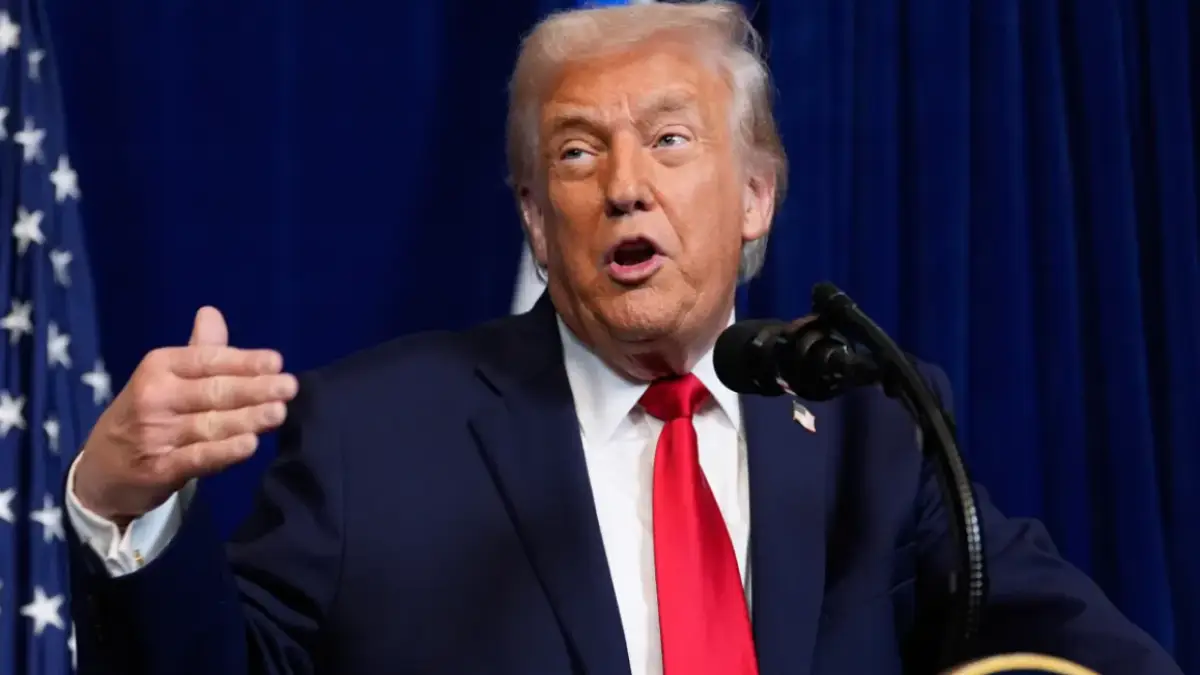
Donald Trump has withdrawn his support for Britain’s agreement to transfer sovereignty of the Chagos Islands to Mauritius, sources have told The Guardian. The shift follows the UK government’s refusal to allow American use of British-controlled airbases, including the strategic facility on Diego Garcia, for a pre-emptive military strike against Iran.
The proposed deal, which has secured backing from the US State Department, would see the UK cede control of the Chagos archipelago to Mauritius while securing a long-term lease—reportedly 99 years—for the joint UK-US military base on Diego Garcia, a key asset in the Indian Ocean. This arrangement aims to maintain uninterrupted operations at the site amid ongoing legal and diplomatic pressures.
Trump’s latest position emerged in a post on his Truth Social platform, where he described Prime Minister Keir Starmer’s approach as a “big mistake.” He explicitly linked the issue to escalating tensions with Iran over its nuclear program, which US officials believe is approaching a critical stage. In the message, Trump stated: “Should Iran decide not to make a Deal, it may be necessary for the United States to use Diego Garcia, and the Airfield located in Fairford, in order to eradicate a potential attack by a highly unstable and dangerous Regime.”
Earlier this month, Trump had offered a more conciliatory view, calling the arrangement the “best” deal Starmer could achieve under the circumstances. However, his stance has fluctuated repeatedly, with prior criticisms labeling the handover an “act of great stupidity” and tying it to broader national security concerns.
The reversal appears tied to Britain’s reluctance to approve US requests for basing operations aimed at Iran. UK legal interpretations of international law are understood to view pre-emptive strikes as problematic, and consent is required for using facilities such as RAF Fairford in Gloucestershire, which hosts American assets. Diego Garcia itself, while jointly operated, would not necessarily require the same level of approval for US actions, but the broader basing dynamics have complicated matters.
The Chagos bill, which would formalize the agreement, was already delayed last month due to uncertainties over Washington’s position. It is now expected to face further postponement in the House of Lords, potentially pushing it beyond the current parliamentary session ending in May. If not passed in time, the legislation would need reintroduction.
Conservative opposition figures have seized on the developments. Shadow foreign secretary Priti Patel described the deal as “now dead in the water,” emphasizing that it cannot advance without American backing. She is scheduled to discuss the matter with US officials during a forthcoming visit to Washington.
A UK government spokesperson declined to address operational specifics but reaffirmed support for diplomatic efforts between the US and Iran, stressing that Tehran must be prevented from acquiring nuclear weapons and highlighting the priority of regional stability.
ALSO READ : India Participates As Observer In Trump’s Inaugural Board Of Peace Meeting On Gaza
Downing Street sources have indicated hope that Trump may yet alter his view again, following a recent phone call between Starmer and Trump that covered Iran but omitted mention of the Chagos issue in official readouts. Former special adviser Ben Judah noted the mounting difficulties for the government in securing parliamentary approval in the coming weeks.
The episode underscores strains in UK-US coordination on security matters, even as the deal seeks to preserve long-term access to a vital military outpost. (Word count: 350)
-

-

-
-