
Russia and China Veto UN Resolution to Reopen Strait of Hormuz as Trump Issues Civilisation Warning
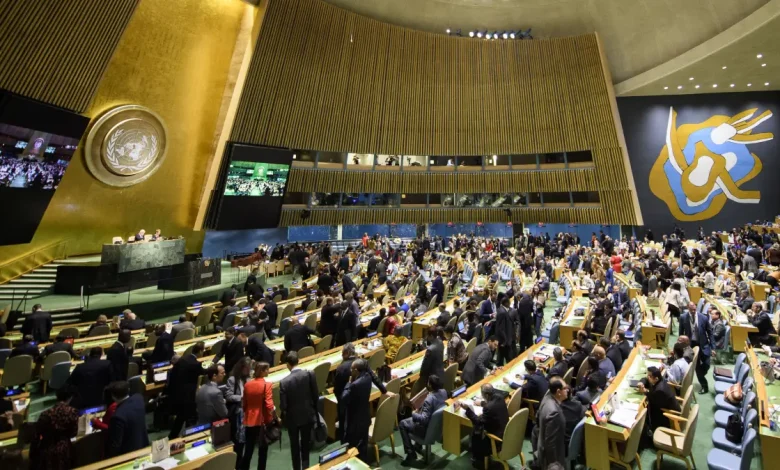
Russia and China on Tuesday vetoed a UN Security Council resolution aimed at reopening the Strait of Hormuz, blocking the measure even after it had been repeatedly watered down to secure their abstentions.
The final vote stood at 11-2, with Pakistan and Colombia abstaining. The veto came hours after US President Donald Trump warned that “a whole civilisation will die tonight” if Iran failed to reopen the strategic waterway before his 8 pm Eastern deadline.
The Strait of Hormuz carries roughly one-fifth of the world’s oil supply. Iran’s control of the passage amid the ongoing conflict has pushed energy prices sharply higher.
Bahrain’s foreign minister Abdullatif bin Rashid Al Zayani, speaking after the vote, said the resolution’s failure sent a troubling signal that threats to international waterways could go unchecked by the very body mandated to preserve global peace and security. Before the vote, he questioned whether the world would accept being “held hostage to economic blackmail,” a reference to Iran’s blockade and its impact on international trade and food security.



The resolution, originally proposed by Bahrain, had been gutted in successive rounds of revision. Its initial draft authorised the use of “all necessary means” language that includes military force to guarantee safe passage through the strait. The United States backed that version. After pushback from Russia, China, and France, all permanent Security Council members, the text was revised to permit only “all defensive means necessary,” stripping out references to offensive action. It was further weakened ahead of a delayed vote on Saturday to remove any Security Council authorisation for action altogether and to narrow its geographic scope exclusively to the Strait of Hormuz, dropping references to adjacent waters.
The final draft, ultimately vetoed Tuesday, urged states using the strait for commercial shipping to coordinate defensive measures, escort merchant vessels, and deter interference with passage. It also demanded Iran immediately halt attacks on commercial ships and cease targeting civilian infrastructure.
US Ambassador to the UN Mike Waltz condemned Moscow and Beijing for what he described as enabling Iran to hold the global economy “at gunpoint.” He accused both nations of aligning with a regime that intimidates Gulf neighbours while subjecting its own population to a nationwide internet blackout.
Russia’s Ambassador Vassily Nebenzia and China’s Ambassador Fu Cong countered by placing blame squarely on the United States and Israel for starting the conflict and escalating the crisis. Both called for an immediate end to military operations.
Also Read:Trump Mulls Nuclear Strike on Iran? White House Fires Back at Speculation
Iran has been striking civilian targets including hotels, airports, and residential buildings across more than ten countries since February 28, framing the attacks as retaliation for US and Israeli strikes.
Gulf nations, heavily exposed to disruption of the strait, have pressed hard for UN intervention. Bahrain, which hosts the US Fifth Fleet and currently holds the Security Council’s rotating presidency, has led that push. On March 11, the Council passed a separate Bahrain-sponsored resolution 13-0 — with Russia and China abstaining — condemning Iran’s “egregious attacks” on Gulf neighbours and its actions in the Strait of Hormuz, and demanding an end to all shipping blockades. Tuesday’s veto marks a significant reversal of that momentum. The conflict is now in its sixth week, with no diplomatic resolution in sight.