Putin’s India Stopover: A Steady Anchor Amid Shifting Global Tides
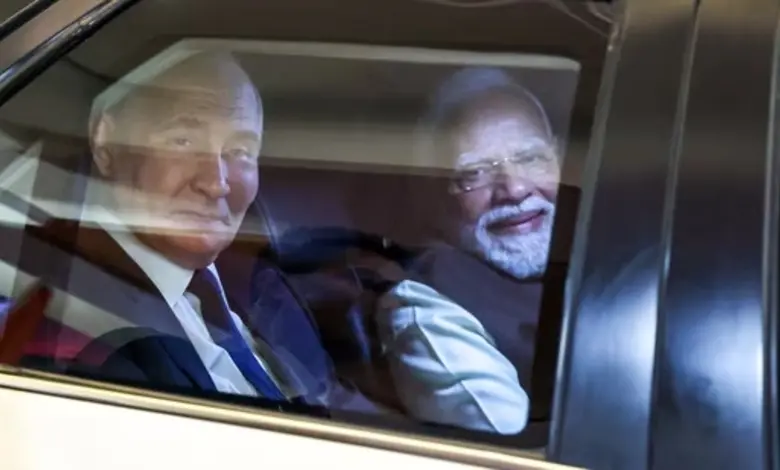
New Delhi – Russian President Vladimir Putin received an effusive reception during his brief 30-hour stay in India, underscoring the enduring bond between the two nations despite a turbulent international landscape. Prime Minister Narendra Modi personally greeted him on the airport tarmac with full ceremonial honors, hosted a private dinner at his residence, and later joined President Droupadi Murmu for a state banquet. Mr. Modi described the partnership as unwavering, akin to the “pole star (dhruva tara)” in the night sky. Yet, while the warmth was palpable, the substantive results from the Modi-Putin summit remained measured and pragmatic.
The visit marked Mr. Putin’s first trip to India since Russia’s military incursion into Ukraine in February 2022, a period shadowed by escalating tensions between India and Pakistan, as well as strains in New Delhi’s relations with Washington. Expectations ran high for breakthroughs in defense, including deals on aircraft, air defense systems, drones, and missiles, potentially involving technology transfers. However, a pre-visit meeting between Indian Defence Minister Rajnath Singh and Russian counterpart Andrei Belousov yielded no public commitments. Instead, the agenda pivoted toward bolstering economic ties, advancing the “Development of Strategic Areas of India-Russia Economic Cooperation till 2030” blueprint unveiled during Mr. Modi’s 2024 Moscow sojourn.
Key deliverables included a “Labour Mobility Agreement” to enable Indian professionals to fill an anticipated shortfall of three million jobs in Russia by decade’s end. Fertilizer firms from both countries inked a memorandum of understanding for a new urea production facility in Russia. Additional pacts covered maritime collaboration, port operations, and customs streamlining, aimed at easing trade flows through initiatives like the Chennai-Vladivostok Eastern Maritime Corridor and the International North-South Transport Corridor. The leaders recommitted to expanding trade settlements in rupees and rubles. Notably absent were updates on India’s hefty $60 billion-plus crude oil imports from Russia—comprising the bulk of last year’s $69 billion bilateral trade—or progress in space and nuclear sectors.
The specter of the Ukraine conflict loomed large over the proceedings, now potentially entering its fourth year. Mr. Putin’s arrival coincided with Moscow’s deliberations on a U.S.-brokered peace framework. In preliminary remarks, Mr. Modi expressed gratitude for Russia’s consistent updates on the situation, reiterating India’s commitment to peace over neutrality. Mr. Putin echoed hopes for resolution and hinted at openness to the American initiative. Yet, Western sanctions have imposed steep penalties on both Russian and Indian entities. Despite Mr. Putin’s assurances of reliable energy deliveries, and the Ministry of External Affairs’ emphasis on market-driven oil decisions, data reveals a sharp 38% year-on-year drop in Russian crude imports by value in October 2025. Caution likely tempered announcements in sensitive domains like defense, space, and nuclear energy, amid lingering U.S. threats under the 2018 CAATSA legislation.
ALSO READ : Assam Tea, Bhagavad Gita, Silver Horse: A Look At PM Modi’s Gifts To Putin
A joint op-ed by ambassadors from the United Kingdom, Germany, and France—condemning Russia’s role in Ukraine and offering unsolicited counsel to India—surfaced days earlier, prompting the Ministry of External Affairs to deem such interference “unacceptable.” Ukraine’s President Volodymyr Zelenskyy, who once chided Mr. Modi’s Moscow embrace, opted for restraint this time, possibly reflecting New Delhi’s quiet diplomatic maneuvers and the fragile status of peace negotiations.
Looking ahead, resolving the Ukraine crisis would alleviate India’s delicate balancing act between Moscow and the West, particularly as Russia’s reliance on Beijing intensifies. Mr. Putin’s timing—mere weeks before anticipated visits from German Chancellor Friedrich Merz, European Commission President Ursula von der Leyen, and European Council President Antonio Costa for Republic Day—highlights New Delhi’s multitasking. The long-awaited EU-India Summit could culminate in a free trade pact, followed by French President Emmanuel Macron’s attendance at a February AI forum and Canadian Prime Minister Mark Carney’s subsequent trip. Parallel talks for an India-U.S. trade deal seek to curb punitive American tariffs.
In essence, the summit sought mutual gains: reaffirming historic India-Russia solidarity without provoking Western backlash. This approach aligns with New Delhi’s long-standing pursuit of strategic autonomy, navigating a polarized world with calculated restraint.