
Pakistan’s Big Peace Bet Backfires After US Iran Talks Collaps; Unlike 9/11, Cold War, No Windfall Now
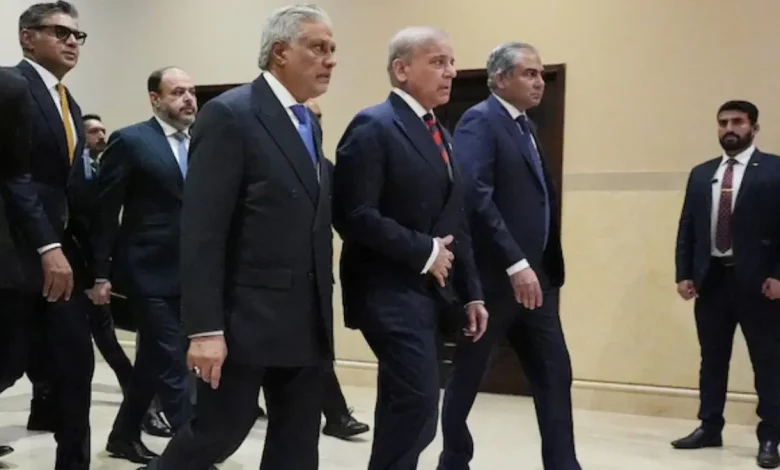
Tehran : With Iran showing no interest in a second round of talks with the US in Pakistan, Islamabad now finds itself in an awkward bind. The uncertainty comes at a time when last-minute developments in Hormuz have raised the risk of escalation at sea, further complicating an already fragile diplomatic track. What was projected as a potential breakthrough venue for backchannel engagement now risks becoming irrelevant before it even begins.
From the Cold War to the post-2001 war on terror, Pakistan leveraged crises to fill its coffers with aid, grants, and strategic payouts. Historically, Pakistan’s strategic location has translated into economic advantage, with wars and global alignments bringing in grants, debt relief and reimbursements. But that equation now appears to be reversing. Instead of inflows, recent tensions in the Gulf region have triggered capital flight, reserve depletion and mounting repayment pressures.
The year was 1979. The Soviet Union invaded Afghanistan, Pakistan’s neighbour. As the war raged along Pakistan’s frontier, the US offered a $400 million aid package. It was famously rejected by President General Zia-ul-Haq, who called it peanuts. However, by 1981, a $3.2 billion military and economic assistance package was agreed upon, followed by a second phase of $4-4.2 billion between 1988 and 1993.
The World Bank and IMF further supported Pakistan with $5-7 billion in concessional finance and balance-of-payments relief, resulting in a total inflow of $20-27 billion during the 1980s, as on op-ed in Pakistan Geo News highlighted. Following the events of 9/11, the United States released $600 million in emergency funds to Pakistan, and the Paris Club restructured approximately $12.5 billion of Pakistan’s debt.




These financial inflows had a positive impact on Pakistan’s balance of payments, with total liquid foreign exchange reserves increasing from $3.23 billion in 2000-01 to $15.65 billion by 2006-07. However, in 2026, despite international attention and diplomatic engagements, Pakistan’s geography did not translate into financial gains, resulting in an outflow of $5.7 billion against a reserve base of $16 billion.
Earlier this month, the UAE asked Pakistan to immediately return its $3.5 billion deposited with the State Bank of Pakistan by the end of April. As a result, Qatar and Saudi Arabia stepped in to offer $5 billion in support to keep Pakistan afloat and prevent a sharp depletion of its foreign reserves. The vulnerability runs deeper than headlines.
Read Also : Iran Claims Drone Strikes on US Vessels in Retaliation for Seizure of Iranian Ship