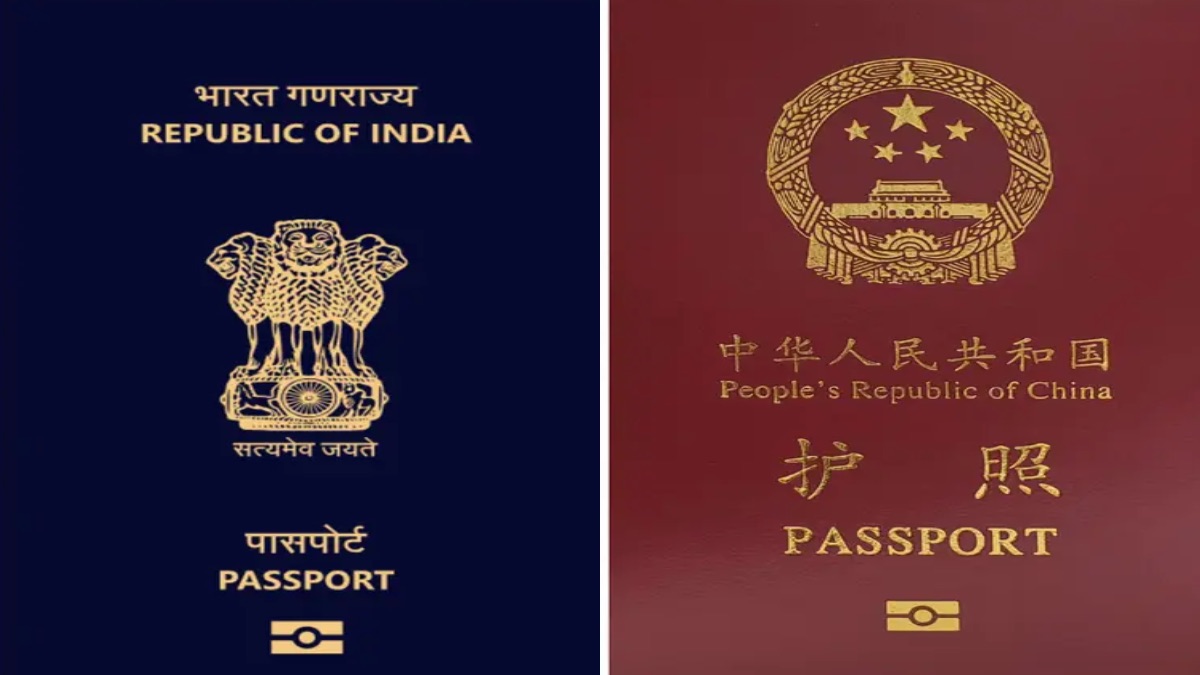
Many Indian politicians and bureaucrats have children or spouses studying or working abroad, and in some cases living in developed countries as permanent residents or citizens. This fact resurfaces during controversies, such as during the recent National Eligibility cum Entrance Test (NEET-UG) paper leak protests, when some alleged that Indian leaders and officials were out of touch with the realities faced by the youth because their own children were studying or working abroad.
China takes a starkly different approach. For over a decade, the Communist Party of China (CPC) has tracked, monitored and, at times, named, shamed or cracked down on officials who send their spouses or children abroad to live or settle. Such officials are referred to by the derogatory term “Naked Officials.” China frames the issue as a matter of corruption, illicit asset flight and personal enrichment. If an official’s family lives abroad, the government may also treat it as a potential national security risk warranting scrutiny, disclosure and restrictions — though this is not treated as automatic proof of guilt.
So what does India do differently? Here is how China handles “Naked Officials,” and what lessons, if any, India might draw from it.
China’s ‘Naked Official’ Policy Is Over A Decade Old
“Naked Officials,” or “Luǒ Guān” in Chinese, refers to officials of the Communist Party of China or the Chinese state whose spouse and/or children have emigrated or settled abroad, whether as permanent residents or citizens, while the official remains in office. The term generally applies where the official stays in China while their immediate family relocates overseas, leaving the official “naked,” or without close family, in the country. For well over a decade, China has sought to regulate and monitor this category of public official.
In 2009, the Central Commission for Discipline Inspection (CCDI) of the Communist Party of China called for increased oversight of “Naked Officials.” In 2010, the Ministry of Supervision formally introduced regulations to strengthen the management of state functionaries whose spouses and children had both emigrated abroad. The primary focus was information gathering and enhanced supervision to prevent corruption, illicit asset transfers and capital flight.
Since then, the policies have been tightened further. Promotion rules were revised in 2014, including measures barring such officials from promotion to sensitive positions and prohibiting them from serving in military, diplomatic, national security, intelligence, confidential and other key leadership roles.
The first major provincial crackdown took place that same year in Guangdong Province, where investigators identified more than 1,000 “Naked Officials.” Of these, 866 were reportedly demoted, reassigned, or required to resign or retire early, including mayors and other senior local officials. Around 200 subsequently arranged for their families to return to mainland China, allowing them to remain eligible for certain positions.
By the end of 2014, the Central Organisation Department of the Communist Party reported identifying around 3,200 “Naked Officials” nationwide, with more than 1,000 either disciplined, reassigned or otherwise removed from sensitive posts.
The next major tightening came in 2022, when the Communist Party of China Central Committee prohibited spouses and children of ministerial-level officials from holding overseas real estate or shares in foreign companies, as part of broader restrictions aimed at reducing conflicts of interest, limiting opportunities for hidden wealth and strengthening anti-corruption measures.
In the past 12 months, renewed internal inspections have reportedly widened the net to include “quasi-Naked Officials,” whose children live abroad but whose spouses remain in China. Nationwide surveys were conducted by the Central Organisation Department, and several officials reportedly lost promotions or appointments following these inspections, with internal disciplinary campaigns calling for their removal from leadership positions where they fell within the relevant categories.
No ‘Naked Official’ Policy In India: How Are Ministers And Officials With Relatives Abroad Treated?
In India, there is no law requiring ministers, Members of Parliament, Members of State Legislative Assemblies, or senior civil servants to publicly disclose whether their spouses or children are permanent residents or citizens of another country, or whether their immediate family lives abroad for study or work. Likewise, there is no dedicated legal framework requiring disclosure of substantial overseas assets held by immediate family members, beyond the general asset declarations required under election laws, service rules or tax laws.
Election candidates must disclose their own assets, liabilities and financial interests through affidavits filed with the Election Commission of India, while certain public servants are subject to service conduct rules governing asset declarations. Residents may also have reporting obligations regarding foreign assets under the Income-tax Act, where applicable. However, India has no China-style registry or disclosure framework specifically covering senior public officials whose immediate family members reside, work, or have permanently settled abroad.
It’s Time To Start A Debate On ‘Naked Officials’ In India
The Chinese model does not automatically presume that every such official is corrupt. It does, however, operate on the principle that such circumstances may warrant greater disclosure, vigilance and institutional scrutiny, given potential conflicts of interest, corruption risks, or concerns about illicit asset flight.
In India, many politicians and senior officials have overseas family connections that would likely fall within the scope of such scrutiny if a similar framework existed. Legislation requiring disclosures by ministers, MPs, MLAs, senior civil servants and other holders of high public office could be considered as a transparency measure.
Such mandated disclosures could answer questions such as:
- Is the official’s spouse or child a permanent resident or citizen of another country?
- Does the official’s immediate family currently reside abroad, or have they done so in the recent past?
- Do the official or their immediate family members own substantial overseas assets, such as real estate, bank accounts or business interests, where disclosure is otherwise legally required?
- Are any immediate family members employed by, or hold significant financial interests in, foreign governments, foreign state-owned enterprises or strategically sensitive foreign companies?
- Have any immediate family members obtained long-term residence, investment visas or citizenship through investment programmes in another country?
Disclosure Without Presumption Of Guilt Is The Need
Such a framework would aim to promote transparency, accountability and conflict-of-interest safeguards. It would not presume wrongdoing or corruption, nor would it justify sweeping conclusions about an individual’s loyalty, integrity or patriotism.
There is nothing inherently wrong with sending one’s child abroad to study, work or live, and doing so does not, by itself, amount to evidence of corruption, divided loyalties or disloyalty to India.
Any such policy, if introduced, should include appropriate safeguards for privacy, due process and legitimate personal circumstances. It should also apply uniformly across all political parties, governments and holders of high public office, without fear, favour or exception.
Ultimately, the question extends beyond any individual or political party: should India establish a transparent disclosure regime requiring senior public officials to declare significant immediate family connections abroad, similar to the disclosure and scrutiny mechanisms adopted in parts of China’s governance framework?
-

-

-

-