Washington: Israel and Lebanon have reached an agreement to prolong their ceasefire by 45 days, following two days of negotiations in the US capital. The move provides a short-term diplomatic opening in a conflict that has persisted in claiming lives even after the initial truce took hold.
The US State Department announced the extension on Friday, ensuring the halt in hostilities would continue past its original Sunday expiration date. Fresh political and military discussions are scheduled in the coming weeks. US State Department spokesman Tommy Pigott called the recent talks “highly productive.” He noted that discussions on a long-term political deal would resume on June 2 and 3, while a separate security track involving military officials from both sides is set to begin at the Pentagon on May 29.
According to Washington, the negotiations aim to establish enduring peace, mutual respect for sovereignty, and enhanced security measures along the Israel-Lebanon border.
The announcement came against a backdrop of ongoing violence. Shortly after the extension was confirmed, Israeli strikes targeted several locations in southern Lebanon, and Hezbollah responded with drone and rocket attacks on Israeli military positions. These incidents highlight the truce’s vulnerability as diplomats work toward a wider settlement.
Diplomatic efforts face significant challenges
The Washington meetings brought Israeli and Lebanese delegations together as the United States sought to avert broader regional escalation. Lebanon’s delegation described the extension as offering “critical breathing room” for civilians and space to pursue “lasting stability.”
Lebanese Prime Minister Nawaf Salam indirectly criticized Hezbollah, stating that Lebanon had endured enough from “reckless adventures serving foreign projects or interests.” He highlighted the occupation of dozens of Lebanese towns and villages by Israeli forces.
ALSO READ : White House Denies Trump Slept During Oval Office Event Amid Viral Video
Israel’s ambassador to Washington, Yechiel Leiter, who headed the Israeli team, emphasized that security remained the top priority while acknowledging “great” potential for progress despite anticipated difficulties.
The ceasefire talks are linked to larger regional dynamics involving Iran. Tehran, Hezbollah’s primary supporter, has maintained that a durable ceasefire in Lebanon should precede any broader regional understanding with US President Donald Trump.
Violence persists on the ground
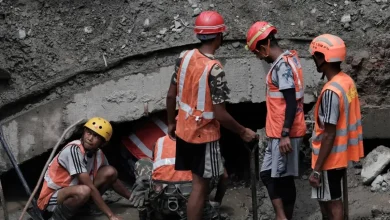
Despite diplomatic advances, clashes have continued in southern Lebanon. Lebanese officials reported that an Israeli strike on a Hezbollah-linked health centre in Hanuf killed six people, including three paramedics. Additional strikes in the Tyre district injured at least 37 others, including women, children, and hospital staff.
Israel stated its operations focused on Hezbollah infrastructure and fighters. The Israeli military reported killing more than 220 Hezbollah members in the past week and hitting hundreds of targets. It also confirmed the death of another Israeli soldier in southern Lebanon, raising the toll of Israeli troops killed since early March to 19.
Hezbollah claimed responsibility for various actions against Israeli forces, such as drone strikes, missile attacks, and ambushes on tanks and vehicles. The Israel Defense Forces noted additional anti-tank missiles and mortar fire from Hezbollah near its positions.
The United Nations humanitarian coordinator for Lebanon, Imran Riza, described the situation as “deeply alarming,” citing daily airstrikes and civilian casualties. He nevertheless voiced hope that the renewed negotiations could lead to a political resolution. According to Lebanese authorities, the violence since March has resulted in nearly 3,000 deaths in Lebanon.