Tehran has cautioned that it would target American military installations in the region should the United States launch any military action against Iran, as Washington begins pulling back some personnel from key bases in the Middle East amid rising fears of confrontation.
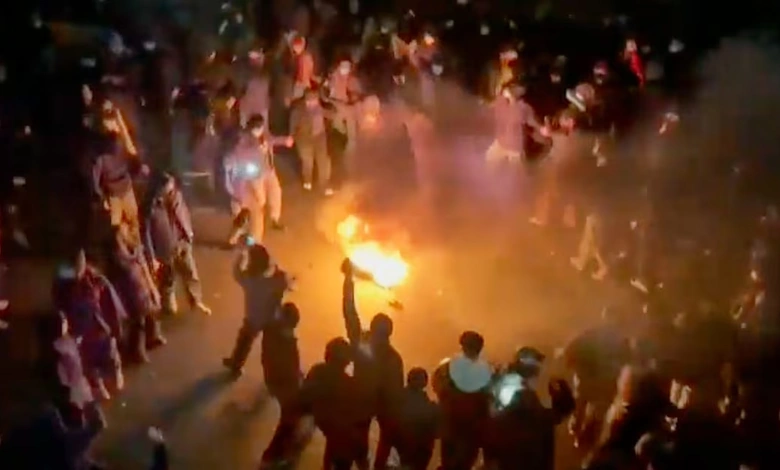
A senior Iranian official, speaking anonymously, disclosed that Tehran has communicated directly to neighboring countries—including Saudi Arabia, the United Arab Emirates, and Turkey—that U.S. bases on their soil would face attacks if Washington strikes Iranian territory. This warning comes as Iran’s leadership works to suppress widespread anti-government protests, the most severe challenge to the Islamic Republic since the 1979 revolution, while simultaneously attempting to discourage U.S. President Donald Trump’s repeated vows to intervene in support of the demonstrators.
The United States has initiated a precautionary withdrawal of certain personnel from strategic bases across the Middle East, according to a U.S. official who requested anonymity. Qatar confirmed that the drawdown from Al Udeid Air Base—the largest U.S. military facility in the region and home to the forward headquarters of U.S. Central Command—is underway in response to the current regional volatility. Diplomats indicated that some individuals received instructions to depart the base, although there were no visible signs of a mass evacuation comparable to measures taken prior to an Iranian missile attack on the facility last year. Britain has also begun relocating some personnel from an air base in Qatar, as reported by The i Paper, though the British defense ministry offered no immediate confirmation.
A Western military official told Reuters that indicators suggest a U.S. attack could be imminent, describing unpredictability as a deliberate element of the current administration’s approach. “All the signals are that a U.S. attack is imminent, but that is also how this administration behaves to keep everyone on their toes,” the official said.
At the White House, President Trump adopted a more measured tone, stating he had received information from “very important sources on the other side” indicating that killings associated with the government’s crackdown on protests were decreasing and that no large-scale executions were planned. He refrained from ruling out military options, noting the administration would monitor developments and had received a “very good statement” from Iran.
Iranian Foreign Minister Abbas Araqchi, in an interview with Fox News, explicitly denied any intention to carry out hangings, asserting, “There is no plan for hanging at all. Hanging is out of the question.” This statement contrasts with reports from groups like the Norway-based Iran Human Rights Society, which note that executions remain common in Iranian prisons.
The United Nations Security Council is scheduled to convene on Thursday to discuss Iran, at Washington’s request. European officials suggested U.S. intervention might occur within the next 24 hours, while an Israeli official indicated Trump appeared resolved to act, though details on timing and scale remained uncertain.
The protests, initially triggered by severe economic hardship including currency collapse, have escalated dramatically, with authorities facing accusations of the most violent repression in Iran’s modern history from French Foreign Minister Jean-Noel Barrot. Death toll estimates vary, with an Iranian official reporting over 2,000 fatalities and rights groups citing figures exceeding 2,600. Iran’s military leadership has attributed the unrest to foreign adversaries, while the government has broadcast images of public funerals for fallen security personnel to demonstrate continued support.
Despite the turmoil, a Western official assessed that Iran’s security forces maintain control and the government shows no immediate signs of collapse. Direct diplomatic channels between Iranian Foreign Minister Araqchi and U.S. Special Envoy Steve Witkoff have been halted, further complicating efforts to de-escalate.