
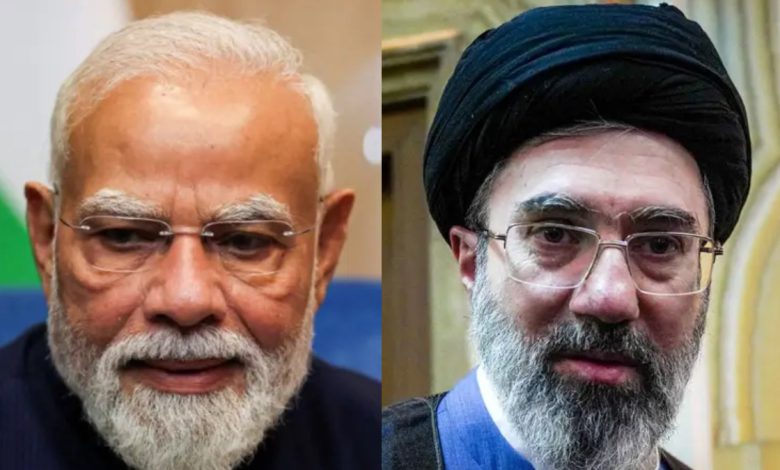
Iran’s Supreme Leader Ayatollah Seyyed Mojtaba Khamenei has thanked Prime Minister Narendra Modi for his Eid al-Adha greetings, describing the bond between the two countries as a “historic friendship” and expressing confidence that ties would grow stronger in the months ahead.
In a formal message addressed to Modi, Khamenei said he had received the Prime Minister’s Eid greetings with “sincere appreciation” and extended reciprocal congratulations. He said the relationship between India and Iran, “founded on mutual respect and shared interests,” would “continue to be further strengthened and expanded through the efforts of our two governments.” The message closed with a prayer for the “prosperity and continued success of the Government and the great people of India.”
The exchange is believed to be the first direct communication between Khamenei and Modi since Khamenei became Supreme Leader. Ali Khamenei, who led Iran for more than three decades, was killed in a joint US-Israeli strike on his Tehran residence on February 28 during the early stages of the conflict in West Asia; his son Mojtaba was named Supreme Leader by the Assembly of Experts the following month.
Also Read:Mumbai Suburban Update: Central Railway Expands Fleet With 12 New AC Local Services


The goodwill message comes days after Iranian President Masoud Pezeshkian formally invited Modi to attend the state funeral and burial ceremonies for Ali Khamenei, with events scheduled across Tehran, Qom and Mashhad between July 4 and July 9. Modi is not expected to travel, with India instead represented by Bihar Governor Lt Gen (retd) Syed Ata Hasnain and Minister of State for External Affairs Pabitra Margherita.
India and Iran share civilisational and cultural links dating back centuries, alongside economic and strategic ties that have endured despite US sanctions limiting bilateral energy trade. Mojtaba Khamenei has issued several public messages since taking charge, largely focused on national unity and resisting external pressure amid the wider West Asia conflict.