
India Sends 38,000 MT Emergency Fuel to Sri Lanka as West Asia Conflict Squeezes Supplies
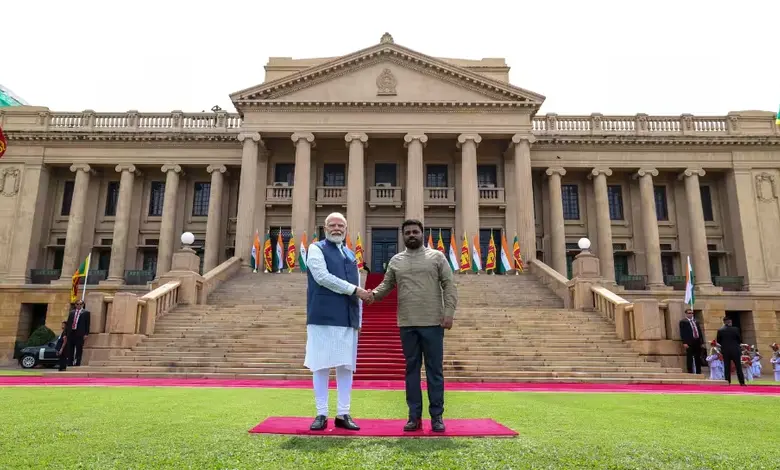
Sri Lankan President Anura Kumara Dissanayake on Sunday thanked Prime Minister Narendra Modi after India dispatched an emergency fuel consignment to Colombo amid supply disruptions caused by the escalating West Asia conflict.
A shipment of 38,000 metric tonnes of fuel comprising 20,000 MT of diesel and 18,000 MT of petrol docked in Colombo on Saturday. The consignment was routed through Indian Oil Corporation’s local subsidiary, Lanka IOC, as part of emergency bilateral support.
“Spoke with PM @narendramodi a few days ago about the fuel supply disruptions Sri Lanka is facing due to the Middle East conflict. Grateful for India’s swift support. 38,000 MT of fuel arrived in Colombo yesterday,” Dissanayake posted on X.
Spoke with PM @narendramodi a few days ago about the fuel supply disruptions Sri Lanka is facing due to the Middle East conflict. Grateful for India’s swift support. 38,000 MT of fuel arrived in Colombo yesterday. My thanks also to EAM @DrSJaishankar for his close coordination.
— Anura Kumara Dissanayake (@anuradisanayake) March 29, 2026




The Sri Lankan President also acknowledged External Affairs Minister S. Jaishankar’s role in the effort. “My thanks also to EAM @DrSJaishankar for his close coordination,” he said.
Rajapaksa Invokes India’s ‘Neighbourhood First’ Policy, Urges Colombo to Follow New Delhi’s Tax Model
Sri Lankan MP Namal Rajapaksa praised the shipment as further proof of India’s Neighbourhood First policy, calling New Delhi Sri Lanka’s “first responder in times of crisis from critical supplies to economic assistance.”
Rajapaksa also drew attention to India’s recent fuel excise duty adjustment, urging his government to adopt a comparable approach. “India reduced excise duty not to lower prices immediately, but to stabilise the market and prevent further increases during global oil price shocks,” he noted on X.
He added that reducing excessive tax burdens in line with what he described as India’s more growth-oriented approach could help stimulate investment, ease pressure on citizens, and support Sri Lanka’s long-term economic recovery.
Energy Crisis Deepens as Conflict Targets Oil Infrastructure
Sri Lanka’s energy situation has deteriorated sharply since tensions in West Asia intensified in the second week of March, when strikes attributed to the United States and Israel on Iran triggered retaliatory attacks on global energy assets including oil tankers, refineries, and LNG facilities.
Also Read:Ishaq Dar Slips During Welcome Ceremony for Egypt’s Foreign Minister in Islamabad
In response, the Sri Lankan government has introduced fuel rationing and a four-day working week across the state sector. Schools, universities, and most government institutions are operating on reduced schedules. Banks have cut their working hours, transport services have scaled back, and several private companies have moved to work-from-home arrangements to conserve energy. Fuel prices in the country have already risen sharply as the conflict continues to roil global supply chains.