
India juts deep into the Indian Ocean. Its long coastline, hundreds of islands, and vast exclusive economic zone place it right across the busy east-west sea lanes that carry oil and goods between the Gulf and East Asia.
More than 90% of India’s trade by volume moves by sea, and over 85% of its crude oil does too. Four key choke points matter most: the Strait of Hormuz, the Red Sea-Suez route, the Strait of Malacca, and Bab el-Mandeb. Hormuz alone has carried a large share of India’s oil, gas, and cooking fuel. A blockage at any of these gates can hit kitchens, factories, and refineries within weeks.
Recent events have laid bare the risks. Houthi attacks have hit shipping near Yemen, with an Indian-flagged cargo ship struck and sunk in early August 2026 its crew was rescued. Indian warships then escorted tankers through Bab el-Mandeb. When the West Asia conflict closed Hormuz earlier in 2026, oil prices jumped sharply and ships were left stranded.
Why Carriers, Not Just Land-Based Aircraft
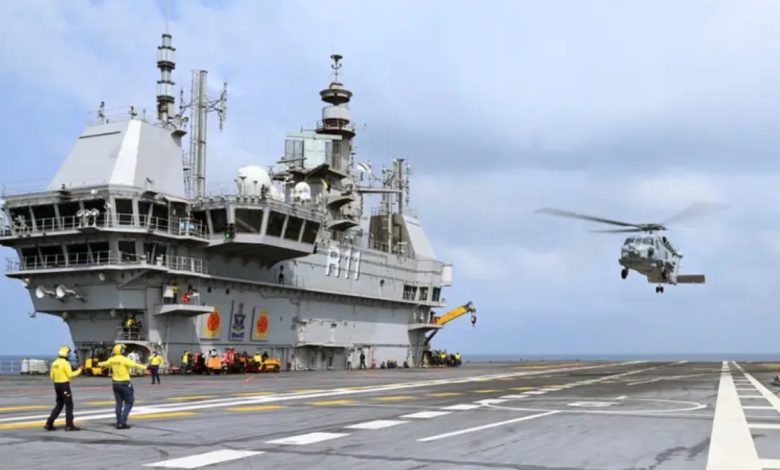
Land-based aircraft cannot stay on station far from home for long. Aircraft carriers can. India currently operates two: Vikramaditya and Vikrant. A carrier brings its own aircraft, air defences, and command centre to distant waters. It can escort ships, project presence, and shift the tone of a crisis without firing a shot.




The United States regularly uses carriers this way moving one toward a trouble spot signals options and pressure, while pulling one away can unsettle the balance. Other countries maintain carriers for similar reasons: they turn a navy from a coastal force into a genuine tool of foreign policy.
Building for the Future
India’s navy wants more ships, aiming for a fleet of 175-200 by 2035. More than 50 are already under construction, though a second home-built carrier still awaits full approval. Ships take years to build, but crises arrive in days.
Geography gives India a natural advantage. But that advantage only counts if the navy can be present where the tankers sail. Escorts that worked this month may not be available next month, and orders placed now will only deliver ships in the 2030s. In the Indian Ocean, presence is the point.