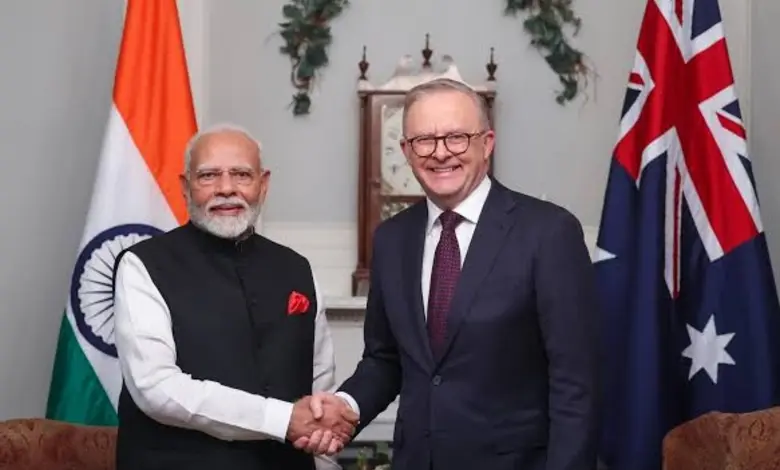
New Delhi: India and Australia have finalized a landmark agreement that paves the way for the commercial export of Australian uranium to India, ending years of procedural delays and marking one of most significant milestones in the two countries strategies relationship. The agreement, announced during Prime Minister Narendra Modi’s visit to Australia, is expected to strengthen India’s clean energy ambitions while deepening defence, trade and Indo-Pacific cooperation.
The breakthrough effectively operationalises the Civil Nuclear Cooperation Agreement signed in 2014, which had remained largely inactive due to pending administrative arrangements. With those formalities now completed, Australian uranium can be supplied exclusively for India’s civilian nuclear power programme under strict international safeguards.
Why the deal matters
Australia possesses some of the world’s largest known uranium reserves, while India is among the fastest growing energy consumers. As New Delhi pushes to expand its nuclear power capacity and reduce dependence on fossil fuels, a reliable supply of uranium is seen as crucial for meeting long term energy security and climate goals. India has set an ambitious target of achieving 100 GW of nuclear power capacity by 2047, making nuclear energy a key pillar of its clean energy transition.
For Australia, the agreement opens a significant new export market while reinforcing its role as a trusted supplier of critical energy resources. Canberra has maintained that all uranium exports will remain subject to stringent safeguards to ensure they are used solely for peaceful civilian purposes.
A journey that took over a decade
The road to the uranium agreement has been long. Following India’s 1998 nuclear tests, Australia suspended uranium sales because India is not a signatory to the Nuclear Non Proliferation Treaty (NPT). The policy began to shift as India’s global strategic importance grew and after the Nuclear Suppliers Group granted India a special waiver in 2008, allowing civilian nuclear commerce despite its non-NPT status.
In 2014, then Australian Prime Minister Tony Abbott and Prime Minister Narendra Modi signed the Civil Nuclear Cooperation Agreement, describing it as a historic step in bilateral ties. Although the pact entered into force in 2015, commercial exports remained stalled as both sides worked through regulatory and administrative requirements. The latest agreement finally clears that hurdle.
More than just uranium
The uranium pact was only one of several outcomes from the leaders summit. India and Australia also agreed to deepen cooperation in defence, maritime security, critical minerals, advanced technologies, cyber security, supply chains and clean energy. Both leaders reiterated their commitment to a free, open and stable Indo-Pacific, reflecting growing strategic convergence amid changing regional dynamics.
Prime Minister Modi described the agreements as another milestone in the Comprehensive Strategic Partnership between the two democracies, while Australian Prime Minister Anthony Albanese said the relationship had entered a new era built on trust, economic cooperation and shared security interests.
The uranium agreement is widely viewed as more than an energy deal. It signals the growing confidence between New Delhi and Canberra, strengthens India’s long term energy security and further cements a partnership that has evolved from cautious engagement into one of the Indo-Pacific’s most important strategic relationships.
ALSO READ: PM Modi Urges Closer India-Australia Partnership in Uncertain Times