
Greenland Question Tests Trump’s Authority As Congress Weighs Limits On Presidential Power
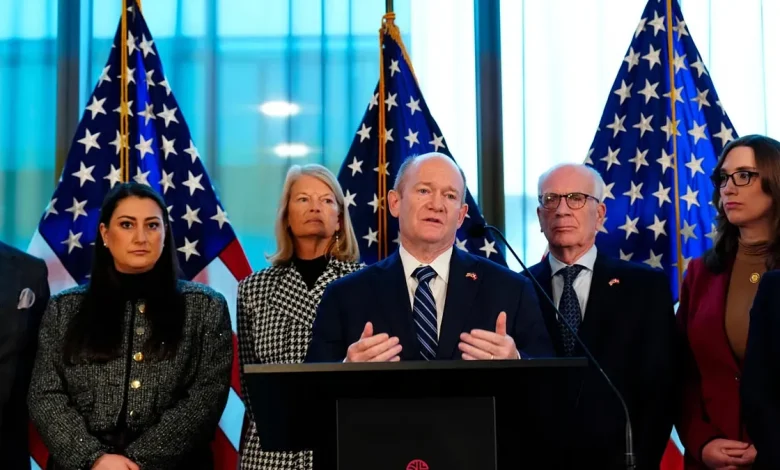
US President Donald Trump’s renewed push to bring Greenland under American control has opened a fresh political fault line in Washington, raising questions about whether the White House can act without congressional approval or whether lawmakers will intervene to block any unilateral move.
While Democrats have firmly rejected the idea, the debate has begun to unsettle Republicans as well, exposing divisions within the party over the expansion of US military and strategic influence overseas. It remains unclear whether enough Republican lawmakers are willing to actively oppose the president or whether Trump would choose to proceed despite resistance from United States Congress, continuing a pattern that has marked his second term.
What began as a discussion about Greenland’s strategic value has widened into a broader confrontation over the administration’s use of military power, economic pressure, and diplomacy to advance American interests globally, including in Venezuela and Iran. Although Trump has enjoyed strong Republican backing on foreign policy since returning to office, signs of dissent are becoming more visible.


Several Republican leaders have publicly dismissed the notion of purchasing Greenland or using force to assert control. Others have joined Democrats in opposing Trump’s proposal to impose tariffs on countries that refuse to support his position on the Arctic territory, which is self-governing but remains under Danish sovereignty. Senator Thom Tillis of North Carolina warned that such tariffs could harm US businesses and allies while benefiting strategic rivals, arguing they would weaken North Atlantic Treaty Organization cohesion and strengthen leaders such as Vladimir Putin and Xi Jinping.
Additional Republican lawmakers have cautioned that Trump’s ambitions could further strain transatlantic relations. Senator Lisa Murkowski of Alaska, co-chair of the Senate Arctic Caucus, has emphasised that the right of Greenland’s population to self-determination must be respected.
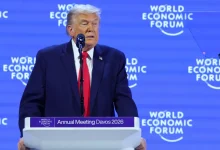
Trump has remained defiant, repeatedly asserting that US control of Greenland is essential to counter Chinese and Russian influence in the Arctic. He has said the United States will obtain the territory “one way or another,” dismissing concerns that the issue could damage NATO. Both Denmark and Greenland have reiterated that the island is not for sale.
From a legal standpoint, Congress holds significant leverage. Any formal purchase of Greenland would require explicit congressional approval, particularly control over federal spending. Legal experts note that existing funds are unlikely to be repurposed for such an acquisition, though they caution the administration could attempt to claim extraordinary executive authority, as it has in other policy areas.
Lawmakers concerned about the prospect of military action are exploring legislation to prevent any such move without congressional consent. Whether these efforts can attract sufficient Republican support remains uncertain. Earlier this month, a small group of Republican senators joined Democrats to advance a resolution aimed at limiting further US military involvement in Venezuela, highlighting growing bipartisan unease over overseas operations despite Trump’s 2024 campaign pledge to curb foreign interventions.
A recent bipartisan congressional delegation visit to Denmark underscored support for Greenland’s autonomy. Any treaty transferring territory would require approval by a two-thirds majority in the Senate a threshold that currently appears out of reach. Senate Republican leader Mitch McConnell has warned that annexing Greenland would cause lasting damage to trust between the United States and its allies.
Also Read: Davos 2026 : Canada’s Prime Minister Says There Has Been ‘Rupture’ In The World Order
Facing mounting resistance, Trump could seek a less formal arrangement that avoids Senate ratification, but legal scholars question whether an agreement of such scale could lawfully bypass Congress. The president has offered little clarity on how he intends to proceed, saying only that developments are forthcoming and would ultimately benefit all parties.