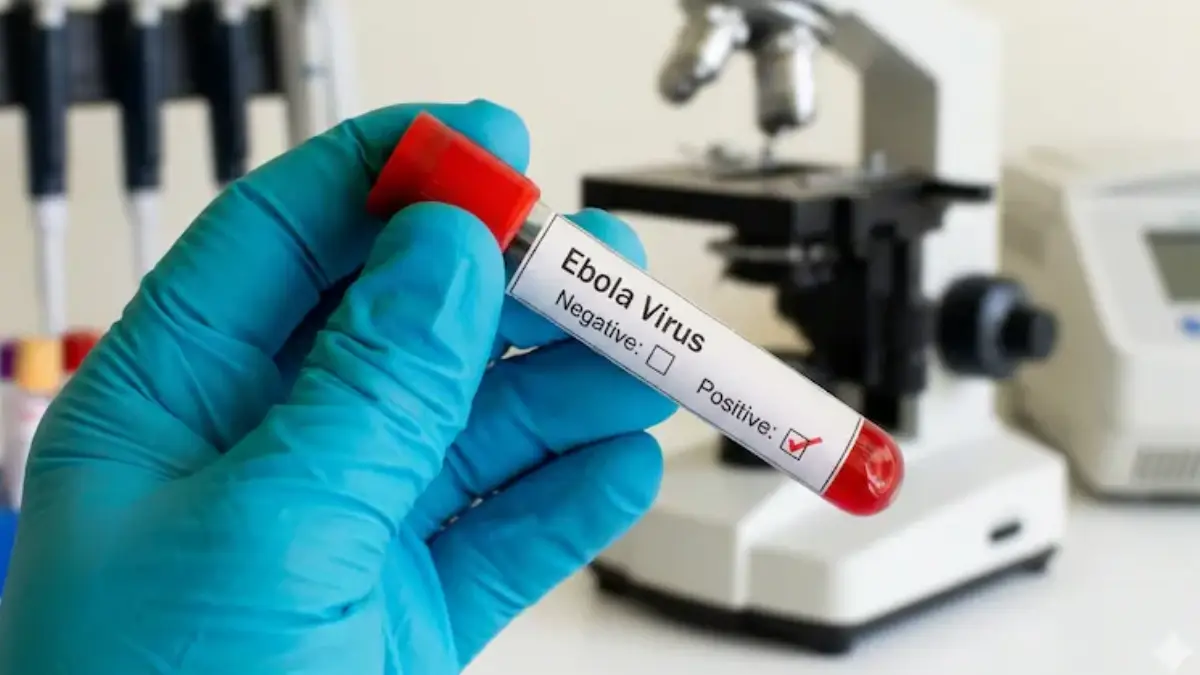
Russian officials have announced the development of a new vaccine designed to counter a recently emerging Ebola strain, as concerns mount over the ongoing Bundibugyo Ebola outbreak affecting the Democratic Republic of Congo and Uganda.
According to Russian Health Minister Mikhail Murashko, the vaccine could offer protection against the Bundibugyo ebolavirus, a rare but dangerous strain that currently lacks any approved specific vaccines or treatments. The announcement arrives as the World Health Organization (WHO) has declared the outbreak a Public Health Emergency of International Concern (PHEIC), highlighting risks of rapid spread across Central Africa.
WHO data indicates more than 80 confirmed cases and associated deaths, with hundreds of suspected infections still under investigation. The Russian Embassy in South Africa amplified the news on social media platform X, noting that scientists in Russia had created the vaccine candidate, which may also prove effective against the Bundibugyo variant driving the current crisis.
Health experts have responded cautiously to the Russian claim, stressing that comprehensive clinical trial data, peer-reviewed studies, and regulatory approvals will be necessary before the vaccine can be deemed safe and effective for broader deployment. No detailed trial results have been publicly released so far.
ALSO READ : Russia Issues Urgent Evacuation Warning for Foreigners in Kyiv Ahead of Planned Strikes
Ebola virus disease remains a highly lethal illness, with mortality rates varying between 25 and 90 percent depending on the strain and quality of medical care. The only widely approved vaccine, Ervebo, targets the more common Zaire ebolavirus strain and is primarily used in ring vaccination strategies during outbreaks. Other vaccines, such as Zabdeno and Mvabea, are similarly focused on Zaire ebolavirus and have not been confirmed effective against Bundibugyo.
Global research efforts are intensifying to address gaps in protection against different Ebola variants. The Russian development is viewed as a potential contribution to these efforts, though independent validation remains essential.
Russia has additionally offered diagnostic tools and medical assistance to affected African countries, including Congo and Uganda.
Public health authorities continue to prioritize core containment measures such as early detection, patient isolation, contact tracing, and enhanced surveillance to limit the virus’s spread while new countermeasures are evaluated.
-

-
-
-