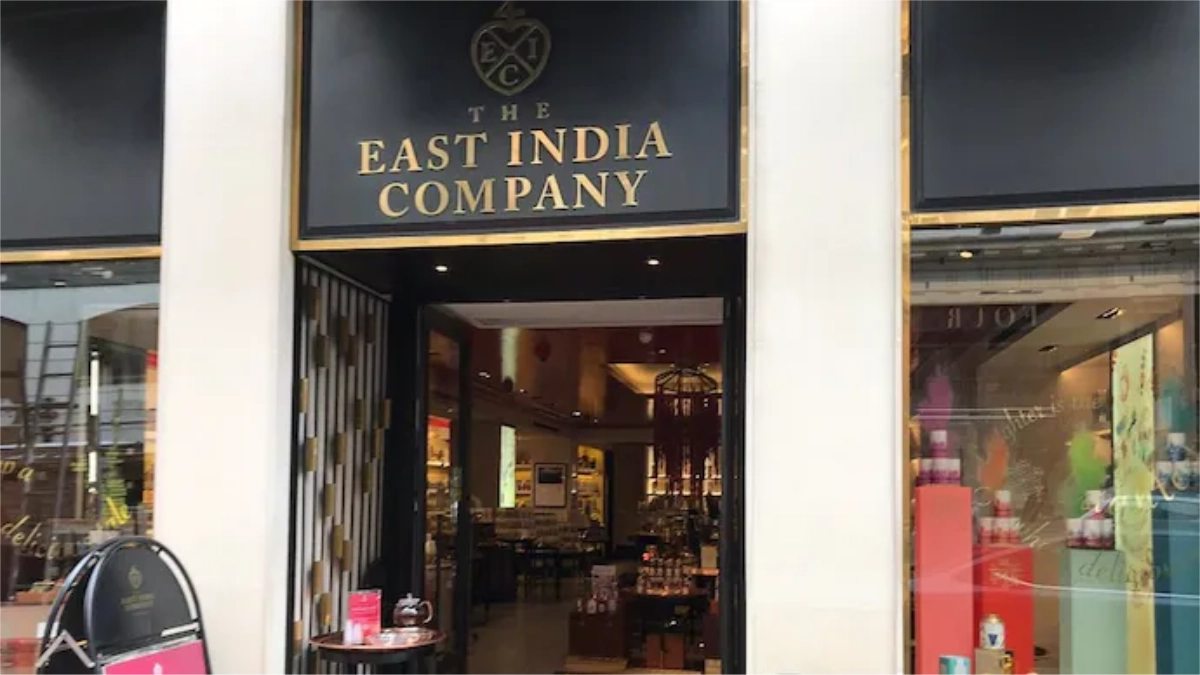
The East India Company the British trading giant that once ruled vast swathes of India and laid the groundwork for colonial rule has closed down once more, this time as a high-end luxury retailer based in London. The modern incarnation of the firm, revived in 2010 by British-Indian businessman Sanjiv Mehta, has gone into liquidation, bringing an unusual chapter in post-colonial business history to an abrupt end.
The original East India Company lost control of India following the 1857 Indian Rebellion, also known as the Sepoy Mutiny, when the British Crown assumed direct governance in 1858, marking the beginning of the British Raj. The company was formally dissolved by the British Parliament in 1874.
Nearly 152 years after going dormant, the name was resurrected when Mehta acquired the rights to it in 2010, a move widely celebrated as a symbolic reversal the colonised taking ownership of the coloniser’s most powerful instrument of trade and exploitation. Mehta opened a 2,000 sq ft luxury store at 97 New Bond Street in Mayfair, London, stocking premium teas, chocolates, confectionery, spices, and other fine goods, positioning it alongside renowned establishments like Fortnum & Mason.
That store is now reportedly empty and listed for rent through agents. The company’s website is also down.
According to The Sunday Times, The East India Company Limited appointed liquidators in October 2025. At the time of closure, it owed more than £600,000 (approximately Rs 6.3 crore) to its parent group registered in the British Virgin Islands, £193,789 (Rs 2.03 crore) in unpaid taxes, and £163,105 (Rs 1.71 crore) to employees. Several other companies bearing the “East India” name and linked to Mehta have also been dissolved, the British newspaper reported. A related entity, East India Company Collections Limited, recently faced a winding-up petition from creditors as well.
Mehta had long framed his ownership of the brand as an act of reclamation. In a 2017 interview with The Guardian, he said: “The fact that an Indian now owns the East India Company means that the negative has become a positive. The historic East India Company built itself on aggression, but today’s East India Company is about compassion.”
Also Read: Humanity Must Never Become Victim Of Conflict Says PM Narendra Modi
The original company had been founded on December 31, 1600, under a royal charter granted by Queen Elizabeth I, initially as a joint-stock trading firm competing for spices and goods from the East Indies. It established its first trading post in Surat, India, between 1612 and 1613, and steadily accumulated monopoly rights over British trade east of the Cape of Good Hope. By the 1700s it had transformed into a formidable territorial power building forts, forging alliances with local rulers, collecting taxes, administering courts, and commanding a private army of around 250,000 men at its peak in the early 1800s, roughly twice the size of the British Army at the time.
After the Battle of Plassey in 1757, it took control of Bengal and effectively governed large portions of the subcontinent. At its height, it accounted for nearly half the world’s trade in certain commodities. But its rule came at an enormous human cost through forced cultivation of cash crops, exploitative export policies, and famines, including the Great Bengal Famine, which killed an estimated 30 million people.
The 1857 rebellion ended the company’s political authority, and the British Crown formally dissolved it in 1874.
The second and final closure of the East India Company marks the end of what many had once hailed as a remarkable act of historical irony and a reminder that symbols of empire, however reframed, carry the weight of the past.
-

-

-

-