
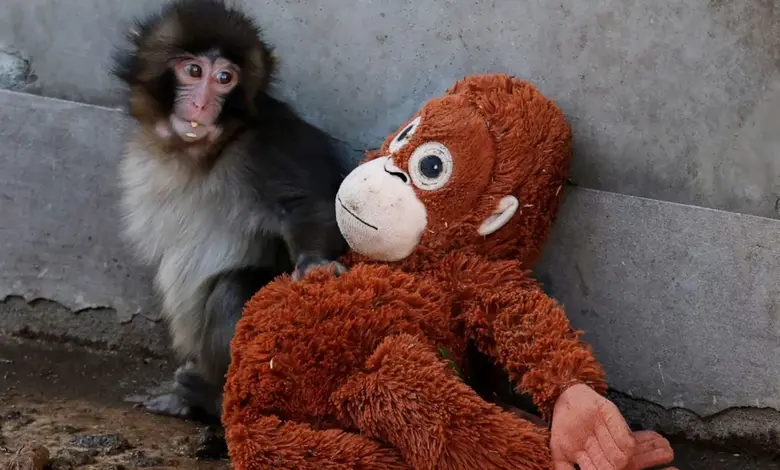
At Ichikawa City Zoo in Japan, a young Japanese macaque named Punch, born in 2025, faced immediate rejection from his mother shortly after delivery. The infant’s plight captured widespread attention online, as videos showed the tiny primate forming an unusual bond with a stuffed orangutan toy provided by zoo staff.
Zookeepers observed Punch’s isolation soon after birth and intervened promptly. In place of maternal care, they introduced the plush toy, selected for its long hair and graspable features that mimic a real monkey. According to zookeeper Kosuke Shikano, the toy offers Punch something to cling to, helping build physical strength and emotional comfort essential elements typically provided by a mother during early development in Japanese macaques.
Shikano explained that the choice aimed to ease Punch’s eventual reintegration into the troop, noting the animal’s resemblance to a fellow primate could prove beneficial over time.




Infant rejection, though distressing, occurs occasionally among primates and is not exclusive to humans. The International Business Times highlighted research on macaque behavior, which documents instances of infant abuse and neglect in monkeys and apes. The study notes that some mothers exhibit aggressive actions toward their young or abandon them soon after birth.
Several factors may explain Punch’s case. Shikano pointed to the intense July heat during the birth as a potential trigger, suggesting environmental stress played a role. First-time mothers often face challenges in forging an instant connection with their offspring, increasing the risk of rejection or neglect, as outlined in the referenced research.
Additional contributors include broader environmental pressures such as extreme temperatures, excessive noise, or other disturbances that can overwhelm a mother. Past trauma also emerges as a factor: females who experienced abuse as infants are more prone to abusive or neglectful parenting. Finally, a mother’s compromised health or poor nutrition may lead her to prioritize self-preservation over infant care.
Despite the difficult start, Punch shows encouraging signs of progress. After initial struggles in approaching other monkeys, he has begun learning social signals and interacting with the group. Zookeepers remain optimistic, with Shikano expressing confidence that Punch will eventually outgrow his reliance on the toy and fully integrate into the troop.