
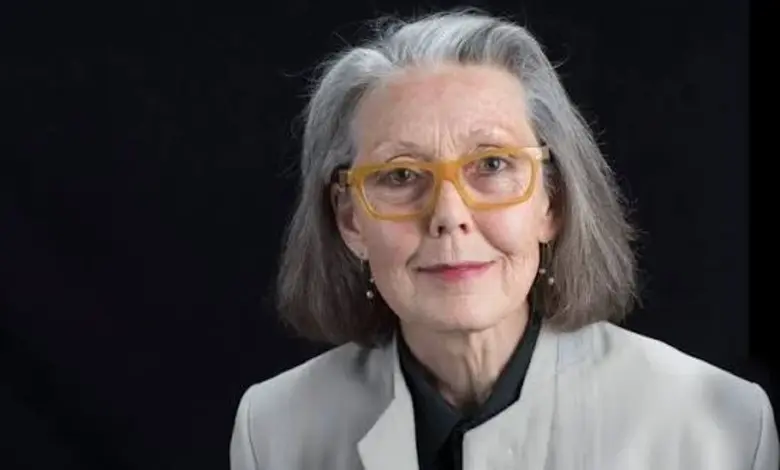
Canadian poet, essayist and translator Anne Carson has won the 2026 Nobel Prize in Literature. The Swedish Academy honoured the 76-year-old writer for her “bold and inventive oeuvre” and her ability to create new forms of literature through a playful dialogue with classical traditions.
Carson becomes the 19th woman to receive the Nobel Prize in Literature, out of 123 laureates since the award was first given. Her win also adds another important name to the growing list of women recognised by the Swedish Academy in recent years.
What makes Carson different is the wide range of her writing. She does not stay within one literary form. Her work moves between poetry, prose, essays, translation and classical scholarship, often mixing more than one form in the same work.




Her writing is also known for bringing together the ancient and the modern. Carson has spent much of her career studying classical Greek literature and has translated writers including Sappho, Sophocles and Euripides. But rather than simply reproducing these old works, she often reshapes them through contemporary language, themes and forms.
One of her best-known books, Autobiography of Red, published in 1998, is a novel in verse. It takes inspiration from an ancient Greek myth about Geryon and turns it into a modern story about adolescence, desire and identity. Her other works, including Men in the Off Hours, Decreation, Nox and Float, also show her interest in crossing traditional literary boundaries.
Carson’s genre-crossing writing has attracted strong critical attention over the years. She was the first woman to win the TS Eliot Prize, receiving it in 2001 for The Beauty of the Husband. She has also received Guggenheim and MacArthur fellowships.
The Nobel recognition therefore comes not only for one book, but for a body of work that has challenged the usual divisions between poetry, fiction, scholarship and translation.
With Carson, the Swedish Academy has once again recognised a writer whose work asks a larger question: what can literature become when its traditional boundaries are no longer fixed?