
Pakistan Strikes Afghan Border Targets, Claims 70+ Militant Deaths Amid Rising Tensions
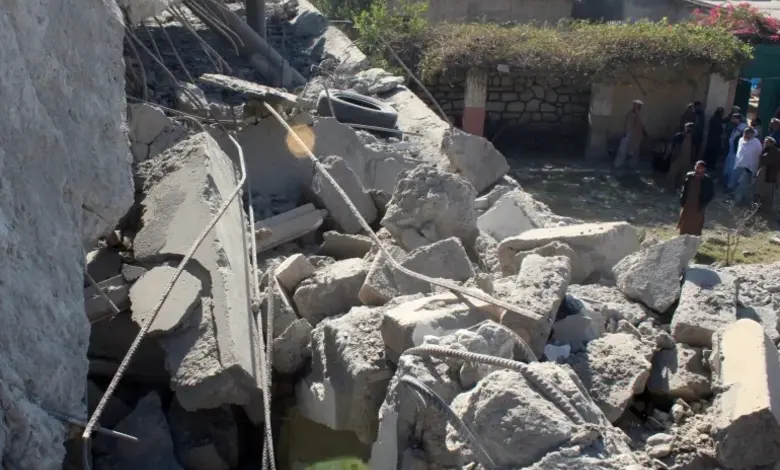
Pakistan’s military conducted airstrikes early Sunday in eastern Afghanistan, asserting it eliminated at least 70 militants from groups blamed for orchestrating attacks inside Pakistan. Afghan officials strongly disputed the figure, reporting civilian casualties and condemning the operation as an infringement on national sovereignty.
Deputy Interior Minister Talal Chaudhry told Geo News that the strikes targeted hideouts used by Pakistani militants responsible for recent violence within Pakistan, though he presented no immediate evidence to support the claim of 70 killed. State-run Pakistani media later revised the militant death toll upward to 80.
Information Minister Attaullah Tarar posted on X that the operations were intelligence-driven and precise, hitting seven camps linked to the Tehreek-e-Taliban Pakistan (TTP) and affiliated factions, including one associated with the Islamic State group.


In contrast, Afghanistan’s Defense Ministry stated that the strikes impacted civilian zones in Nangarhar and Paktika provinces, damaging a religious seminary and residential homes. Government spokesperson Zabihullah Mujahid wrote on X that dozens were killed and injured, among them women and children, labeling Pakistan’s militant casualty report as false.
The Afghan Red Crescent Society’s Nangarhar provincial director, Mawlawi Fazl Rahman Fayyaz, confirmed 18 deaths and multiple injuries in the aftermath.
A local tribal elder, Habib Ullah, speaking to The Associated Press, insisted the victims were ordinary villagers leading modest lives, with no ties to militants, Taliban fighters, security forces, or the previous administration.
Pakistan’s President Asif Ali Zardari defended the action late Sunday as a necessary act of self-defense against terrorism, noting that prior warnings to Kabul had gone ignored. He highlighted Pakistan’s restraint in confining targets to border areas but vowed that those directing attacks from across the frontier would not escape accountability, underscoring the protection of citizens as an absolute priority.
Afghanistan’s Foreign Ministry summoned Pakistan’s ambassador in protest and cautioned that Islamabad would bear responsibility for the repercussions, while reaffirming its obligation under Sharia to secure its territory.
The strikes followed a wave of militant incidents in Pakistan, including a suicide bombing in Bannu that claimed two soldiers’ lives hours earlier, and another in Bajaur the previous week that killed 11 soldiers and a child—attributed to an Afghan national. Tarar referenced evidence connecting recent violence, such as a Shiite mosque bombing in Islamabad that left 31 dead, to TTP leadership operating from Afghanistan. He called on the international community to compel the Taliban authorities to fulfill Doha agreement pledges against permitting their soil for cross-border attacks.
Security analyst Abdullah Khan observed that mediation efforts by Qatar, Turkey, and Saudi Arabia had yielded no resolution, predicting the latest strikes could intensify bilateral friction.