
Why Tarique Rahman As Bangladesh PM May Be India’s Best Strategic Bet?
[By Devansh Desai Mumbai Samachar Desk]
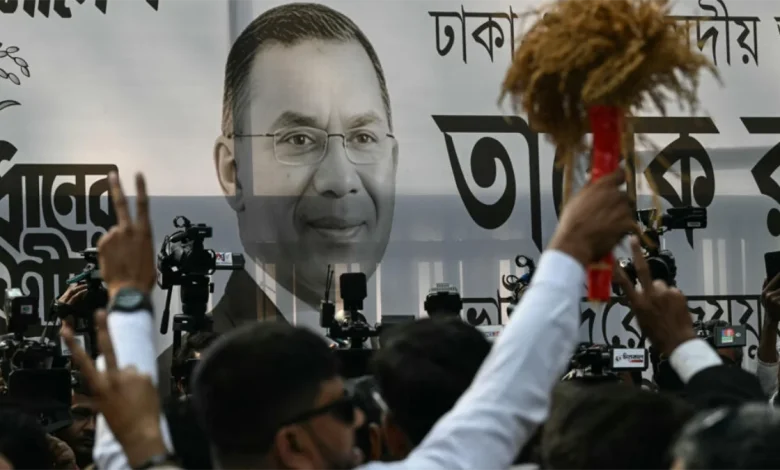
In the four general elections held in Bangladesh over the past decade, India’s Prime Minister has consistently been among the first foreign leaders to congratulate the winning party. Whether Manmohan Singh or Narendra Modi occupied the seat of power in New Delhi, this tradition continued without exception. The morning of February 13 saw this custom observed once again. However, the political landscape in Bangladesh has undergone a complete transformation. The name of Bangladesh’s future Prime Minister had changed. After four consecutive electoral victories, Sheikh Hasina’s Awami League chose not to participate in this election.
Around 9 AM on February 13, PM Narendra Modi posted a congratulatory message following the Bangladesh Nationalist Party’s (BNP) lead in the elections. Writing on social media platform X, he stated, “This victory reflects the trust of Bangladesh’s people in your leadership.” Approximately half an hour later, the message was posted in Bengali as well, ensuring its resonance across Bangladesh.
When Earlier Outreach Attempts Failed
This message was directed at a politician who had not received particular attention from India for an extended period. Despite accepting his congratulations, this move can be viewed as a diplomatic U-turn. Observers in India appear to agree with this assessment. Given Bangladesh’s current political circumstances, a strong BNP government represents the most pragmatic strategic option for India at present. They believe this thinking forms the basis for Delhi’s shift in approach. Many are also speculating that the recent warmth stems from specific assurances regarding bilateral relations provided by a government led by Tarique Rahman.
Whatever fluctuations may have occurred during BNP’s previous tenures, India now appears ready to move forward without dwelling on past differences. PM Modi’s message signals this intent. However, India is also indicating that engagement with Bangladesh’s new government will be focused on specific issues. Foreign Ministry spokesperson Randhir Jaiswal made this clear in his statement a day earlier. The ruling Bharatiya Janata Party (BJP) has reiterated that relations with any government in Bangladesh cannot remain untouched by concerns over alleged attacks on Hindus in Bangladesh. Nevertheless, there is no doubt that India welcomes the end of Bangladesh’s interim government and the return of an elected political administration.

When the BJP first secured an absolute majority under Modi’s leadership in 2014, BNP’s acting chairman Tarique Rahman was living in exile in London. Since both the BJP and BNP are broadly associated with center-right, nationalist ideologies, there was an expectation of natural political alignment. The Indian National Congress has historically been close to the Awami League. After its departure from power, this hope felt natural. In efforts to improve relations with the new government, Rahman sent a gift to PM Modi, delivered by BJP leader Vijay Jolly in Delhi. Informal contacts were also attempted on several occasions afterward. However, these efforts did not succeed, at least not publicly. Some analysts in Delhi believe Indian intelligence agencies advised caution in this matter.
Pinak Ranjan Chakravarty, former Indian High Commissioner to Dhaka, offers a different perspective: “Prime Minister Hasina was extremely sensitive about any contact between us and the BNP. This sensitivity was a significant reason.” During that period, BNP chairperson Khaleda Zia’s health was deteriorating, and party leadership was gradually shifting to Rahman’s hands. Since formal contact was limited, India maintained so-called “Track Two” channels through think tanks, retired diplomats, and security officials. Chakravarty describes participating in such meetings in Delhi and even Bangkok.
Changing Circumstances After August 5, 2024
The dramatic political transformation in Bangladesh on August 5, 2024, completely altered Delhi’s political calculations. In circumstances without the Awami League, the BNP evidently became India’s first choice. Chakravarty was India’s High Commissioner to Dhaka in 2008 when the army-backed caretaker government forced Rahman to leave for London. He recalls the allegations against Rahman during the 2001-2006 BNP tenure. Chakravarty notes, “After spending over 17 years in Britain, it’s difficult to assess how much he has changed. But if India is now openly engaging, with the Prime Minister’s letter and public congratulations, one can assume some reasonable assurances have been received.” What those assurances entail remains speculative. However, many in Delhi believe there is no apprehension of the BNP returning to overtly anti-India rhetoric.
The party presents its foreign policy as ‘Bangladesh First.’ Yet Rahman has refrained from direct and sharp attacks on India in recent speeches. India views this as a positive stance. Smruti Pattanaik, Fellow at the Delhi-based Manohar Parrikar Institute for Defence Studies and Analyses, cites another reason. She suggests a future BNP government may not aggressively pursue demands for Sheikh Hasina’s extradition from India. “Mohammad Yunus’s interim government attempted to make this a major issue. The BNP may continue raising this demand rhetorically, but won’t allow it to obstruct broader dialogue with Delhi,” she explains.
The Minority Question
Over the past 18 months, India has repeatedly expressed concern about alleged violence against Hindus and other religious minorities in Bangladesh. This issue remained a source of tension in relations with the interim government. Bangladesh dismissed these claims as exaggerated or politically motivated. However, India maintained its position. How the BNP government handles minority protection will be crucial. West Bengal BJP spokesperson Debjit Sarkar states that ground realities matter more than which party rules Bangladesh. Referencing recent incidents, he notes, “Our experience shows attacks on Hindus don’t stop, whether it’s the Awami League or BNP in power.”
While hoping for a more humane approach from the new government, he remains skeptical about concrete change. Some analysts in West Bengal believe this issue will remain politically significant, at least until the upcoming state assembly elections conclude, given its relevance among voters. However, regardless of regional rhetoric, the atmosphere in New Delhi is considerably more positive. The BJP-led central government has warmly welcomed Bangladesh’s new Prime Minister. The logic is straightforward. In Bangladesh’s current political situation, Tarique Rahman represents the best option for India—and possibly the only option.