
Wang Yi Calls for India-China Partnership, Says Both Nations Should View Each Other As ‘Opportunity, Not Threat’
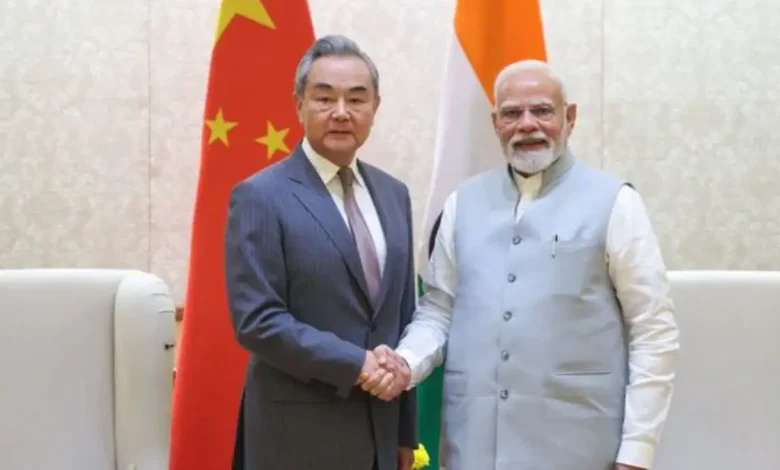
New Delhi: Chinese Foreign Minister Wang Yi on Sunday called on India and China to view each other as “partners, not rivals” and as an “opportunity instead of a threat,” signalling Beijing’s push for warmer ties with New Delhi.
Speaking at his annual press conference on the sidelines of the National People’s Congress (NPC), Wang said both countries should continue on the path charted by Prime Minister Narendra Modi and President Xi Jinping to strengthen bilateral relations — free from external interference.
In a post on X, Wang also referenced the Modi-Xi summit in Tianjin last August, describing it as a further milestone in the relationship. “Building on the fresh start enabled by their Kazan meeting in 2024, the Tianjin summit brought about further improvement in China-India relations,” he wrote.
Renewed Engagement Across All Levels
Wang said both sides are actively working to implement the understandings reached by their leaders, pointing to a revival of interactions across multiple levels that has resulted in a new record in bilateral trade and stronger people-to-people ties. He described these developments as delivering “tangible benefits” to the citizens of both nations.




Also Read: Kuwait Airport Hit, Saudi Defenses Down Dozens of Drones and Missiles
Emphasising shared identity and interests, Wang noted: “As each other’s important neighbours and members of the Global South, China and India enjoy profound civilizational ties and share extensive common interests. Mutual trust and cooperation are beneficial to the development of the two countries, while division and confrontation are detrimental to the rejuvenation of Asia.”
Four-Point Roadmap for Relations
The Chinese foreign minister laid out a four-point framework for taking the relationship forward. First, he said both nations must maintain the correct strategic perception of each other — as partners rather than rivals, and as an opportunity rather than a threat. Second, they must uphold good-neighbourliness and friendship while jointly safeguarding peace and stability along the border. Third, both sides must focus on development as the “biggest common denominator” and generate more concrete outcomes through practical cooperation. Fourth, Wang called on India and China to support each other’s BRICS presidencies over the next two years, with the aim of making BRICS cooperation more substantive and bringing “new hope to the Global South.”